KAUST alumnus Zhiyuan Liu receives top honor in solid-state lighting
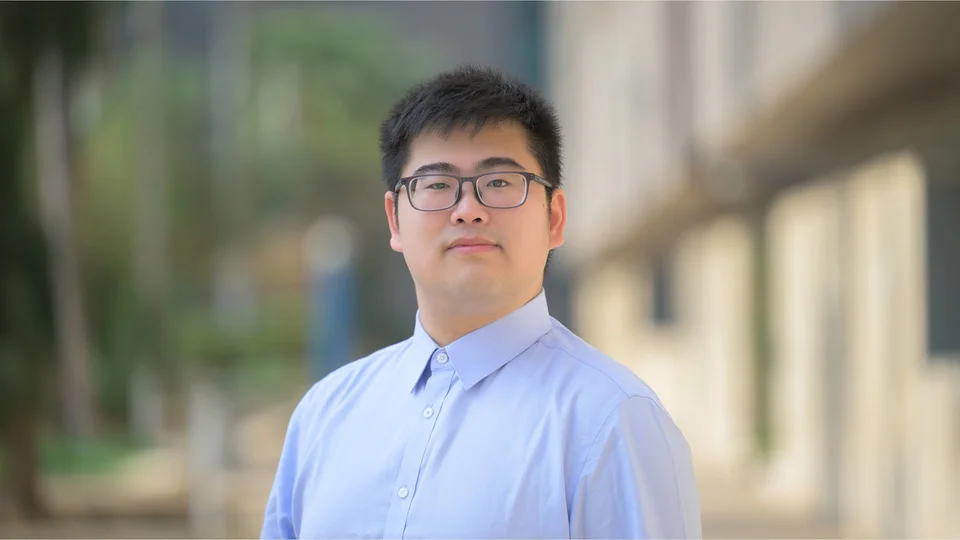
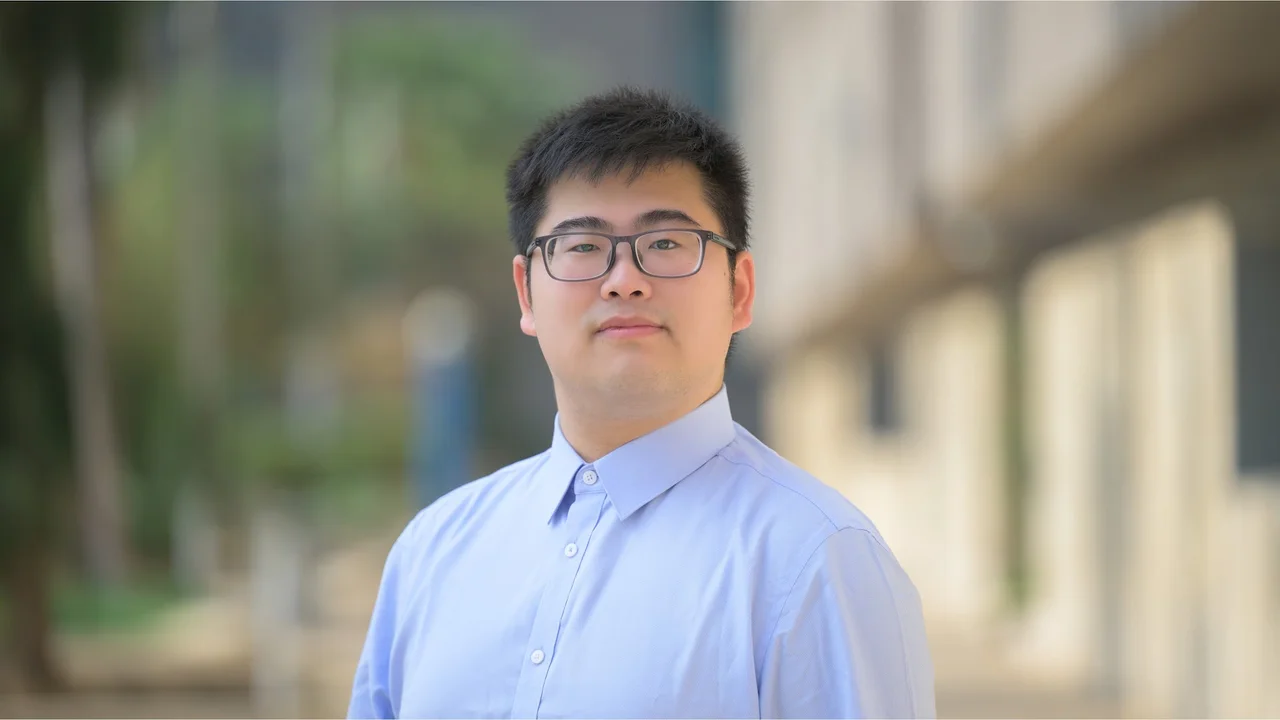
KAUST alumnus Zhiyuan Liu (Ph.D. '25) has received the International Solid State Lighting Alliance’s Global SSL Award of Innovations for developing a new fabrication method that makes it easier to produce small, bright and energy-efficient micro-LED pixels.
About
KAUST alumnus Zhiyuan Liu (Ph.D. ’25) has received the International Solid State Lighting Alliance (ISA)’s 2025 Global SSL Award of Innovations Top 100.
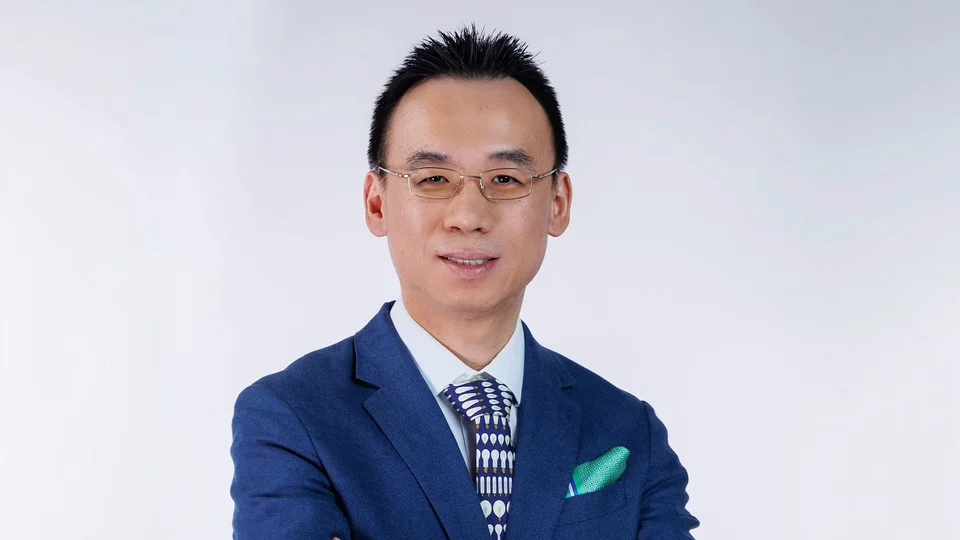
Liu, who completed his doctoral research in the KAUST Advanced Semiconductor Laboratory (ASL) under the supervision of Professor Xiaohang Li, was recognized for a KAUST ASL study titled "Etching-free Pixelation of Efficient and Ultra-small Micro-LEDs via Selective Thermal Oxidation Technique."
The study introduces a novel etching-free fabrication process that lowers manufacturing costs and enhances the quantum efficiency of micro-LEDs used in displays, optical communications, and solid-state lighting.
Established in 2021, the ISA Global SSL Award of Innovations promotes sustainable development in the solid-state lighting industry and highlights technologies that advance lighting and beyond-lighting applications. This year’s ceremony took place on November 13 in Xiamen, China, during the ISA General Assembly.
A new approach
Micro-LEDs are widely considered a key platform for next-generation display technologies, spanning augmented and virtual reality systems, wearable electronics and large-format screens. Conventional fabrication typically uses plasma etching to define pixel regions, but the process can create sidewall defects that leak current, reduce brightness and degrade efficiency.
To address this challenge, Liu and his ASL colleagues developed a selective thermal oxidation method that anneals the wafer in ambient air to oxidize and reshape non-pixel regions. Simultaneously, a protective silicon dioxide coating preserves the designed pixel areas during annealing. This approach defines pixel geometry without causing plasma damage or requiring additional repair steps.
By tuning heating time and protective-layer thickness, the researchers significantly reduced leakage current and improved efficiency. They fabricated green micro-LED arrays as small as 10 micrometers (μm), with a 10-μm pixel array showing low leakage current and strong external quantum efficiency after four hours of air annealing with a 3.5-μm silicon dioxide layer.
The ASL-developed method offers a promising alternative for manufacturing micro-LEDs, avoiding the performance losses that occur as devices shrink. It also facilitates more straightforward integration with driving circuits and can be extended to other III-nitride devices, including photodetectors, laser diodes, and high-electron-mobility transistors.
Liu has joined the Suzhou Institute of Nano-Tech and Nano-Bionics (SINANO) in Suzhou, China, as a professor, following the completion of his Ph.D. at KAUST.
“In my new role, I will continue pursuing a research philosophy shaped during my time at KAUST, focused on rigor, collaboration and high-quality outcomes,” Liu concluded.
Pushing the boundaries
Liu’s research focuses on III-nitride optoelectronic devices, including micro-LEDs and deep ultraviolet LEDs. His work emphasizes device structural design, physical modeling, micro- and nanofabrication, and interface engineering to improve efficiency and reliability.
“At the KAUST ASL, we balance independent project research with strong team collaboration, always aiming for innovation with practical value. I believe this philosophy underpins high-quality scientific outcomes,” Liu said.
“The ISA award affirms the originality and impact of our work,” Professor Li added. “It motivates us to continue pushing the boundaries of semiconductor and photonics innovation.”
Liu will soon join the Suzhou Institute of Nano-Tech and Nano-Bionics (SINANO) in Suzhou, China, as a full professor. There, he will continue advancing micro-LED technology, with a focus on performance improvements and full-color displays.
“In my new role, I will bring what I learned at KAUST and continue pursuing a research philosophy that delivers high-quality results,” Liu concluded.