Professor Wolfgang Heidrich named an ACM Fellow
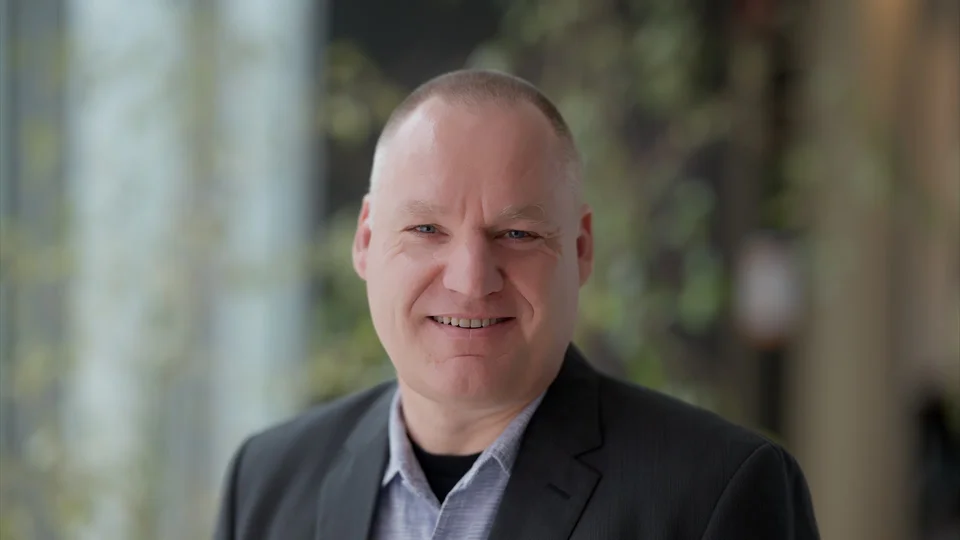
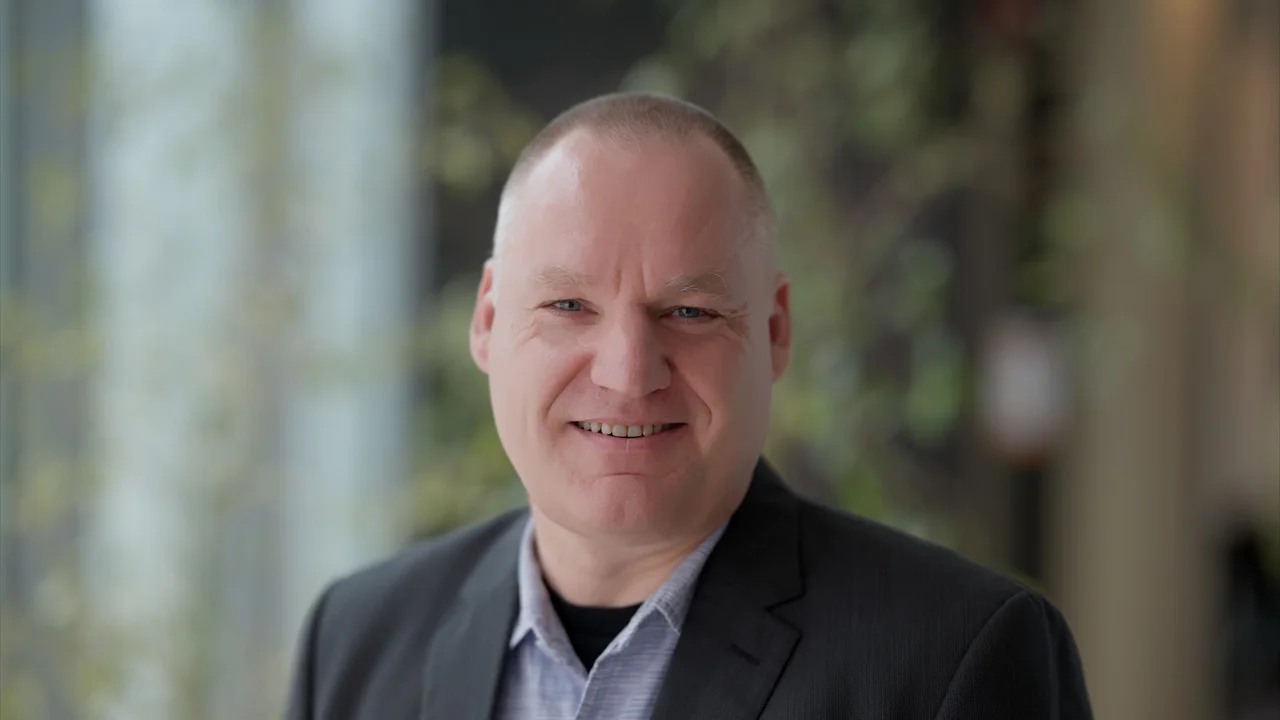
KAUST Professor of Computer Science and Electrical and Computer Engineering Wolfgang Heidrich has been named a Fellow of the Association for Computing Machinery (ACM), one of the highest honors in the field of computing.
About
KAUST Professor of Computer Science and Electrical and Computer Engineering Wolfgang Heidrich has been named a Fellow of the Association for Computing Machinery (ACM), one of the highest honors in the field of computing.
Heidrich is a pioneer in computational imaging and display, a field that advances imaging and display technologies through the joint design of optics, electronics and algorithms.
ACM, the world’s largest educational and scientific computing society, brings together educators, researchers and professionals to promote dialogue, share resources and address challenges in the field.
According to ACM, its Fellows program recognizes the top 1% of members for outstanding accomplishments in computing and information technology or exceptional service to the profession. Fellows are nominated by their peers and selected by a distinguished review committee.
This year’s 71 new Fellows hail from 14 countries and were chosen from among ACM’s global membership of more than 100,000 computing professionals. They are cited for contributions across a wide range of research areas, including AI for healthcare, computer graphics, data management, electronic mail and human-computer interaction, among others.
Heidrich joins an elite group of computer scientists that includes Jeffrey Dean, chief scientist at Google DeepMind and Google Research; Edouard Bugnion, vice president for innovation and impact at École Polytechnique Fédérale de Lausanne (EPFL); and Nobel laureate Edward A. Feigenbaum—all of whom are widely regarded as leaders in computing and information technology.
The German-Canadian researcher was selected for his “contributions to computational photography and displays, and to high dynamic range imaging and display,” according to his citation. He will be formally recognized during an ACM awards banquet on June 13 in San Francisco.
“Being named an ACM Fellow is a wonderful recognition not only of my own work but of the achievements of my whole team. ACM was the first professional association I joined, almost 35 years ago, as a second-year undergraduate student. It feels amazing to now join the ranks of individuals whose work I have admired for my whole career.”
Engineering vision
Since joining KAUST in 2014, Heidrich’s research has focused on computational imaging and display, drawing on computer graphics, machine vision, inverse methods, optics and perception. A central theme of his current work lies at the intersection of artificial intelligence and optics, particularly the use of learning-based techniques to design imaging systems and enable optics-assisted computation for artificial intelligence (AI).
Heidrich’s computational imaging research allows information about the real world to be encoded optically and captured through the combined design of hardware and software. These tightly coupled systems are powerful but notoriously difficult to design, relying on the close integration of algorithms, electronics and optics to capture and process images. Computational displays apply similar principles to monitors, televisions and projectors.
Working with colleagues in the Computational Imaging Group (VCCIMAGING), Heidrich has helped pioneer end-to-end learning approaches that automate the design of complex optical systems. Using inverse methods, machine learning and numerical optimization, Heidrich and his colleagues decode this information to recover detailed data on scene geometry, motion, spectral content and contrast.
This approach enables the team to address complex camera design problems, from developing systems with advanced capabilities, such as spectral or depth imaging, to improving conventional cameras through better engineering trade-offs, including slimmer form factors.
The group’s research spans new algorithms for accurate simulation, neural representations of optical systems and next-generation camera technologies. Among its key interests are spectral cameras, which capture information across a wide range of light wavelengths and enable applications that extend far beyond conventional imaging.
Recent projects have explored mounting these spectral cameras on microscopes, on underwater vehicles to monitor coral health, and on satellites to track agricultural crops. In collaboration with the KAUST Coral Restoration Initiative and the KAUST Center of Excellence for Generative AI, the team’s technology has supported both environmental sustainability and food security in the Kingdom.
Heidrich’s career includes numerous respected honors, including the 2014 Humboldt Research Award and the 2023 ACM SIGGRAPH Achievement Award. He was also named an IEEE Fellow in 2021, a Fellow of the National Academy of Inventors in 2024 and an Optica Fellow in 2025.