
The invisible architect
Most people never see the mathematics running beneath modern life. CEMSE Professor Miguel Urbano is making sure it works when it matters most.
About
Saudi Arabia manages some of the largest human gatherings on Earth during Hajj and Umrah. As millions of pilgrims congregate in Makkah each year, the application of an invisible mathematical framework can offer insight into the dynamics planners must anticipate to support effective coordination and decision-making.
In nine years, the Kingdom will host the FIFA World Cup, a crowd-management challenge where millions will move through stadiums, transport hubs, and fan zones under time pressure and heat stress. In an environment where safety and operational excellence are inseparable, shifting toward predictive engineering could be decisive.
The mathematical principles behind these large-scale settings extend well beyond events themselves. When artificial intelligence makes decisions with limited data, behind-the-scenes equations guide its logic. When cities plan climate-resilient futures, abstract formulas reveal where systems may break under pressure. Better models mean safer venues, smarter evacuations, and infrastructure that performs when it matters.
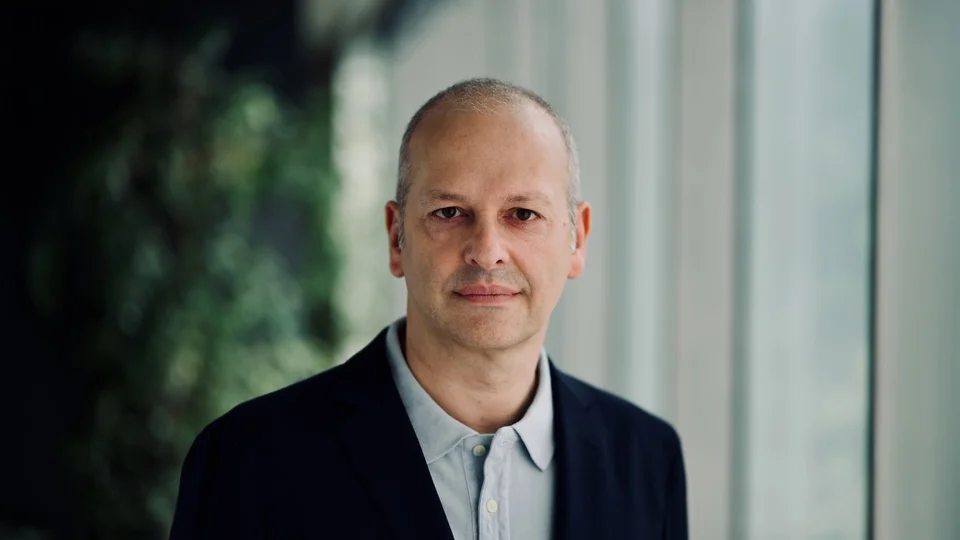
This is the hidden power of mathematics: a “no-drama” rule for extracting clarity from chaos, silently shaping how complex systems behave under the hood. This quiet, structural role is where KAUST Professor Miguel Urbano's work sits. His research does not operate on the surface of events, but beneath them, acting as the invisible architect whose mathematical tools provide the stability complex systems require when navigating uncertainty.
“Most people never see the mathematics that makes modern life work,” he said. “But every time a tool works reliably, there is usually deep mathematical theory underneath. My work focuses on building mathematical tools that make systems more reliable and controllable. That includes identifying where processes are active versus wasteful, optimizing behavior under extreme or congested conditions, and extracting trustworthy decisions from imperfect data."
Mathematics as infrastructure
Complex reality must be distilled into models that remain stable under uncertainty. Urbano addresses this challenge through partial differential equations (PDEs), which describe how quantities such as density or temperature evolve across space and time. These equations provide a mathematical structure for representing complex systems in a controlled way, even when data are noisy or incomplete.
That mathematical structure becomes especially important when labeled data are scarce, which is where partial differential equations and contemporary artificial intelligence converge.
In both crowd modeling and AI, PDE-based thinking spreads limited information across a system to ensure algorithms behave predictably rather than erratically. This distinction is vital in domains such as healthcare, energy systems, and public safety, where failure carries real consequences.
In this context, as Saudi Arabia advances its Vision 2030 ambitions around artificial intelligence, the emphasis increasingly shifts toward systems that can operate reliably in complex, real-world environments throughout the Kingdom.
“In practice, data are rarely complete or clean,” Urbano said. “A major part of the challenge is designing methods that remain robust under those constraints, rather than assuming ideal conditions.”
Mathematics for the millions
A central theme of Urbano’s work is free boundary problems (FBPs). These occur when you must solve a “what happens” question and a “where it happens” question simultaneously, such as determining the edge of melting ice, the front of a spreading forest fire, or the optimal exercise region in finance. Free boundaries describe how cracks propagate, alloys solidify, and porous materials absorb fluids; they can model reaction zones in processes where adding catalysts only helps in the regions where the reaction is actually occurring, so identifying “dead zones” can save resources.
Urbano’s Free Boundary and Interface Problems (FBIP) research group also develops methods that allow artificial intelligence to learn from very limited labeled data by exploiting structure in large unlabeled datasets.
In parallel, the team builds realistic models of crowd motion under congestion to capture how people slow down, reroute, or become trapped in dense conditions. Rather than tracking millions of individuals separately, the group’s crowd models treat people as a flowing “mass” in which density and direction evolve in space and time, more like water moving through pipes than individuals walking through doors.
That abstraction works well, but only up to a point. Crowds have a breaking point. Pack too many people into too small a space, and movement does not merely slow; it can stop altogether. Small bottlenecks can cascade into system-wide failures. Pressure builds near exits, and under extreme density, behavior becomes intermittent and chaotic.
Urbano’s research captures these critical transitions, reproducing real-world phenomena such as spontaneous lane formation and dangerous pressure buildups. The implications extend far beyond academic theory. City planners may be able to test “what-if” scenarios digitally before breaking ground, identifying risks that intuition alone might miss.
“In the Kingdom, where millions gather for the annual Hajj and Umrah pilgrimages, and where events like the Riyadh Season draw massive crowds, this isn’t abstract mathematics; it is simply a matter of public safety. Better predictive models mean safer venues, smarter evacuation planning, and infrastructure that performs when it matters most.”
Interconnected pathways
Urbano was drawn early on to questions where the behaviour of solutions to PDEs is subtle, and understanding structure and regularity is key. His career was shaped by a postdoc in Chicago with Emmanuele DiBenedetto, whose way of thinking about nonlinear diffusion and intrinsic geometry taught him to see technical estimates as a language for revealing how an equation truly behaves. Later, his collaboration with Luis Caffarelli at the University of Texas at Austin, and the chance to share his vision for free boundary problems, combining sharp intuition with rigorous classification and geometric ideas, had a similarly lasting impact.
“Moving to KAUST was a turning point,” Urbano said. “The scientific ecosystem allows me to pursue questions that remain rigorous while connecting to real problems and societal impact.”
Better foundations for people and systems
For Urbano, the ultimate value of these invisible frameworks lies in their ability to support both technological progress and human development.
“I’m genuinely motivated by the idea that deep mathematical reasoning can still open new doors, both by answering long-standing questions and by giving modern technologies firmer foundations. Mathematics is often less visible and can be perceived as “less applied” because it doesn’t always translate directly into a product or an immediate, visible payoff. Still, in a serious scientific environment, it is a crucial foundational discipline and a cornerstone for reliability, efficiency, and long-term innovation, and it should be actively nurtured.” Urbano said.
He stresses that investing in a new generation of Saudi researchers is essential to building the Kingdom's long-term research ecosystem. “The most meaningful progress will come from training young researchers here in Saudi Arabia,” he said, “so the next wave of advances is driven locally and recognized globally.”