Protecting the systems that power modern life
About
The modern world runs on interconnected cyber-physical and distributed digital systems.
When cyber-physical systems are compromised, the consequences can extend into the physical world. A cyberattack on a maritime system can disrupt supply chains. A breach in financial infrastructure can destabilize economies. An autonomous system exploit can paralyze transportation networks.
These scenarios raise a fundamental question: how can digital and cyber-physical systems be designed to remain secure and resilient in increasingly complex environments?
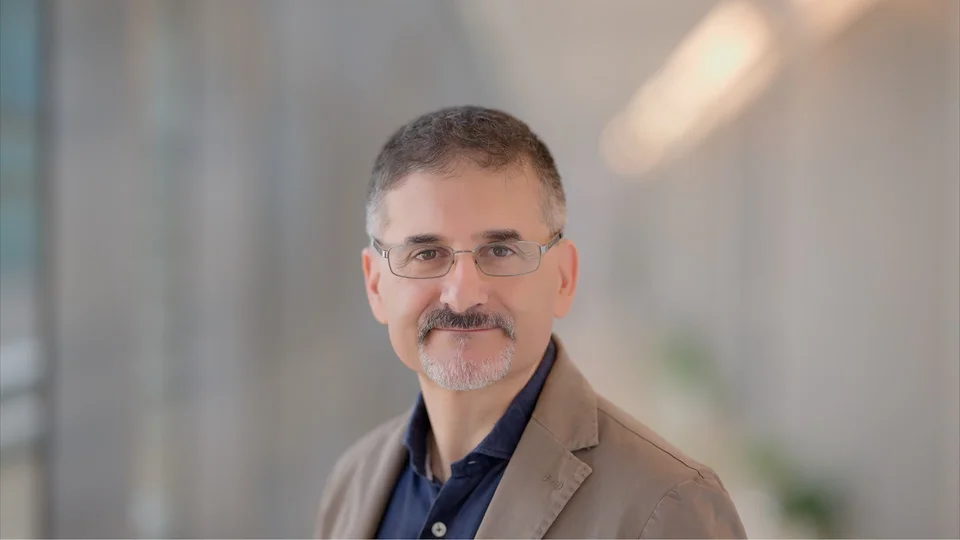
For three decades, KAUST Professor Roberto Di Pietro has advanced the understanding of how distributed and cyber-physical systems behave under adversarial conditions and how they can be designed to remain secure even when components are compromised. His work focuses on preserving system integrity, helping ensure that critical infrastructure, including transportation, energy and information networks, can operate securely and reliably.
Securing the systems that power modern life
At the center of Di Pietro's work is Critical Infrastructure Protection (CIP), focused on safeguarding the essential services that underpin modern life. Rather than adding security as an afterthought, his research aims to embed it directly into system architecture from the outset through a secure-by-design philosophy.
In practice, a secure-by-design approach is vital for water systems. In desalination infrastructure, compromises occur through subtle data manipulation rather than overt breaches. Traditional defenses often miss a shifted chemical reading or a spoofed pressure sensor. A secure-by-design architecture anticipates this by embedding independent physical verification directly into the system foundation. If a digital sensor is manipulated to report normal pressure while a pump is physically overworking, the architecture automatically detects the contradiction and isolates the node before the disruption can cascade. The same logic applies to energy networks where inherent system compartmentalization prevents small monitoring errors from causing large-scale failures.
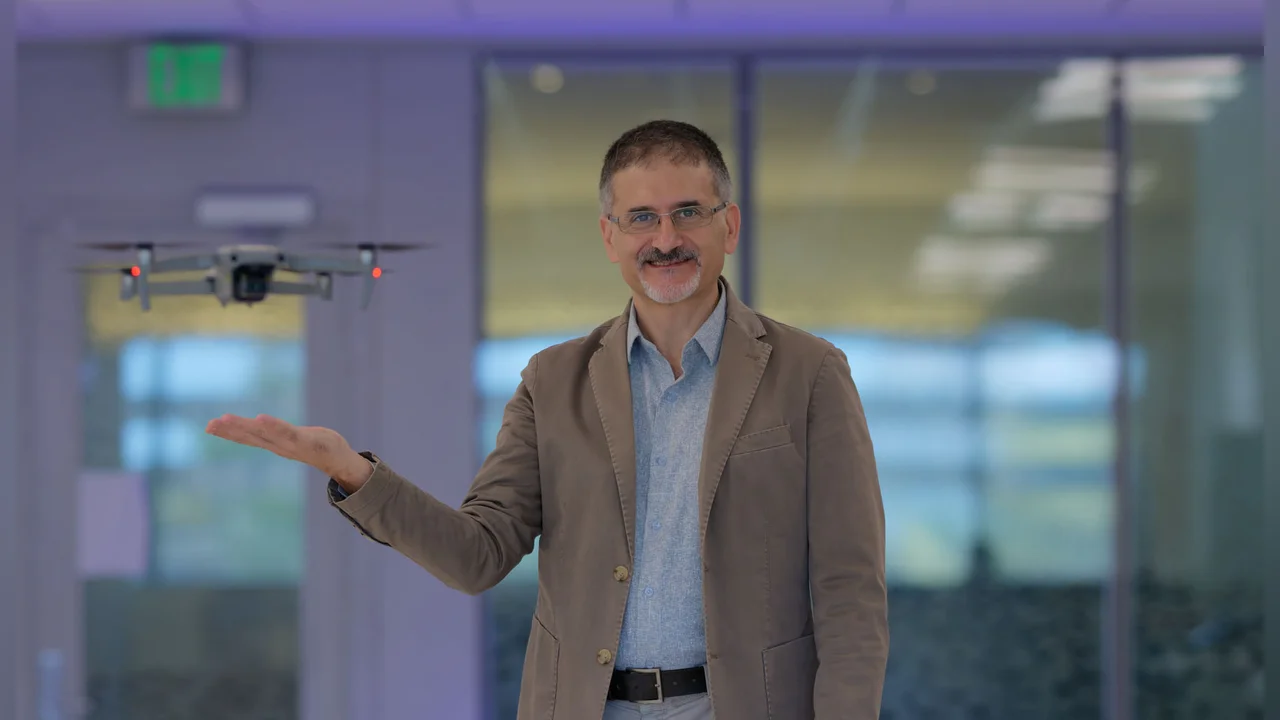
Di Pietro applies this philosophy to the security of the Internet of Things (IoT), autonomous platforms, digital markets, and satellite systems. To manage the scale of these complex networks, his work leverages artificial intelligence to identify anomalous behavior, including spoofing attempts, unauthorized access and irregular communication patterns, before they escalate.
"I focus on artificial intelligence-driven cybersecurity and the resilience of complex digital systems," Di Pietro said. "I work to understand how to make modern digital infrastructures secure and trustworthy, even in the presence of malicious actors. The impact of cybersecurity research extends far beyond academia; it influences how societies function and how safely digital innovation can progress."
In tandem, not in isolation
It was in 1990, while studying computer science at the University of Pisa in his native Italy, Di Pietro first recognized the growing exposure and fragility of emerging internet-based systems. What started as intellectual curiosity evolved into a sustained research career as digital infrastructure expanded and security lapses began to carry real-world consequences.
His career took him through prominent roles in industry, government and strategic consultancy. It began with a decade-long stint as a senior military technical officer at the Italian Ministry of Defense. He then spent four years as the Global Head of Security Research at Nokia Bell Labs (formerly Alcatel-Lucent/Nokia) and, while on the faculty at the University of Roma Tre and later at the University of Padua, provided advisory support to both the European Union and the United Nations. Each of these experiences strengthened Di Pietro's conviction that rigorous research and practical security solutions must develop in tandem, not in isolation.
"In my experience, the interaction between these two perspectives is extremely valuable: curiosity-driven research provides depth and innovation, while real-world engagement ensures ongoing relevance and practical impact."
Securing Saudi Arabia's digital sovereignty
There is a broader goal behind Di Pietro's work at KAUST: helping to develop the Kingdom's national capability in a digital age. As he notes, achieving Saudi Arabia's Vision 2030 diversification objectives requires cybersecurity to evolve from a defensive necessity into a strategic enabler.
"My goal is to help develop technologies, expertise and human capital that enable the Kingdom to build secure-by-design, resilient digital ecosystems, protecting critical infrastructure while supporting innovation and economic diversification," he said.
This ambition fits naturally within the broader push to diversify the economy. Di Pietro sees the university's role as more than institutional alignment; its interdisciplinary environment allows research to move from theory into practice.
"The interdisciplinary collaboration at KAUST enables me to translate theoretical research into practical technologies and intellectual property, supported and further strengthened by the KAUST National Transformation Institute (NTI). I must also acknowledge the collaboration within my research group and with colleagues at KAUST. It is thanks to these extraordinary students and scientists that I can advance my research vision."
Trustworthy AI and secure digital architectures
Over the next decade, Di Pietro believes that cybersecurity will increasingly intersect with artificial intelligence, large-scale digital infrastructures and cyber-physical systems. His research agenda will reflect this trend by continuing to explore AI-driven security mechanisms, resilient distributed architectures, and security solutions for emerging technologies such as autonomous systems and smart infrastructure.
In the short term, that means continued contributions to cyber threat detection systems, reliable communication mechanisms, and the trustworthiness of LLMs. In the longer term, his work may influence how future digital infrastructures are designed from the ground up to withstand adversarial conditions rather than being retrofitted to survive them.
"What motivates me is the opportunity to help build digital systems that people and institutions can trust. I want to help create a digital world where societies can confidently rely on technology, knowing that the systems supporting their economies, communications, and infrastructures are designed to remain secure even in the face of evolving threats."