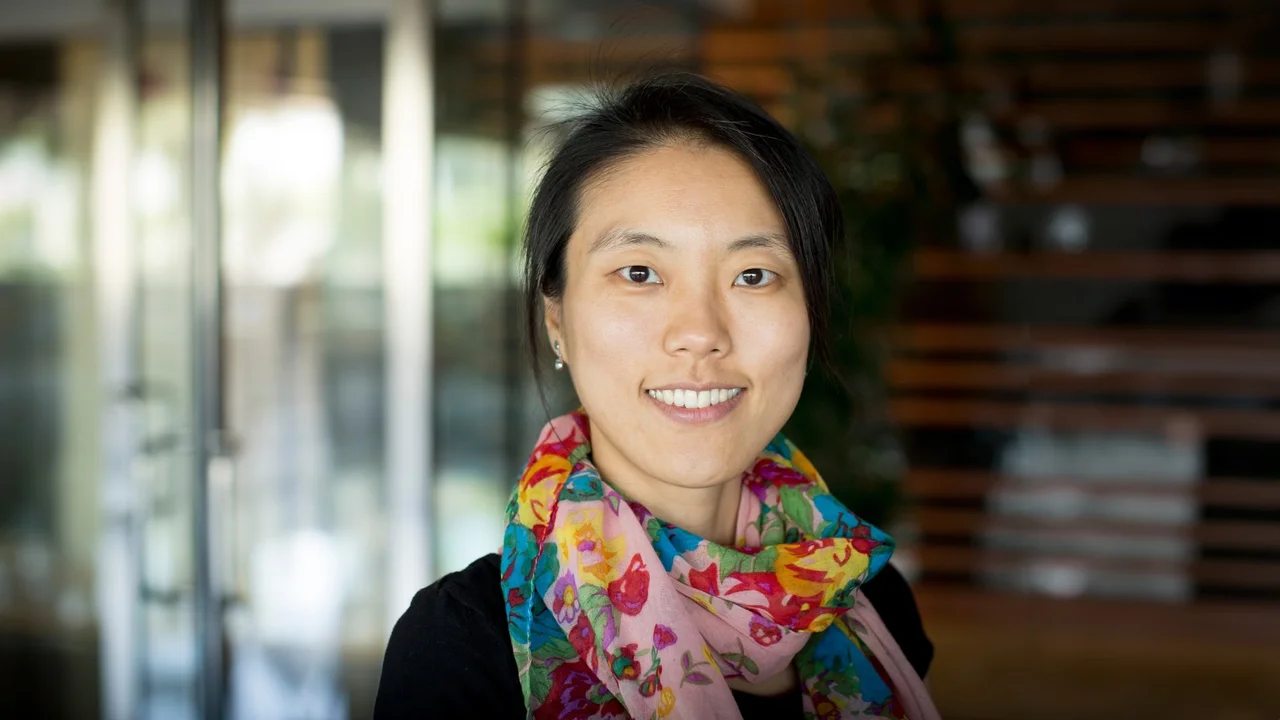
Professor Ying Sun receives the 2026 ENVR Distinguished Achievement Award
Professor Ying Sun has received the 2026 ENVR Distinguished Achievement Award from the American Statistical Association’s Section on Statistics and the Environment.
About
The KAUST professor of statistics was recognized for, according to her citation, "distinguished and sustained contributions to environmental statistics through advances in spatial and spatio-temporal modelling, high-performance statistical computing, and impactful interdisciplinary applications across climate, air quality, water, and renewable energy, and for outstanding mentoring and service to the environmental statistics community."
Sun will receive her award at this year’s Joint Statistical Meetings, which will be held in Boston, from August 1-6.
"I am deeply honored and grateful to receive the 2026 ENVR Distinguished Achievement Award," Sun said. “The award recognizes sustained contributions across several connected areas: scalable spatial and spatio-temporal modelling, high-performance statistical computing, and interdisciplinary environmental applications.
“It is especially meaningful because it comes from the environmental statistics community that has shaped much of my research career. This recognition reflects my work and the contributions of my students, postdoctoral fellows, collaborators and colleagues at KAUST and internationally.”
Setting a new standard in statistics
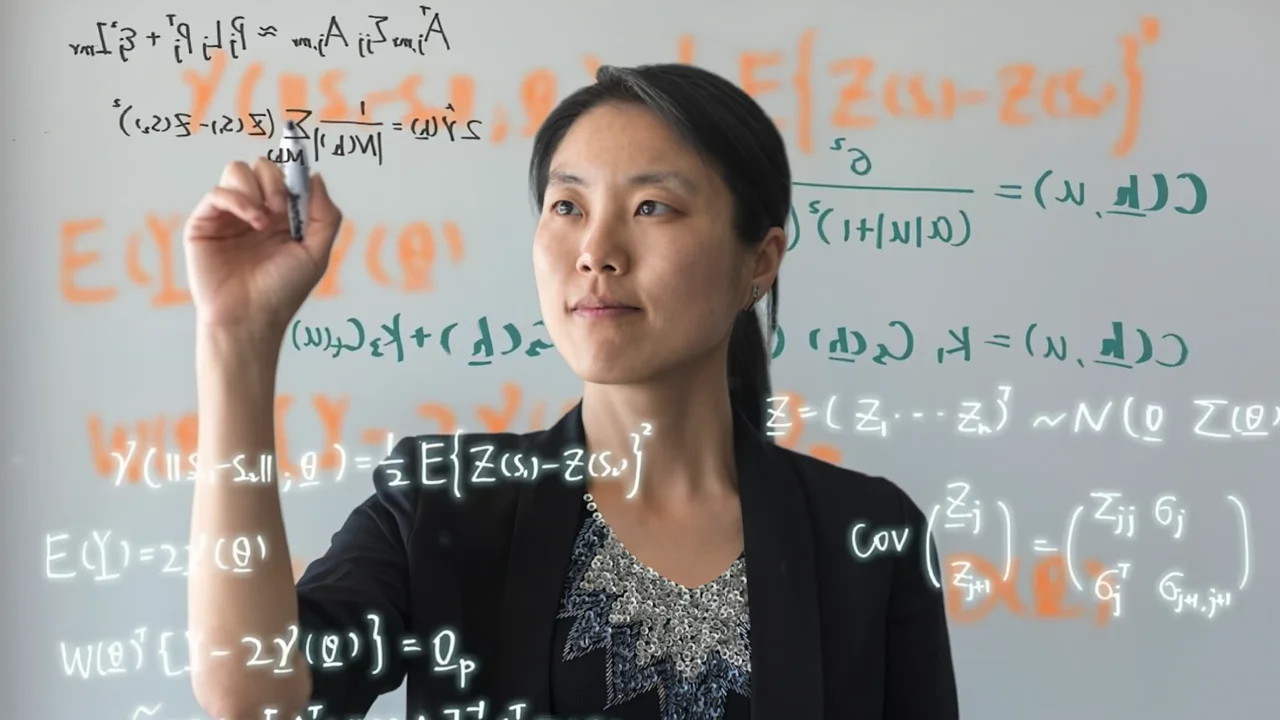
Sun, a leading figure in spatial and environmental statistics, is known for research spanning spatial and spatio-temporal modeling, artificial intelligence and high-performance statistical computing (HPC). Her methodological innovations, particularly in data visualization and the modeling of spatial and functional data, have set new standards in statistics.
Sun’s KAUST Environmental Statistics (EnvStat) Research Group develops scalable statistical and machine learning methods for massive environmental datasets, with applications in climate and weather modeling, air-quality forecasting, renewable energy and environmental monitoring.
"Our work contributes to areas such as air quality management, smart environmental monitoring and energy systems, while also advancing Saudi Arabia's growing leadership in AI and exascale computing. We have developed computationally efficient methods for large environmental datasets, including GPU-accelerated geostatistics and DeepKriging frameworks that integrate deep neural networks with spatial statistics.
"KAUST has created a uniquely interdisciplinary environment that enables researchers to combine statistics, AI and scientific computing to address large-scale global challenges."
For Sun, one of the most rewarding aspects of environmental statistics is seeing theoretical research translate into real-world impact: “Our methods have been applied to climate-model emulation, PM2.5 prediction, renewable energy forecasting, photovoltaic monitoring and water-treatment systems. This research directly affects sustainability, energy efficiency and public health."
Having worked in both the United States and Saudi Arabia, she has seen firsthand how statistics has evolved into an increasingly global, interdisciplinary and computational field: “Statistics is now a central pillar of modern AI and scientific computing, while still playing an essential role in uncertainty quantification and scientific reliability.
"Its future lies in combining deep learning with statistical uncertainty quantification and scientific interpretability. Environmental and climate problems generate enormous datasets, and advances in GPU and exascale computing now allow us to analyze these systems at scales that were previously impossible.
"Statistics will continue to play a critical role by ensuring reliability, uncertainty assessment and scientific rigor within AI-driven research."
The sun sets on KAUST
After 12 fulfilling years at KAUST, Sun is set to move to Switzerland this June, leaving behind a substantial legacy.
Since arriving at KAUST in 2014 as the second statistician on the faculty, she has become a key figure in building the University’s Statistics (STAT) Program. While at the University, she developed statistical models for air-quality forecasting using real-time environmental data in collaboration with KAUST’s HSE department; created predictive tools for wastewater treatment monitoring; designed fault-detection algorithms for photovoltaic systems; and advanced climate modeling through high-resolution spatio-temporal data analysis.
In addition to her research, Sun is known for a deep commitment to education, inclusion and the advancement of statistical science. Her mentorship and outreach efforts included internships for Saudi students, the Winter School for Saudi students, Statistics Open Day activities and her instrumental role in launching the Al-Kindi Distinguished Statistics Lectures. Many of her mentees have received international awards and have gone on to successful careers in academia and industry.
"KAUST has been a transformative experience for me professionally and personally. I have thoroughly enjoyed the opportunity to build supportive, collaborative research communities for the next generation of emerging statisticians.
"I will especially remember the strong international collaborations, my talented students and colleagues, and the opportunity to contribute to the growth of an ambitious research community in Saudi Arabia. Science is a collective effort, and I feel very fortunate to have worked with so many talented colleagues over the years."