
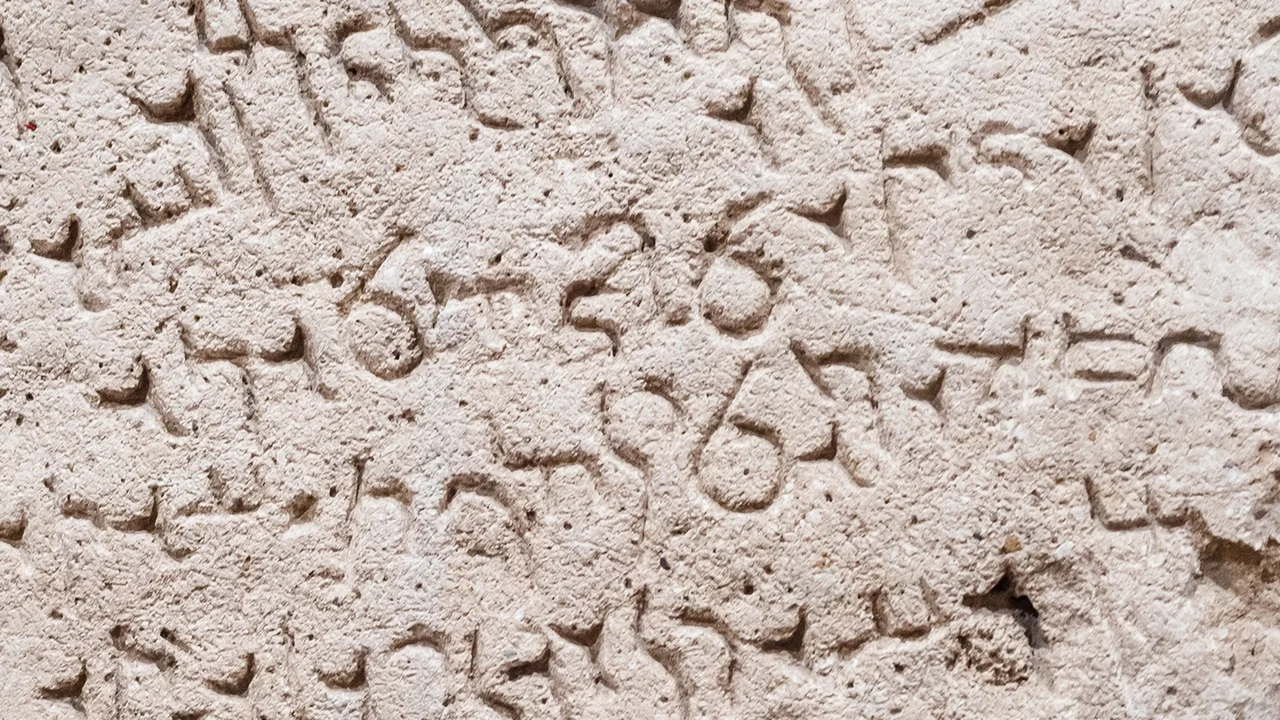
AI helps historians illuminate the past
An AI model developed at KAUST reconstructs inscriptions on ancient statues, helping historians analyze sources that might otherwise remain unreadable.
About
- The model, named DeepHadad, is trained to reconstruct damaged inscriptions to make them much easier to read.
- Unlike AI tools that use language patterns to predict missing words or letters, DeepHadad analyses the physical structure of inscriptions.
- To train the model, the researchers simulated damage to inscriptions, creating paired examples of intact and damaged texts that are scarce in existing sources.
What is DeepHadad and what does it do?
Inscriptions on statues are a vital resource for historians trying to understand ancient civilizations. However, weathering, erosion and intentional damage have caused much of this written record to be lost over the centuries.
Researchers at KAUST have developed DeepHadad, an AI model that creates digital reconstructions of physical surfaces that have deteriorated over time[1] The team has used the technology to improve the legibility of the heavily damaged inscriptions on an almost 3,000-year-old Hadad statue.
“DeepHadad helps historians and archaeologists study ancient written records that might otherwise be impossible to decipher,” says Jonathan Klein, KAUST research scientist who worked on the project. “This breakthrough opens new possibilities to enrich our understanding of the past.”
Read the full story on KAUST News.