Energy-Efficient and Sustainable Spatial Modeling Using GPU Computing
This talk highlights recent advances in energy-efficient and sustainable spatial modeling using GPU computing. It focuses on mixed-precision algorithms and scalable spatial statistical modeling that significantly reduce computational cost and power consumption while preserving scientific accuracy.
Overview
Energy efficiency has emerged as a major constraint for modern GPU-accelerated platforms as data-intensive modeling and AI-based scientific workloads continue to grow in scale and complexity. By relying on GPU-accelerated Gaussian process (GP) modeling and low-rank/mixed-precision parallel linear algebra, these approaches can enable high-resolution climate and environmental analysis at a fraction of the energy required by traditional methods. In alignment with Saudi Arabia’s Vision 2030 and its strategic expansion of national data center infrastructure, this work highlights the importance of reducing energy consumption at the application level and not only through hardware advances to accommodate a growing number of scientific and AI workloads within fixed energy budgets, thereby maximizing scientific throughput per watt and supporting sustainable digital growth in the kingdom.
Presenters
Brief Biography
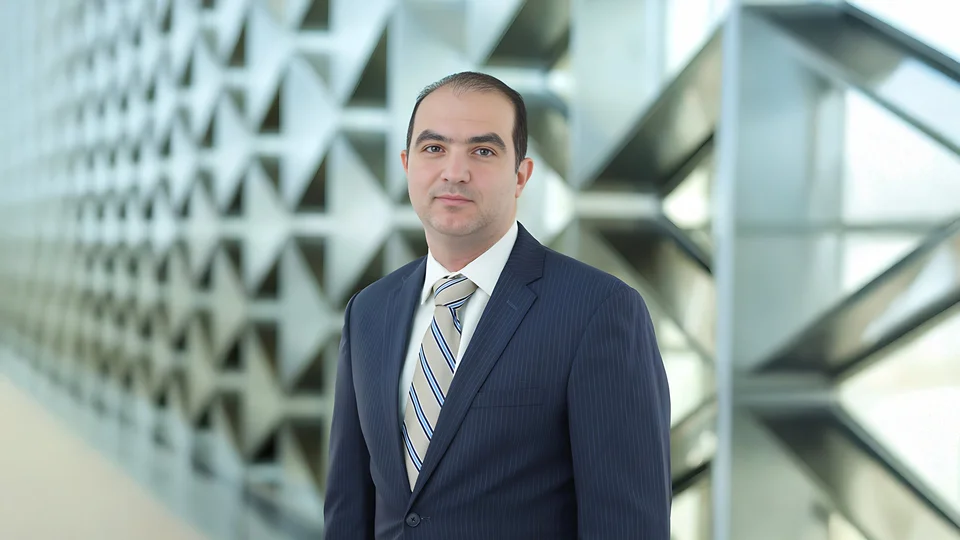
Dr. Sameh Abdulah is an HPC senior research scientist specializing in high-performance computing (HPC), and large-scale data analytics. He is a Senior Research Scientist at the Computer, Electrical and Mathematical Sciences and Engineering Division at KAUST. His work focuses on developing scalable algorithms and efficient software frameworks to address complex computational challenges across diverse scientific and engineering domains, including spatial statistics.
He serves as a key link between three major research groups within the extreme computing research at KAUST: the Hierarchical Computations on Manycore Architectures (HiCMA) group led by Professor David Keyes, the Spatio-Temporal Statistics & Data Science (STSDS) group led by Professor Marc Genton, and the Environmental Statistics (ES) group led by Professor Ying Sun. His primary role is to bridge advanced parallel linear algebra (LA) innovations with high-performance computing (HPC) in the spatial statistics field in the context of climate and weather applications.
Dr. Abdulah was honored with the ACM Gordon Bell Prize for Climate Modelling in November 2024. His team's pioneering work in climate simulation set new benchmarks in computational efficiency and resolution, transforming how climate data is modeled and analyzed. He was also part of the KAUST team nominated for the ACM Gordon Bell Prize in the general track for spatial data modeling/prediction in 2022.
He has significantly contributed to scalable matrix computations, particularly in designing numerical libraries that leverage modern hardware architectures. His expertise includes mixed-precision matrix computations, geostatistical modeling, and prediction. He has also developed cutting-edge methodologies for accelerating data-intensive simulations, enabling transformative weather/climate modeling advancements.
As a passionate advocate for open-source software, Dr. Abdulah is actively involved in collaborative research and software development, sharing tools and libraries that empower researchers globally. His work is driven by a commitment to innovation and interdisciplinary collaboration, harnessing the power of HPC to tackle some of the most pressing challenges in computational science.