
From Nanoparticles to Microwave Systems: Bridging Materials, Inks, and Additive Manufacturing
This talk introduces additive manufacturing as an emerging technique to realize low-cost, flexible, and wearable wireless communication and sensing systems.
Overview
With the advent of wearable sensors and the Internet of Things (IoT), there is a growing focus on electronics that can be bent, stretched, and conformally integrated onto the human body or mounted on non-planar objects. Given the massive scale of deployment - often reaching billions of devices - there is a critical need for extremely low-cost solutions, to the extent that such devices can become disposable. The flexible and low-cost requirements can be effectively addressed through additive manufacturing technologies such as inkjet and screen printing. This talk introduces additive manufacturing as an emerging technique to realize low-cost, flexible, and wearable wireless communication and sensing systems. The ability to print electronics on unconventional substrates such as plastics, paper, and textiles has opened up a wide range of new applications. Various innovative antenna and sensor designs realized through additive manufacturing will be presented. A multilayer printing process will be discussed, where dielectrics are printed in addition to metallic layers, demonstrating fully printed components. Several new functional inks and their use in tunable and reconfigurable components will also be shown, followed by system-level examples of wireless sensing applications.
Beyond fundamental research, this talk will highlight how innovations in printed electronics can transition into real-world products, illustrated through the example of a successful company that emerged from academic research to deliver scalable industrial sensing solutions—demonstrating a clear pathway from laboratory concepts to commercial impact. From a broader societal perspective, low-cost and printable electronics have the potential to democratize access to sensing and connectivity technologies, enabling applications in public health, environmental monitoring, smart infrastructure, and humanitarian contexts where affordability, scalability, and rapid deployment are essential.The promising results of these designs indicate that the day when electronics can be printed like newspapers and magazines through roll-to-roll manufacturing is not far away.
Presenters
Brief Biography
Atif Shamim received his M.S. and Ph.D. degrees in electrical engineering from Carleton University, Canada, in 2004 and 2009, respectively. He was an NSERC Alexander Graham Bell Graduate Scholar at Carleton University from 2007 to 2009 and an NSERC Postdoctoral Fellow from 2009 to 2010 at the Royal Military College Canada and KAUST.
In 2006, he joined the VTT Micro-Modules Research Center (Oulu, Finland) as an invited researcher. In August 2010, he joined the Electrical and Computer Engineering (ECE) Program at KAUST, where he is currently a full professor, chair of the ECE Program, and principal investigator of the IMPACTS Lab.
His research work has earned numerous awards, including Best Paper Awards at IEEE ICMAC 2021, IEEE IMS 2016, IEEE MECAP 2016, and IEEE EuWiT 2008. He also received first prize in the IEEE IMS 2019 3MT Competition, the IEEE AP-S Design Competition 2022, and second prize in the IEEE IMS Design Competition 2024. Additionally, he was recognized with finalist or honorable mention awards in several prestigious competitions, including the IEEE AP-S Design Competition 2020 and the R.W.P. King Prize for journal papers in IEEE TAP 2017 and 2020. He has been selected as a Distinguished Lecturer for IEEE AP-S (2022–2024).
In addition to his research accolades, Professor Shamim’s work has been recognized for its broader impact across innovation, industry and entrepreneurship. He received the King’s Prize for the Best Innovation of the Year (2018) for his work on sensors for the oil industry. In 2008, he was honored with the Ottawa Centre of Research Innovation (OCRI) Researcher of the Year Award in Canada. His innovative Wireless Dosimeter earned the ITAC SMC Award at the Canadian Microelectronics Corporation TEXPO in 2007. He has also won several business-related honors, including first prize in Canada’s National Business Plan Competition and the OCRI Entrepreneur of the Year Award in 2010.
Professor Shamim has been actively involved in contributing to the IEEE community through various technical, editorial, and leadership roles. He is a Fellow of IEEE and founded the first IEEE AP/MTT chapter in Saudi Arabia (2013). He served on the editorial board of IEEE Transactions on Antennas and Propagation (2013–2019), as a Guest Editor for an IEEE AWPL Special Issue (2019), and as an Associate Editor for the IEEE Journal of Electromagnetics, RF and Microwaves in Medicine and Biology (2020–2024). He has also participated in several IEEE Technical Committees, including those on Antenna Measurements (AP-S), Microwave Controls (MTT-S 13), and Additive Manufacturing (CRFID).
He currently chairs the IEEE AP-S Technical Committee on Wireless Communication and serves as Vice Chair of the IEEE AP-S MGA Committee.
Related People
Related Researchers
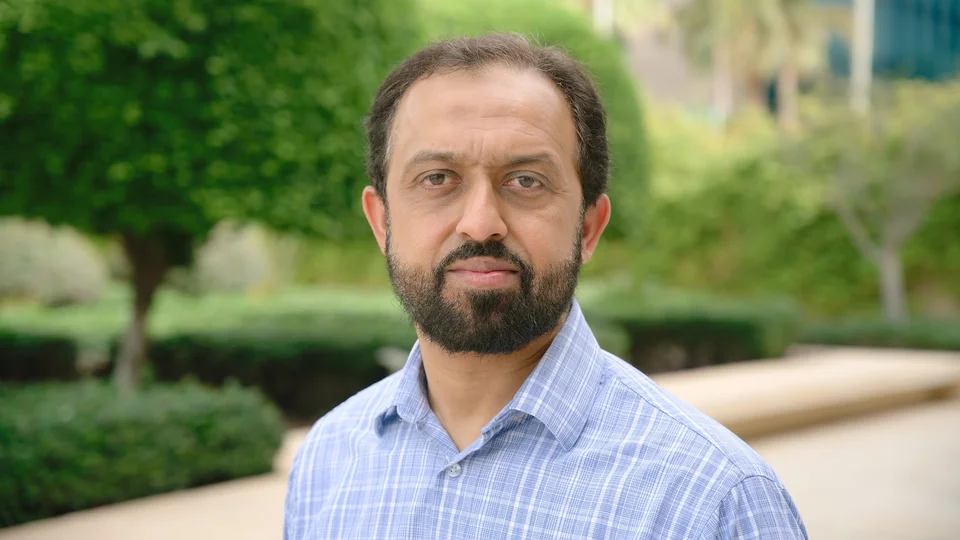
Atif Shamim
- Associate Dean for Special Projects, Computer, Electrical and Mathematical Sciences and Engineering