
Solvers That Don't Choose Sides
In this talk, I will present sTiles, a direct solver that decides sparse or dense tile by tile instead of once for the whole matrix, covering the full range from sparse to fully dense and outpacing established sparse direct solvers on the repeated factorizations that drive large-scale inference.
Overview
Solvers at the core of large-scale inference factorize the same matrix again and again: structure fixed, numbers changing. Convention demands a choice up front, sparse or dense, yet real matrices mix both: a sparse mesh, a few variables coupled to everything, structured bands in between. Choose sparse and you stall on the dense parts; choose dense and you pay for the zeros.
sTiles cuts the matrix into tiles, classifies each as sparse or dense from the pattern alone, and reuses that decision across every factorization. Across 60 benchmark matrices it beats MUMPS, PaStiX, CHOLMOD, symPACK, and PARDISO by 1.8× to 12.5× in total factorization time, and the same tiling supports selected inversion. The talk closes with the driving application: Bayesian inference with INLA, where a single model fit issues thousands of factorizations of one fixed pattern.
Presenters
Brief Biography
Esmail Abdul Fattah holds a Ph.D. in Statistics from KAUST, where he is now a postdoctoral researcher in high-performance computing. His work connects the two fields to scale Bayesian inference, bringing HPC to approximate methods such as INLA. This includes GPU-accelerated sparse factorizations and selected inversion for structured matrices through the sTiles framework, and extending INLA to non-sparse models. He also works on applications in spatial and spatio-temporal disease mapping.
More information: https://esmail-abdulfattah.github.io
Related People
Related Researchers
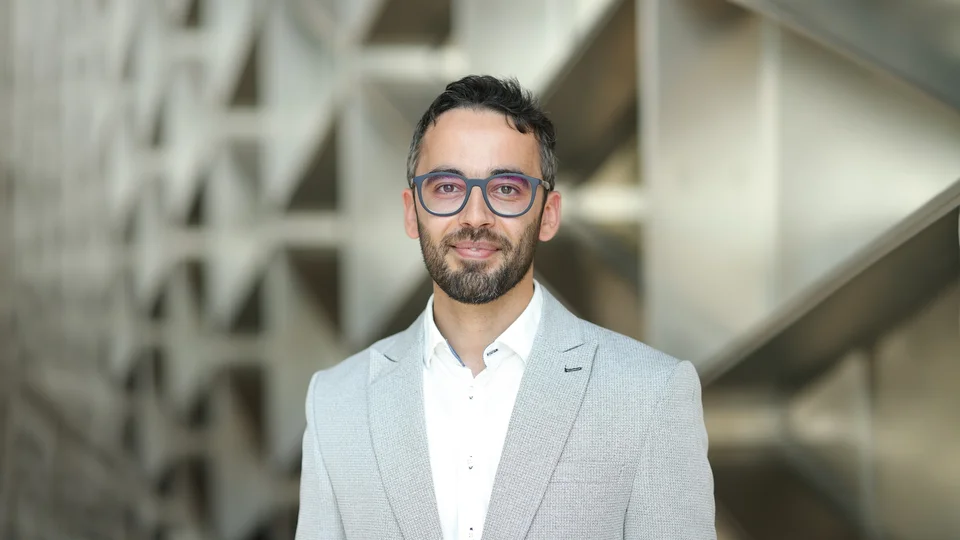
Esmail Abdul Fattah
- Postdoctoral Research Fellow, Statistics