
Quantum Communications
This seminar introduces the basic principles of quantum communication from a physical-layer perspective.
Overview
Quantum communication is becoming an important research area, offering new opportunities for secure communication, quantum networks, and advanced optical systems. While most studies focus on quantum security and protocols, understanding the physical layer is also important for designing practical quantum communication systems.
This seminar introduces the basic principles of quantum communication from a physical-layer perspective. We begin with fundamental concepts of quantum mechanics, including quantum states, superposition, and quantum measurements. We then discuss quantum detection and introduce the Helstrom bound, which defines the best possible detection performance.
Next, we explain how information can be transmitted using laser light and coherent states, focusing on simple modulation techniques such as on-off keying (OOK) and binary phase-shift keying (BPSK). We also discuss practical optical receivers, particularly homodyne detection, and compare their performance with optimal quantum receivers.
Finally, we briefly discuss the effects of channel loss, channel estimation, and some open research challenges in quantum communications.
Presenters
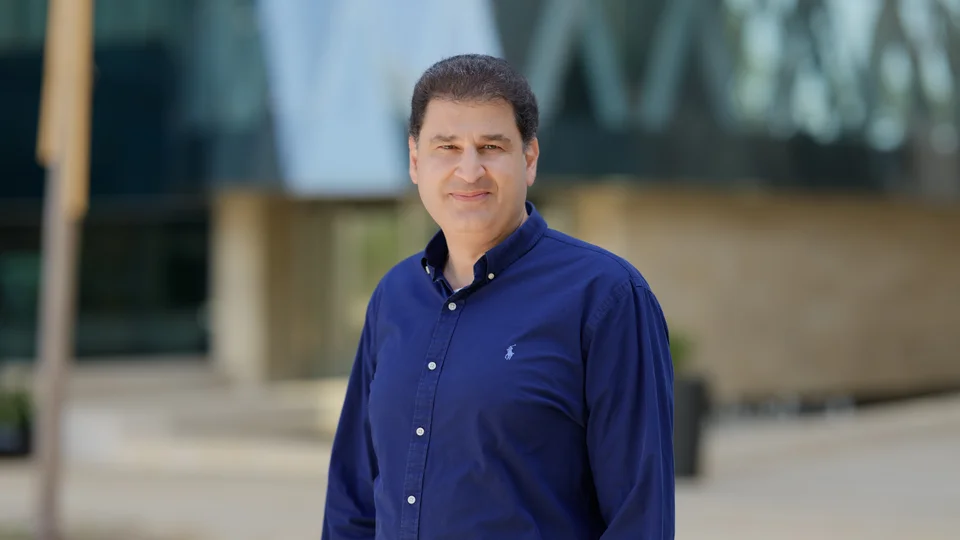
Salama Ikki, Full Professor, Electrical and Computer Engineering Department, Lakehead University (LakeheadU), Canada
Brief Biography
Professor Salama S. Ikki is a Full Professor in the Department of Electrical and Computer Engineering at Lakehead University, Canada. He earned his Ph.D. in Electrical Engineering from Memorial University of Newfoundland in 2009. Prior to joining Lakehead University in 2013, he held an academic position at Newcastle University in the United Kingdom. He is a Senior Member of the IEEE and was a Visiting Research Professor at Aalto University, Finland, under the Nokia Visiting Professor program in 2022.
Professor Ikki is internationally recognized for his contributions to wireless communications and signal processing. His research focuses on 5G and 6G wireless networks, massive and cell-free MIMO systems, visible light communications (VLC), millimeter-wave communications, UAV networks, localization and positioning, channel estimation, physical-layer security, and resource allocation for next-generation communication systems. His research group has made significant contributions to the advancement of 4G and 5G technologies, and he has published more than 200 journal and conference papers, accumulating thousands of citations and a strong international research impact.
In addition to his research achievements, Professor Ikki has played an active leadership role in the international communications research community. He serves as an Editor for IEEE Transactions on Wireless Communications and previously served on the editorial boards of IEEE Communications Letters and IET Communications. He has received numerous awards and recognitions for excellence in research, teaching, professional service, and scholarly impact, including repeated inclusion among the world's top 2% most-cited scientists and multiple best paper awards. Through his research, mentorship, and professional service, Professor Ikki continues to contribute to the development of advanced wireless communication technologies and the training of future engineers and researchers.
Related People
Hosts
Basem Shihada
- Program Chair, Computer Science