
Geometry and Thermal Engineering of VCSELs for Enhanced Performance
This thesis presents a comprehensive approach to enhancing VCSEL performance through geometry engineering and passive thermal management to enable next-generation high-power and high-speed photonic systems, such as speckle-free imaging and ultrafast random number generation.
Overview
Vertical-cavity surface-emitting lasers (VCSELs) are key light sources for optical communication, sensing, imaging, and emerging photonic systems due to their compact structure, low power consumption, and compatibility with large-scale array integration. However, conventional VCSEL designs face fundamental limitations in high-power and high-speed operation, including current crowding, thermal accumulation, efficiency degradation, and strong spatial coherence-induced speckle noise. These challenges impose critical trade-offs between output power, modulation bandwidth, thermal stability, and beam quality.
This thesis presents a comprehensive approach to enhancing VCSEL performance through geometry engineering and passive thermal management. First, an annular cavity design is introduced to address current crowding in top-emitting VCSELs. By redistributing the current injection region into a ring-shaped geometry, lateral current uniformity is significantly improved, resulting in reduced series resistance, suppressed self-heating, delayed thermal rollover, and enhanced optical output power. The improved electrical and thermal characteristics further enable superior orthogonal frequency division multiplexing (OFDM) communication performance.
Second, coherence engineering is achieved using eccentric annular VCSEL structures. By breaking circular symmetry and tailoring internal ray dynamics, the cavity supports chaotic and multimode emission behavior. This leads to reduced spatial coherence, enabling speckle-free imaging with improved modulation transfer function (MTF) performance. In addition, the chaotic dynamics facilitate high-speed physical random number generation, demonstrating the multifunctionality of geometry-engineered VCSELs.
Finally, a passive thermal management strategy based on radiative cooling is developed to further enhance device performance and reliability. A dual-channel heat dissipation architecture is proposed by integrating carbon-based radiative coatings and infrared-transparent polyethylene (PE) film packaging. This approach enables simultaneous conductive and radiative heat extraction, reducing thermal resistance, lowering junction temperature, and improving output power stability. Experimental results demonstrate reduced thermal rollover, improved high-temperature operation, and enhanced optical wireless communication performance without additional energy consumption.
Overall, this work establishes a unified framework that integrates cavity geometry engineering and passive thermal management to simultaneously optimize power performance, coherence properties, and communication capability in VCSELs. The proposed strategies provide scalable and practical solutions for next-generation high-power and high-speed photonic systems.
Presenters
Brief Biography
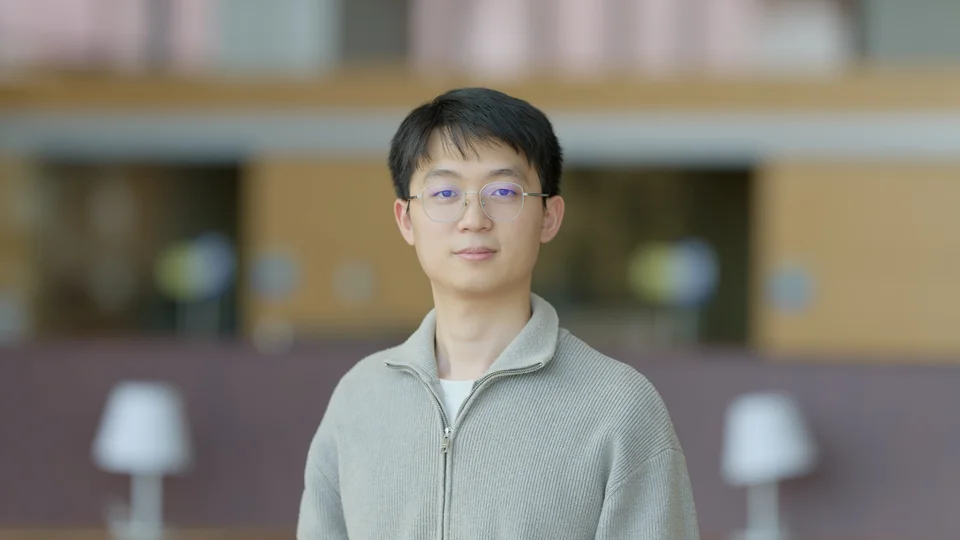
Wenbo Yan received the B.Eng. degree in Materials Science and Engineering from South China University of Technology, China, in 2021, and M.S. degree in Material Science and Engineering in 2022 from King Abdullah University of Science and Technology (KAUST). He is currently pursuing the Ph.D. degree in Electrical and Computer Engineering at KAUST under the supervision of Prof. Boon S. Ooi.
Related People
Related Researchers
Advisors
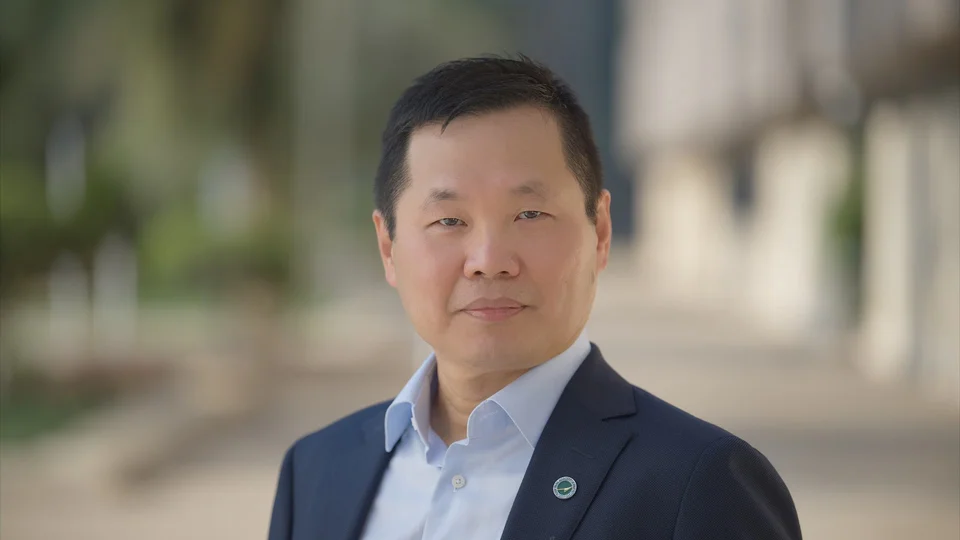
Boon Ooi
- Al-Khawarzmi Distinguished Professor, Electrical and Computer Engineering