Understanding Practical Optimization in Machine Learning
This dissertation studies how practical optimization methods used to train modern machine learning systems can be better understood by analyzing the objectives, updates, assumptions, and approximations that arise in their actual implementation.
Overview
Modern AI systems are built by training large and increasingly complex machine learning models, making optimization one of the central algorithmic challenges behind their success. Many practical optimization methods work well empirically before they are fully understood theoretically. Moreover, these methods often differ substantially from the idealized algorithms used in classical analyses: they operate on sketches or submodels of the model, modify gradients through clipping or normalization, use layer-wise non-Euclidean update directions, or rely on approximate oracle computations. This thesis studies these discrepancies through the lens of optimization. Its guiding principle is to analyze the objective, update, assumptions, and oracle induced by the implemented method, rather than by a simplified proxy.
The first part studies submodel and sparse training. We analyze Independent Subnetwork Training and show that computing gradients after sketching the model can shift the fixed point of the method, creating an irreducible error for the original objective. We then study Model-Agnostic Sparsified Training, a sketch-aware formulation that explains dropout-like and sparse methods as optimizing an objective that explicitly incorporates the sketching mechanism.
The second part focuses on private optimization. We analyze adaptive quantile clipping, a widely used technique motivated by the difficulty of tuning clipping thresholds in differentially private learning. The analysis shows that adaptive clipping reduces the tuning burden, but does not remove the bias introduced by clipping. We then propose smoothed normalization with error compensation and obtain convergence guarantees for distributed private optimization under standard assumptions.
The third part studies modern LMO-based optimizers and the assumptions needed to analyze them faithfully. We develop Gluon, a layer-wise framework for Muon/Scion-style methods that revisits standard smoothness assumptions through generalized, layer-wise models supported by trajectory measurements. We also analyze inexact Muon updates, showing how approximate orthogonalization affects convergence, step sizes, momentum, and hyperparameter sensitivity. Overall, the thesis argues that practical optimization methods in machine learning can be better understood, and ultimately improved, by explicitly modeling the structure that makes them practical.
Presenters
Brief Biography
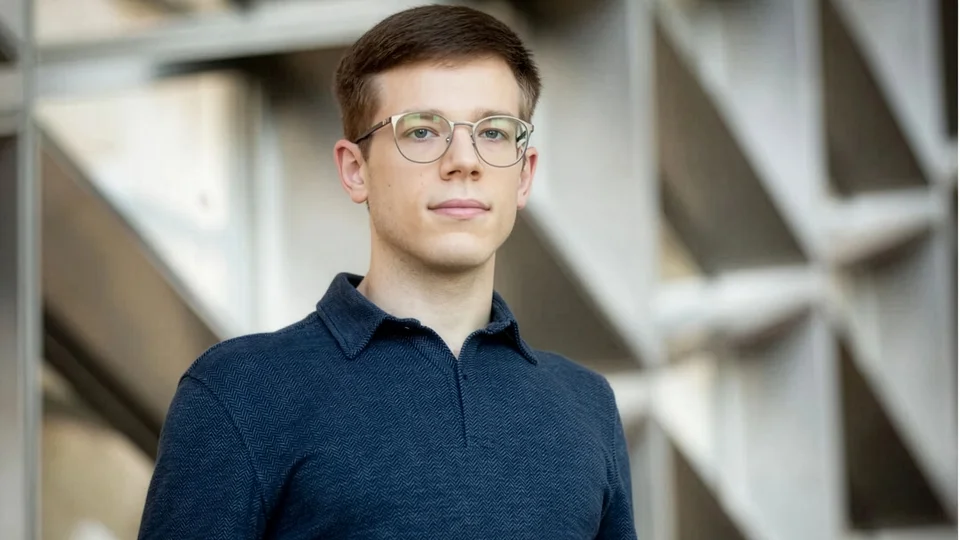
Egor Shulgin is a Ph.D. candidate in Computer Science at King Abdullah University of Science and Technology (KAUST), advised by Professor Peter Richtárik. His work has appeared at venues including ICML, ICLR, AISTATS, and UAI. During his PhD, he conducted research internships at Apple and Samsung AI Center in Cambridge, UK. He received his BSc in Applied Mathematics and Physics from the Moscow Institute of Physics and Technology in 2019.