DLS-Based Sunlight Communication: From Theory to Prototype
This thesis presents the Sun-Fi system, an indoor OWC architecture that modulates natural sunlight through a DLS array integrated into building window glass, delivering communication, illumination, and positioning services with ultra-low transmit-side energy consumption.
Overview
The proliferation of smart indoor environments and the exponential growth of wireless data demand have placed increasing pressure on conventional RF and LED-based optical wireless systems, both of which face fundamental limitations in daytime sustainable operation.
The theoretical foundation is established by deriving physics-based channel models for SISO and MIMO configurations, with a joint data rate-illumination optimization demonstrating a peak spectral efficiency exceeding 7000 bits/s/Hz and a maximum data rate of approximately 233 Mbps, at the modeled 30 μs symbol duration, within a feasible operating range of up to 10.2 m. Building on this, a multi-user MISO downlink architecture employing TDM and tunable lens-aided beam steering achieves channel capacities exceeding 500 bits/s/Hz for a 7×7 DLS cell configuration under nominal 5000-lux illumination, and exceeding 4000 bits/s/Hz for a 5×5 configuration under real seasonal sunlight data for Riyadh, Saudi Arabia.
To overcome the computational intractability of static optimization in dynamic deployments, the multi-user MIMO problem is formulated as an MDP and solved by an AC RL algorithm that achieves max-min capacities within 1.0% to 4.3% of a GA near-optimal benchmark while reducing the computation time by roughly four to six orders of magnitude, to a mean inference time of 0.34 s. Concurrently, the DLS window is established as a 3D indoor positioning infrastructure: closed-form CRLB bounds are derived via analytical channel gain gradients, and a Gauss-Newton MLE is validated against these bounds, achieving PEB of 1.34 mm and 139.7 mm at depths of 0.8 m and 3.5 m, respectively.
A complete Sun-Fi prototype is implemented and experimentally validated, spanning the full hardware-software signal chain from the transmitting application through the FPGA controller, R2R DAC, DLS array, PD array, TIA array, DAQ, and receiving application. A 12-cell array demonstrates zero bit errors over 12,827 decoded bits in SISO mode and a BER of 10⁻³ over 102,000 decoded bits in MIMO mode, within a TDM/Polarization-Division architecture theoretically supporting up to 106 simultaneous cells. These results establish Sun-Fi as a rigorous, hardware-validated foundation for ultra-low transmission-energy indoor wireless connectivity.
Presenters
Brief Biography
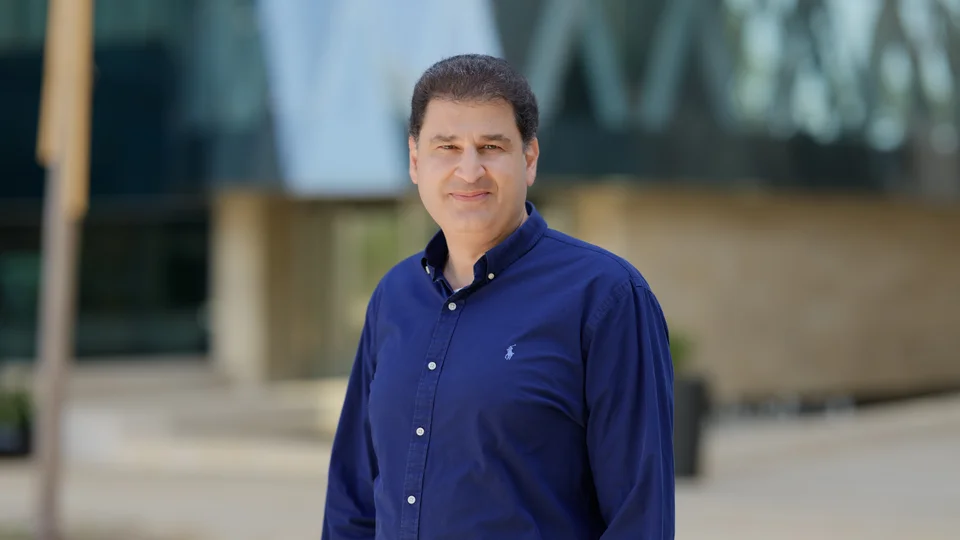
Yuxiang Liu is a Ph.D. candidate in Electrical and Computer Engineering at King Abdullah University of Science and Technology (KAUST), where he has studied since August 2021. His research is on Sun-Fi, a wireless communication system that uses modulated sunlight to send data. He built a complete Sun-Fi prototype on his own, covering everything from the hardware to the protocol layer. This included an FPGA-based control board, high-precision DAC driver arrays for dual-cell liquid crystal shutters (DLS), photodiode and transimpedance-amplifier receivers, and the MAC-layer coding and scheduling. On the theory side, he modeled the system at the physical level, derived channel capacity and performance limits for SISO, MISO, and MIMO setups, and developed a 3D indoor positioning method that uses sunlight. He has published first-author papers at flagship conferences including IEEE ICC and IEEE WCNC, and more of his work is under review in IEEE journals. In 2025 he was named to MIT Technology Review’s Innovators Under 35 (Middle East and North Africa). He has also won First Prize in the 6G Summit Young Scholar Competition, an Honorable Mention in the IEEE ComSoc Student Competition 2025, and a Silver Award at the 2026 China International College Students’ Innovation Competition (Middle East Regional).