Novel Deep Learning Approaches for Modern Genetics: Bridging Insights from Cytogenetics, 3D Genomics, and Next-Generation Sequencing
This dissertation presents four deep learning approaches spanning cytogenetics, three-dimensional genomics, and sequence-based analysis of recombination to address complementary analytical challenges across genome organization and variation. Novel Deep Learning Approaches for Modern Genetics: Bridging Insights from Cytogenetics, 3D Genomics, and Next-Generation Sequencing
Overview
Advances in microscopy and high-throughput sequencing have expanded our ability to investigate genome organization and variation, from chromosome morphology and three-dimensional chromatin interactions to the sequence and epigenomic features associated with meiotic recombination. Interpreting these complementary data remains challenging because of limited training annotations, variability across experimental conditions, the scale and sparsity of sequencing-derived contact maps, and difficulties in connecting model predictions to biologically informative features. Addressing these challenges requires computational approaches that are efficient, robust, and interpretable.
This dissertation presents four deep learning approaches spanning cytogenetics, three-dimensional genomics, and sequence-based analysis of recombination. KaryoXpert combines morphology-based processing with deep learning for automated chromosome segmentation and classification. Its simulated training data avoid the need for manually annotated chromosome instance masks in metaphase training images, reducing annotation requirements while supporting robust karyotyping. BR-ChromNet extends this analysis to the identification and localization of chromosome banding variants. By combining banding features, conditional random field-guided mapping, and ensemble learning, it produces spatially explicit predictions and reduces false positives, supporting more interpretable cytogenetic analysis.
Moving from chromosome images to sequencing-derived chromatin contact maps, YOLOOP formulates genome-wide chromatin loop mapping as an object-detection task. It enables efficient detection across different cell types, species, experimental protocols, and map resolutions, with fine-tuning extending its applicability to sparse contact maps aggregated from single-cell Hi-C data. At the sequence level, RHSNet combines deep learning, activation-based attribution, and signal processing to predict recombination hotspots and quantify the model-derived contributions of associated features. It analyzes DNA sequences and can incorporate histone-modification profiles from chromatin immunoprecipitation sequencing (ChIP-seq). Low-pass filtering of attribution scores enables the extraction of informative motifs of variable lengths. Analyses across studies, sexes, populations, and species characterize associations involving PRDM9 binding motifs, GC content, and histone modifications, and reveal differences in hotspot-associated features, including in species lacking PRDM9. These results connect hotspot prediction with quantitative interpretation of sequence and epigenomic information.
Together, these studies demonstrate how deep learning can address complementary analytical challenges across genome organization and variation. By reducing annotation requirements, localizing chromosome banding variants, accelerating chromatin loop detection, and characterizing recombination hotspot determinants, this dissertation provides computational tools that link chromosome-level observations, three-dimensional interaction patterns, and sequence-associated features to support biological investigation.
Presenters
Brief Biography
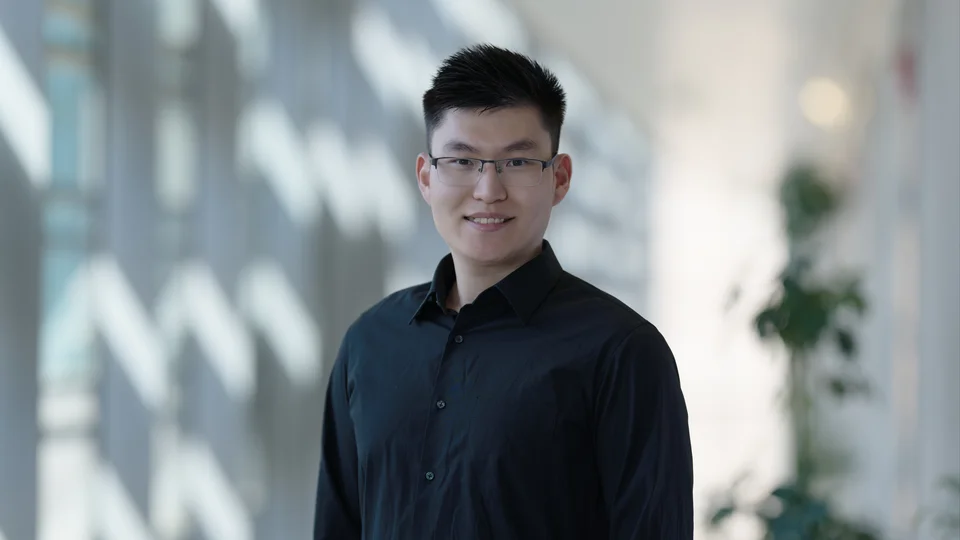
Siyuan Chen is a Ph.D. candidate in the Computer Science Program at King Abdullah University of Science and Technology (KAUST), supervised by Prof. Xin Gao (KAUST). During his Ph.D., he has published 14 journal articles, 8 as first or co-first author, in journals including Science Advances, Genome Research, Nature Communications, and the IEEE Journal of Biomedical and Health Informatics. He has also served as a reviewer for Bioinformatics, Briefings in Bioinformatics, BMC Bioinformatics, and the MICCAI conference.