From Foundation Models to Real World Lifelong Systems
This thesis investigates how foundation models can be endowed with the capacity to adapt continually to real-world problems.
Overview
Recent advances in large foundation models raise the prospect of artificial intelligence integrated deeply into everyday life. However, these models are typically trained on static datasets and evaluated against a finite set of benchmarks, whereas the real world is substantially more complex and dynamic. This thesis investigates how foundation models can be endowed with the capacity to adapt continually to real-world problems. We disentangle this problem to two complementary directions: (1) the proxy investigation of continual learning mechanisms, and (2) the development of adaptation methods for more complex modern Large Language Models (LLMs) and Vision-Language Model (VLM).
To investigate continual learning mechanisms, we first study the feature space of vision foundation models. We show that a pretrained foundation model already possesses a highly discriminative representation space for previously acquired knowledge. Adapting the model to new knowledge therefore can be achieved through reconstructing a representation space in which both new and existing knowledge remain mutually discriminative. We then analyze the model's parameter space and demonstrate that, within the Transformer architecture, knowledge updates primarily occur in the feed-forward network (FFN) layers. Modifying these layers helps integrate new knowledge while preserving previously acquired knowledge. To further understand the continual learning problem under real-world constraints, we evaluate continual learning algorithms subject to different training budgets and supervision levels, and propose an algorithm that uses the most informative labeled samples to update the model while exploiting abundant, albeit noisy, unlabeled data as regularization.
The recent emergence of more capable LLMs and VLMs offers another important basis for real-world artificial intelligence. These models are trained on massive datasets and incorporate distinct architectural components, making adaptation without catastrophic forgetting considerably more challenging. We investigate theoretically grounded preference optimization algorithms for both autoregressive and diffusion LLMs, with the aim of producing more human-aligned responses while preserving the models' original knowledge. Furthermore, we investigate the end-to-end training of VLMs in real-world scenarios, seeking to preserve their reasoning capabilities while improving their ability to make decisions based on that reasoning. To this end, we introduce a theoretically grounded hybrid advantage-and-return estimation method that enables end-to-end reinforcement learning for VLMs.
Presenters
Brief Biography
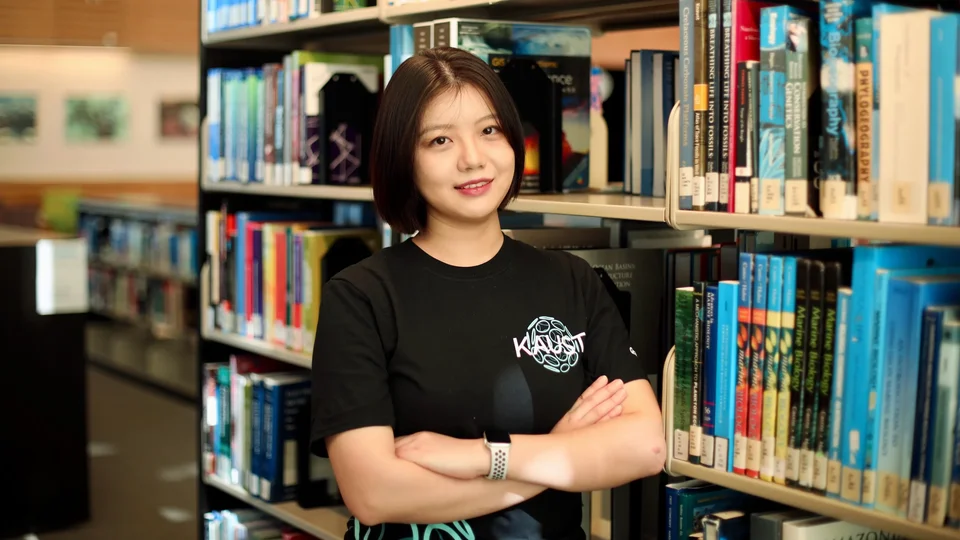
Wenxuan Zhang is a Ph.D. student in Computer Science at King Abdullah University of Science and Technology (KAUST). She is part of the Vision-CAIR group advised by Prof. Mohamed Elhoseiny. Before joining KAUST, she obtained an M.S. degree in Applied Mathematics and Computer Science from the University of Penn (Penn) in 2021 and B.S. degree in Mathematics and Applied Mathematics from Beijing Normal University (BNU) in 2019.