KAUST Neuro AI
KAUST NeuroAI is an interdisciplinary research community advancing the integration of neuroscience, artificial intelligence, statistical modeling and signal processing.
The team investigates how neural activity encodes emotion, cognition, intention and social interaction in real-world environments. By combining simultaneous EEG–fNIRS recordings with advanced AI-driven modeling, KAUST NeuroAI develops scalable methods to decode, interpret, and utilize brain signals in naturalistic settings.
This work spans foundational neural modeling, real-time brain–computer systems, multimodal representation learning, and clinically grounded EEG analytics. The effort bridges theoretical AI advances with deployable neurotechnology that is robust, interpretable, and socially relevant.
Research Vision
KAUST NeuroAI research is driven by a central challenge: how to build intelligent systems that can reliably interpret, generalize, and act upon neural signals in realistic, noisy and heterogeneous settings.
The lab pursues this challenge through:
- large-scale neural modeling across modalities and populations,
- principled integration of learning theory, signal processing, and neuroscience, and
- an emphasis on robustness, interpretability, and real-world applicability.
Rather than focusing on constrained laboratory conditions, KAUST NeuroAI emphasizes naturalistic data, scalable architectures and trustworthy AI, enabling neural technologies that move beyond proof-of-concept toward practical impact.
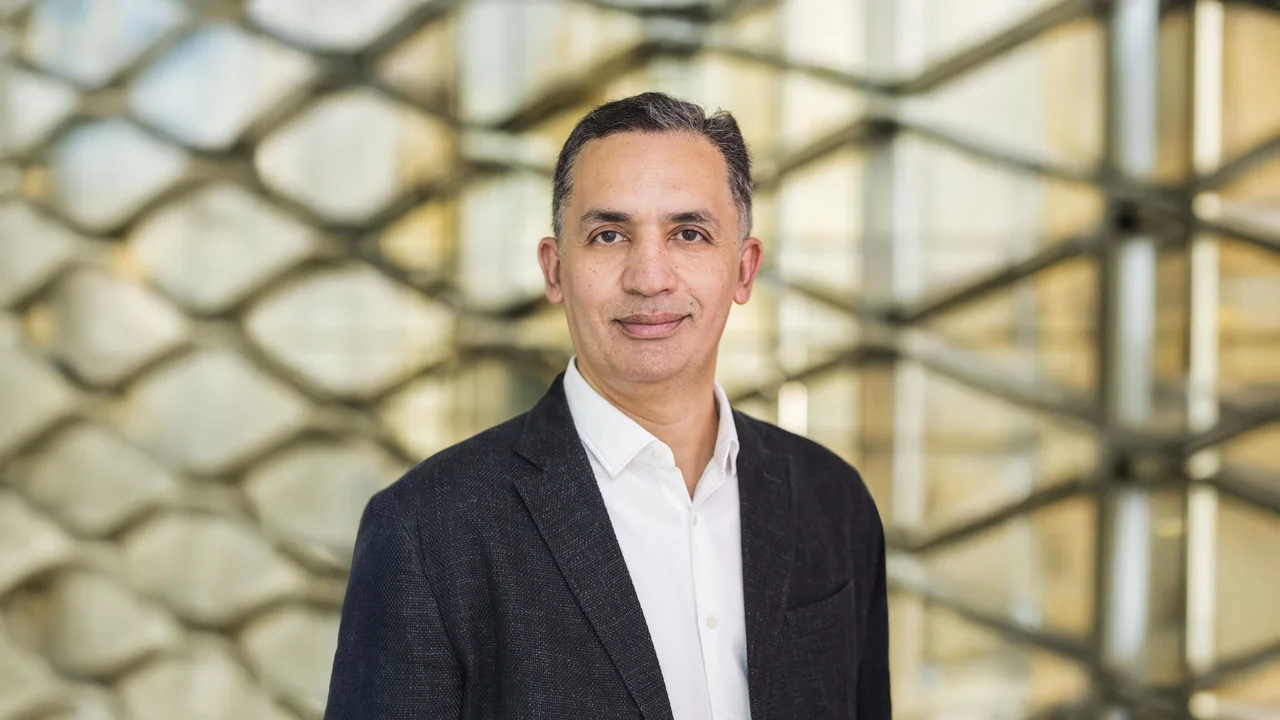
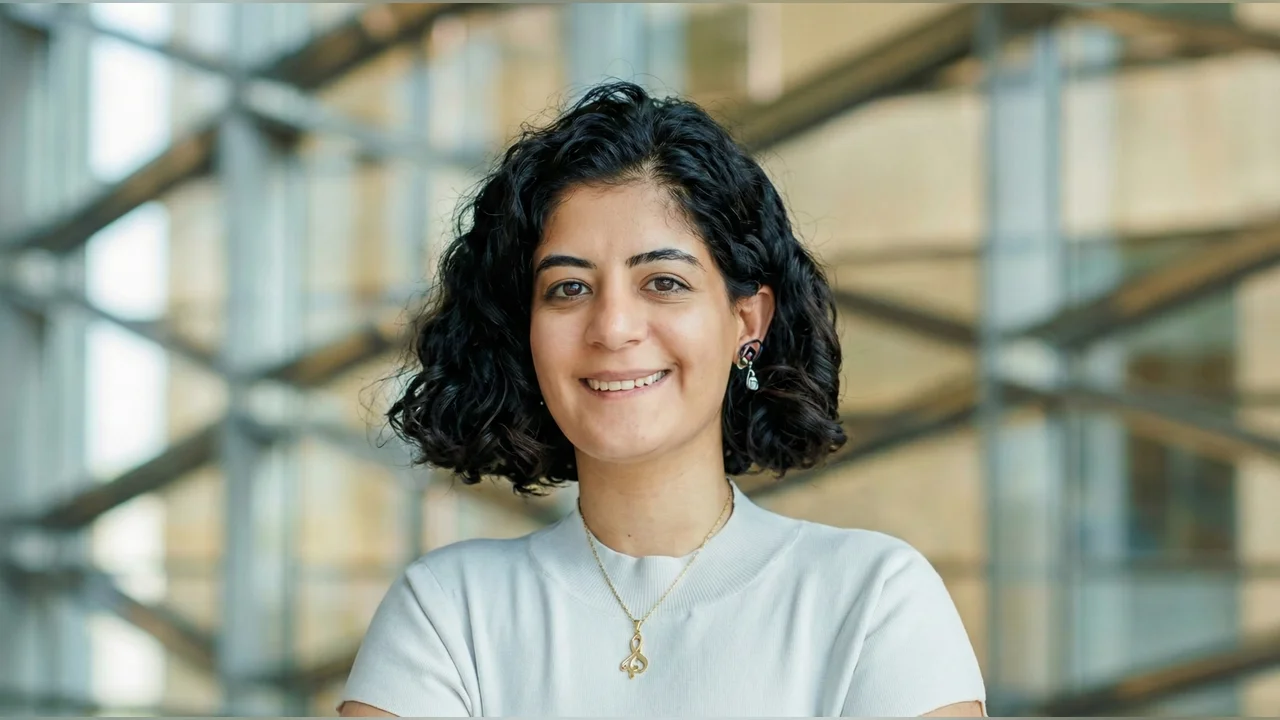
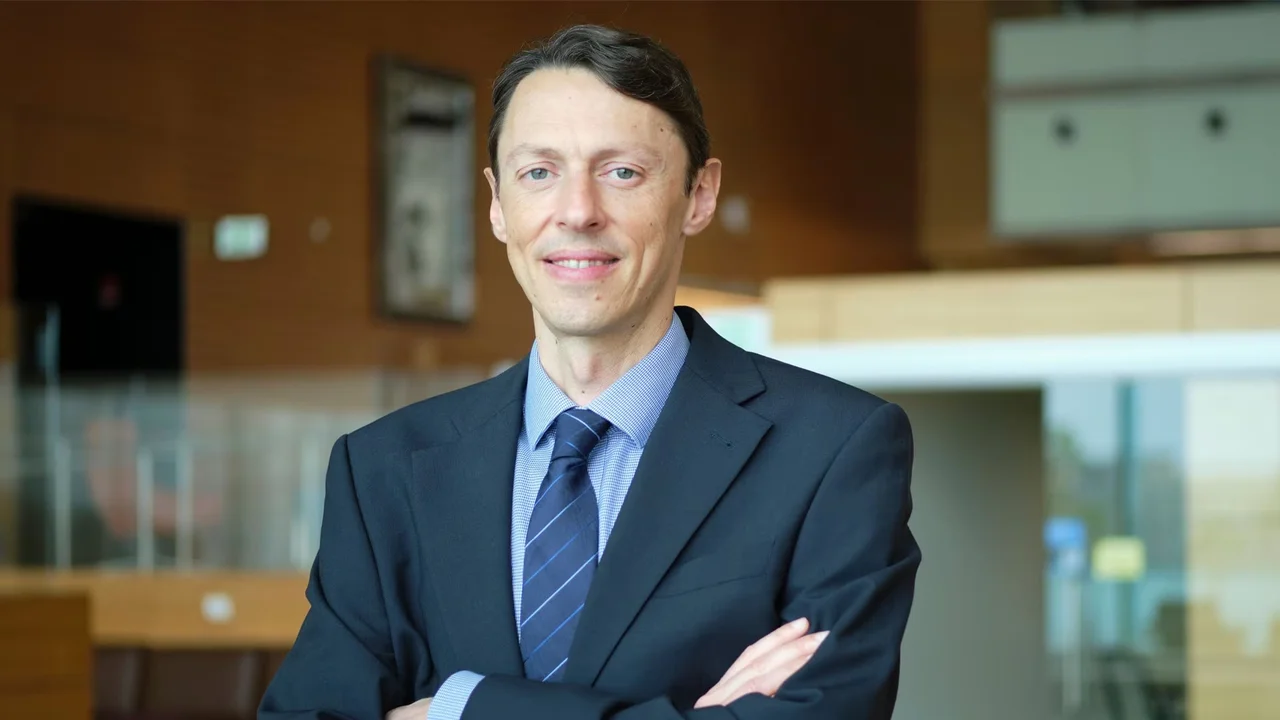
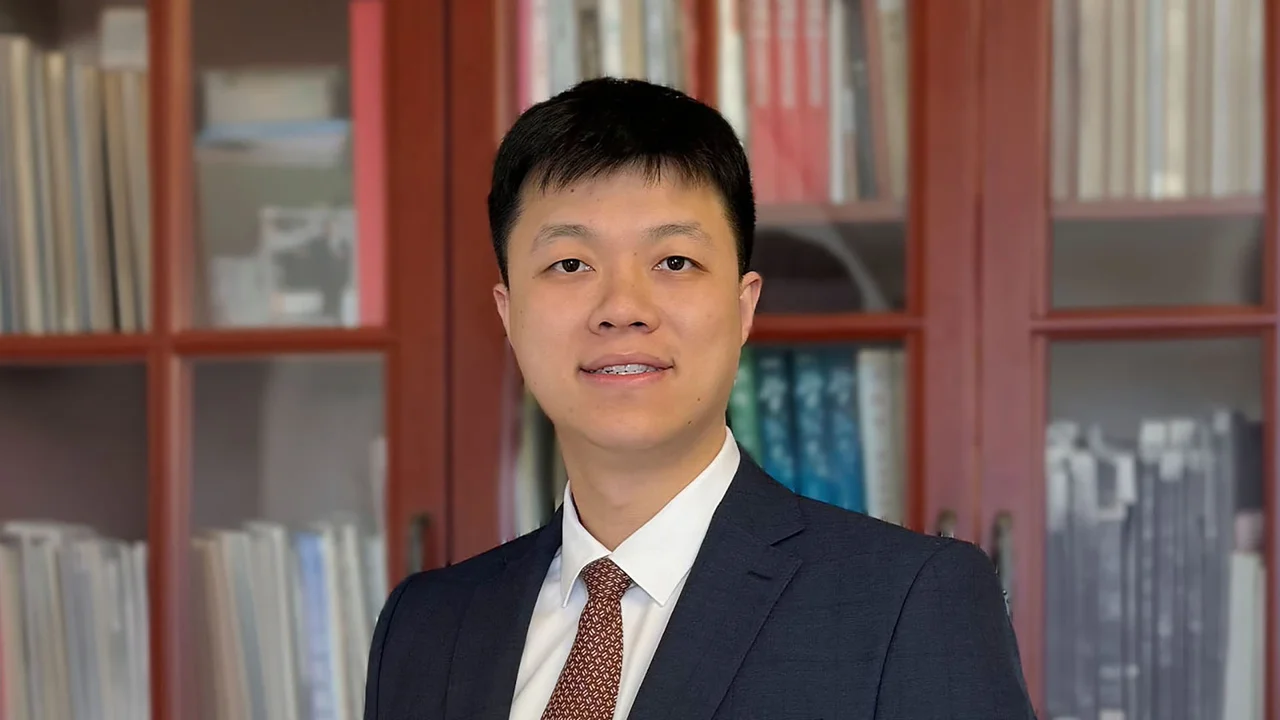
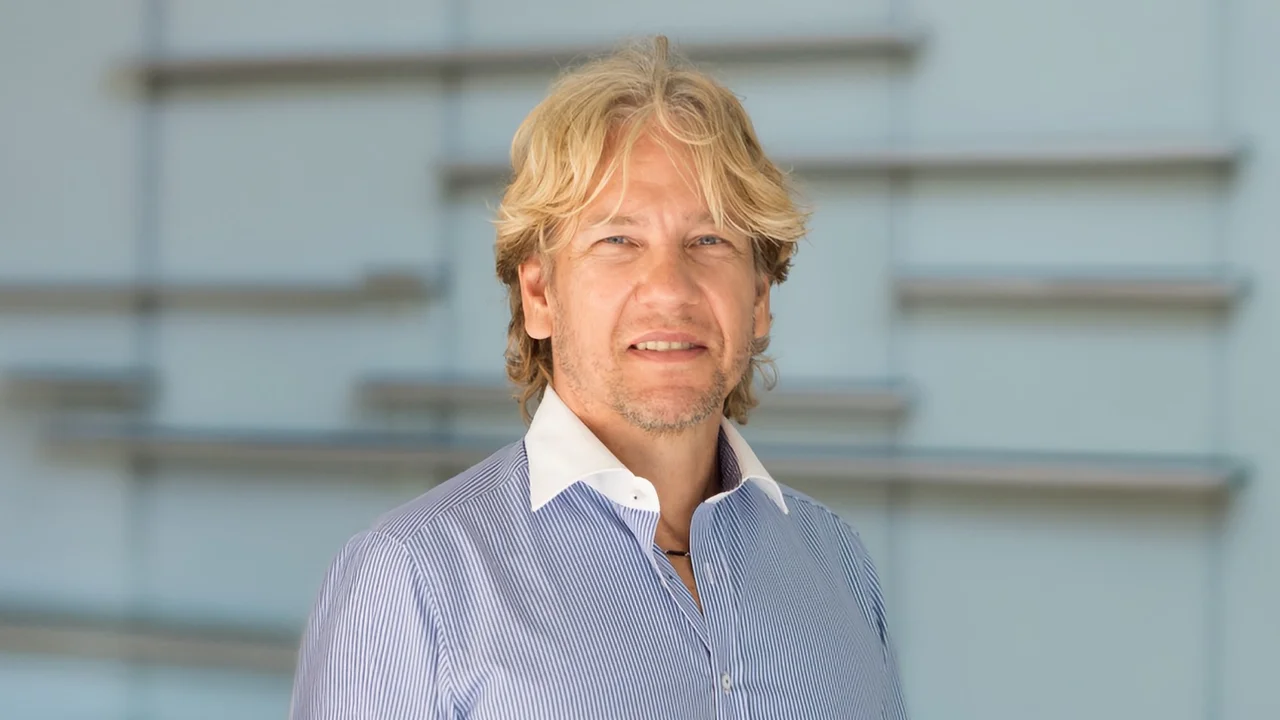
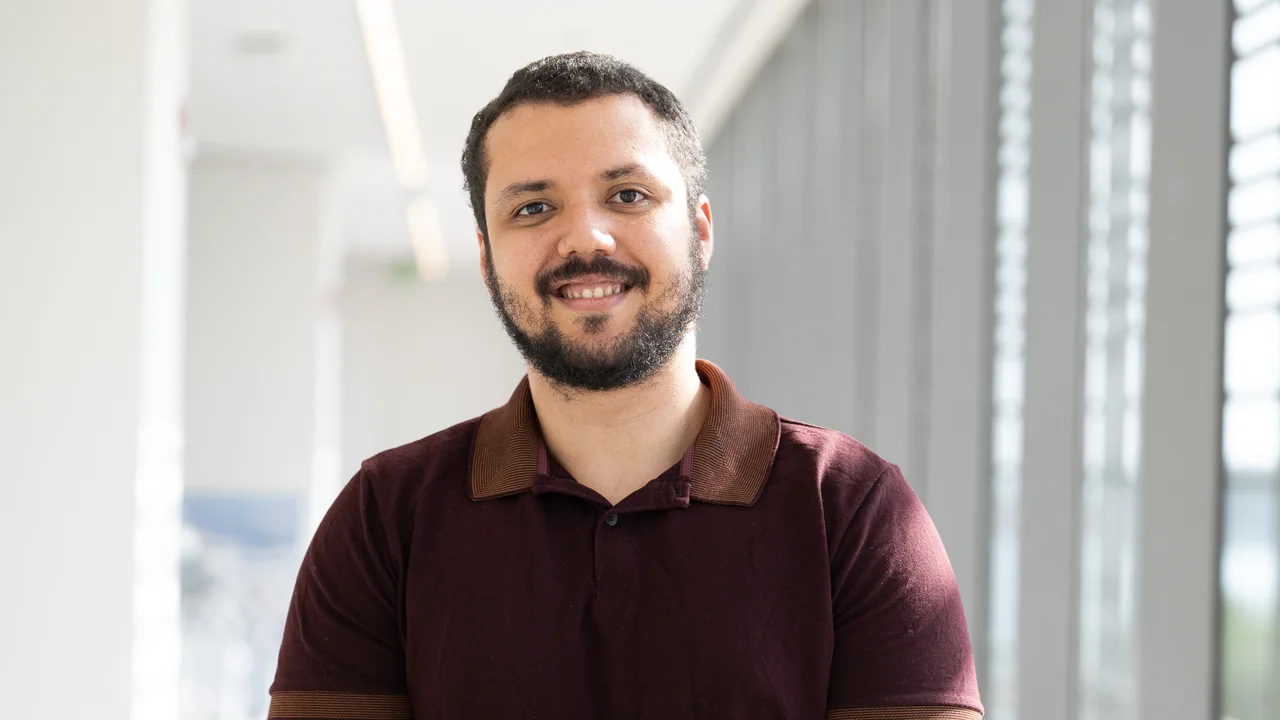
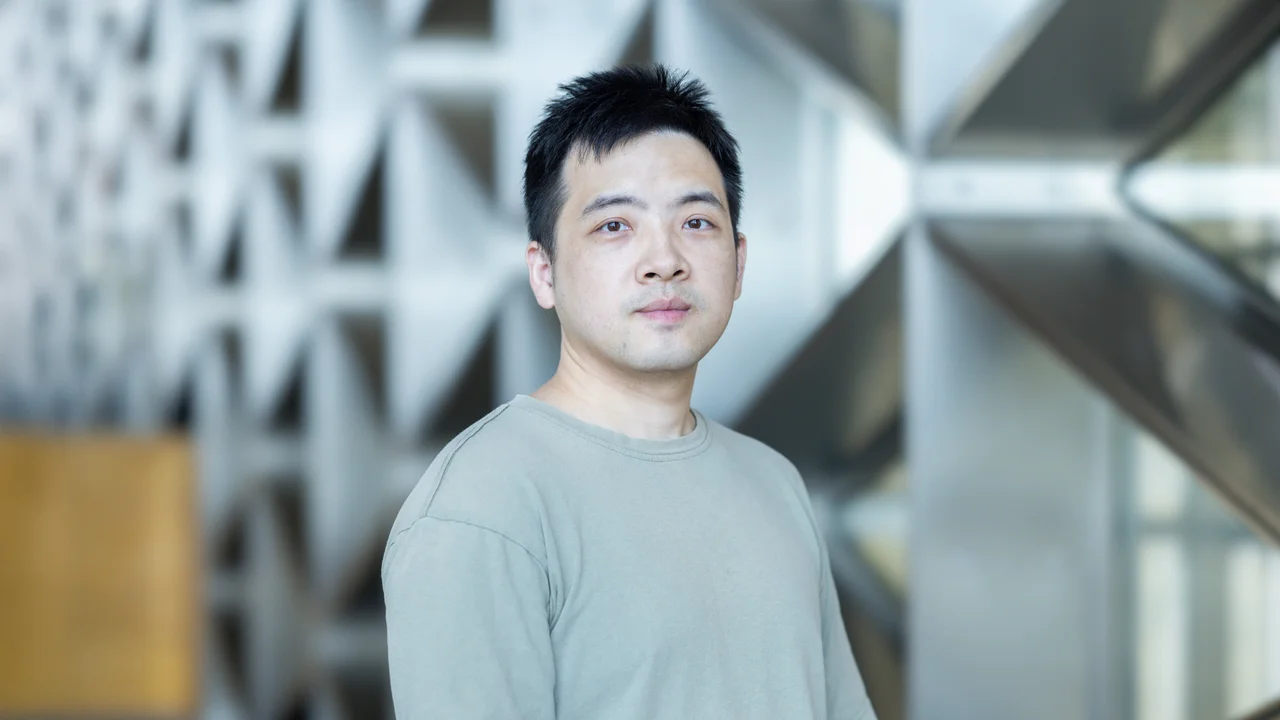
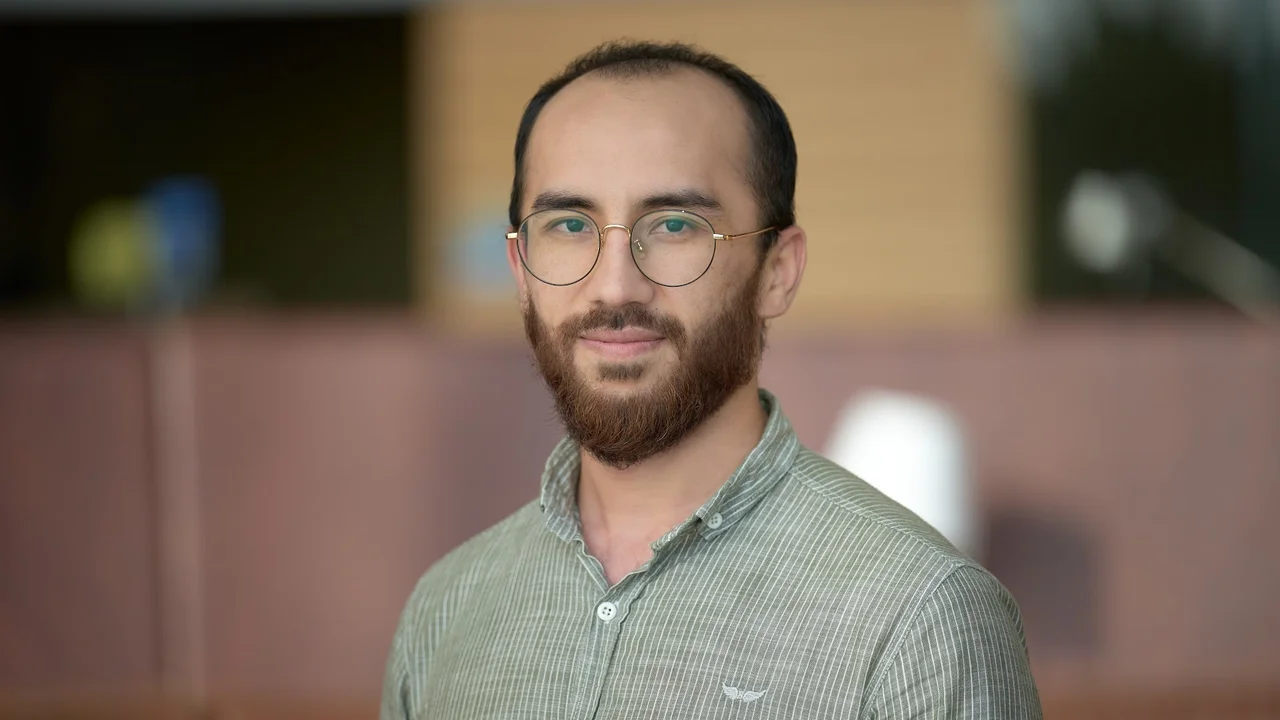
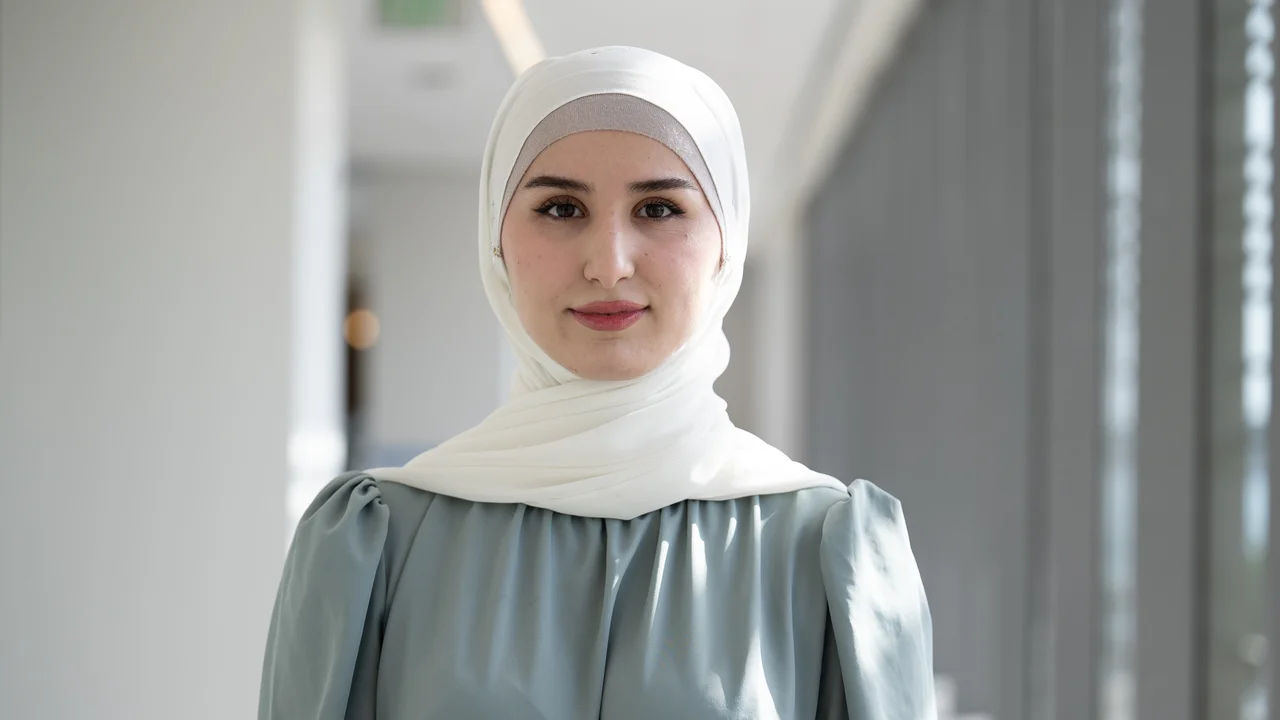
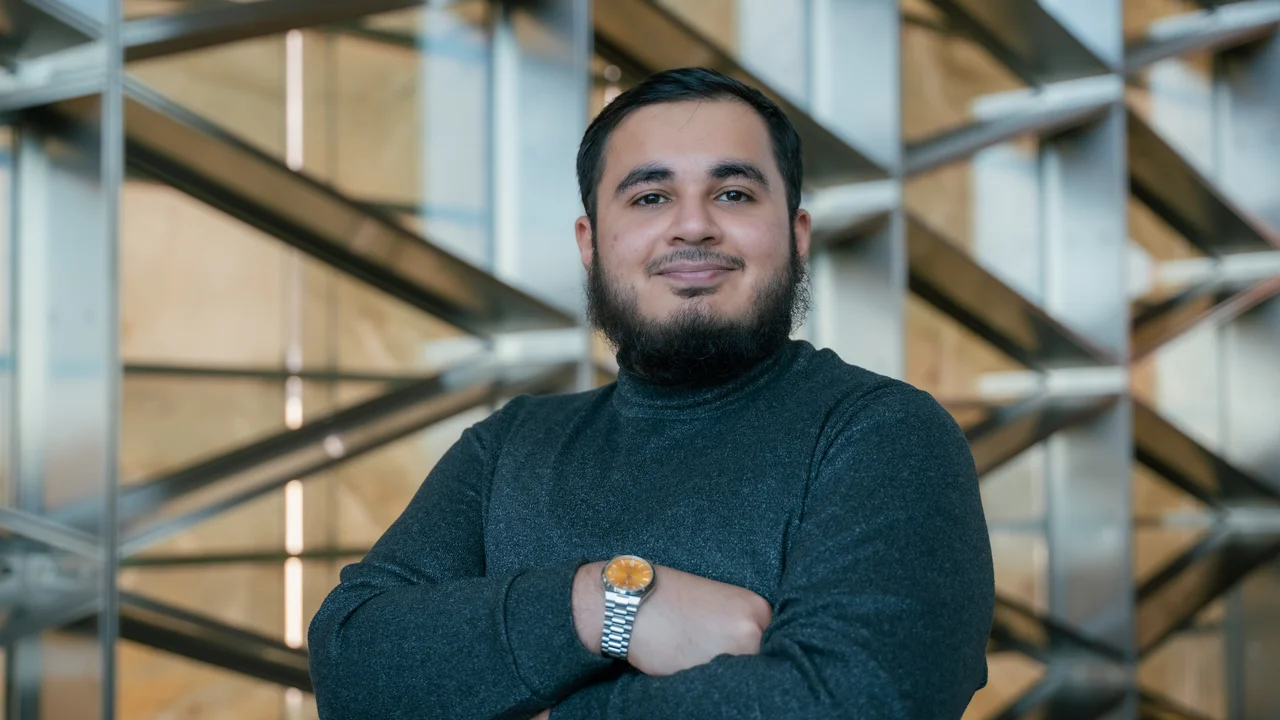
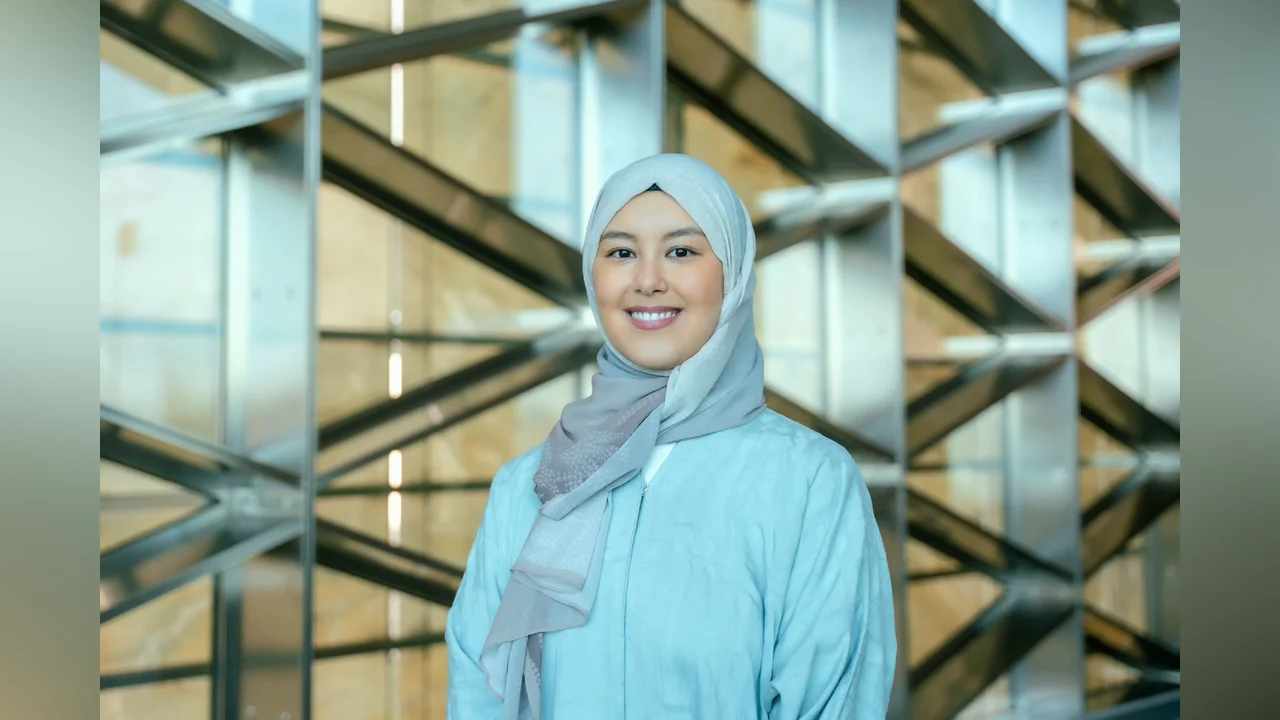
Leading Faculty

Experimental Infrastructure
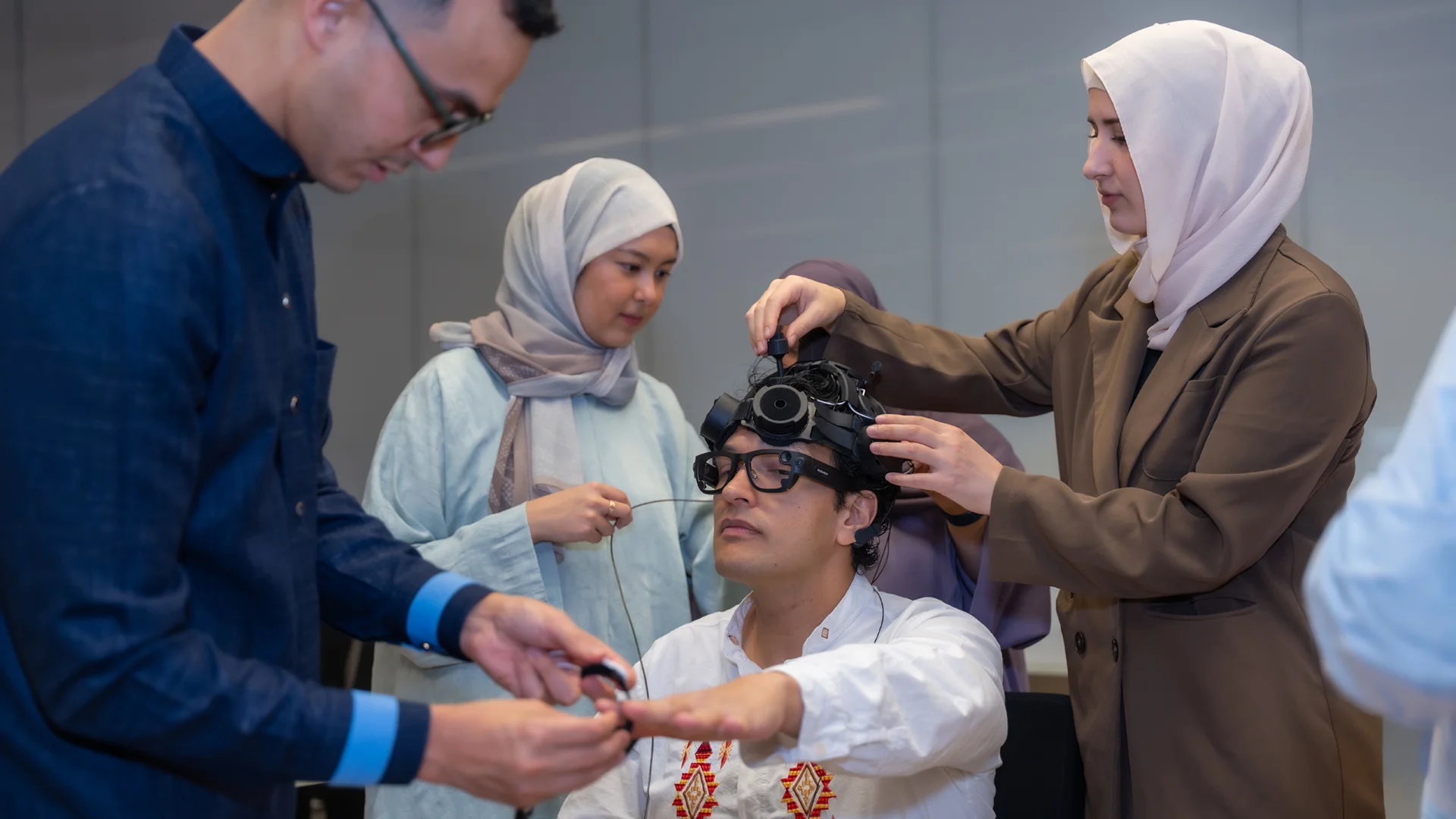
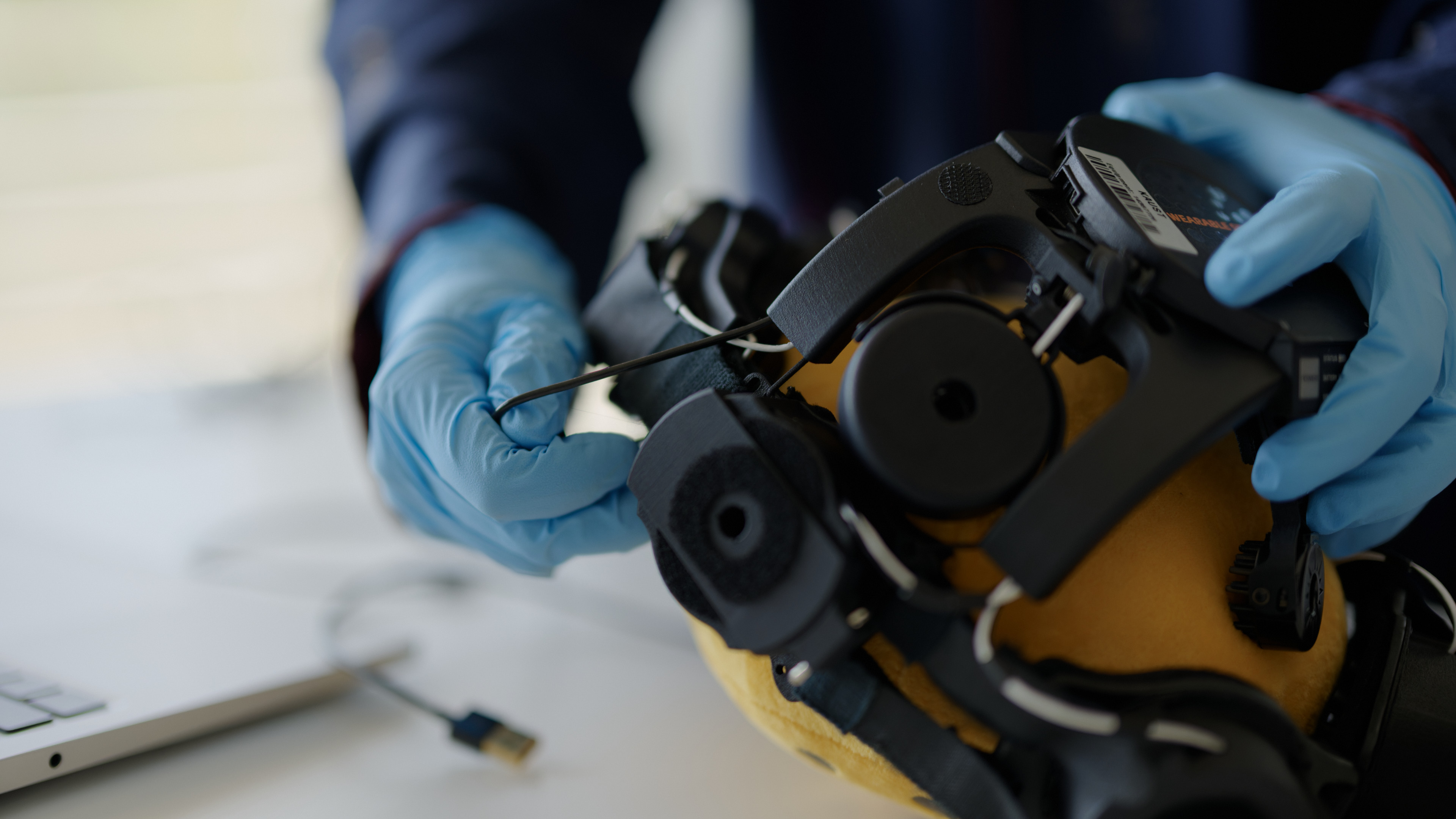
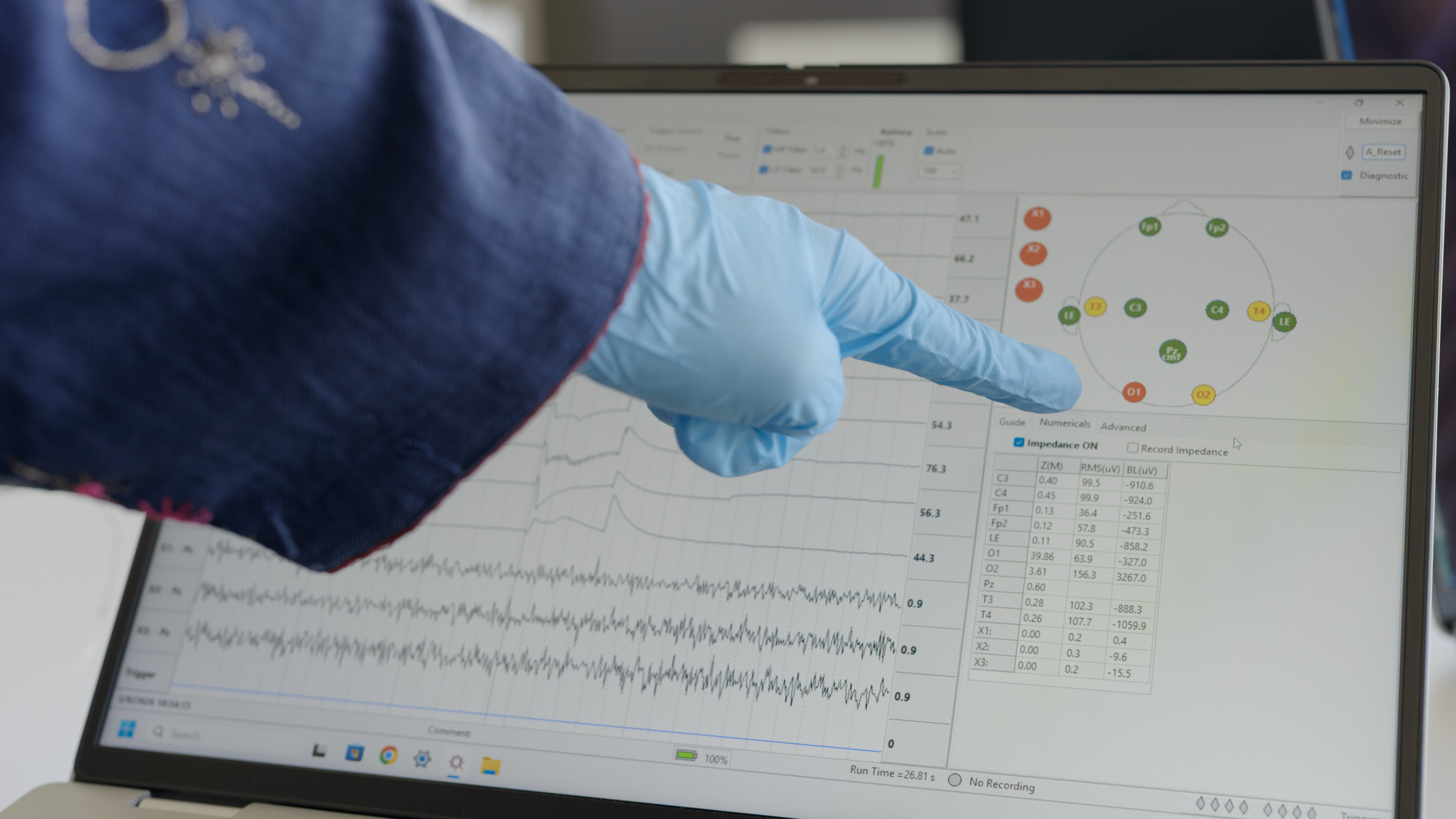
KAUST NeuroAI operates a multimodal neuroimaging environment built around integrated electroencephalography (EEG) and functional near-infrared spectroscopy (fNIRS) systems, supported by dedicated GPU-enabled computational workstations.
This configuration enables:
- Concurrent recording of electrical (EEG) and hemodynamic (fNIRS) brain activity
- Multi-participant social experiments in shared and naturalistic environments
- High-performance neural decoding and modeling pipelines
- Accelerated large-scale dataset collection across participants and experimental conditions
By combining complementary sensing modalities with high-performance computational resources, we supports both foundational research in brain function and the development of robust AI-driven neurotechnology systems.
Research Areas
Neural Foundation Models and Multimodal Brain Representation
KAUST NeuroAI develops large-scale neural foundation models trained on multimodal EEG–fNIRS data to decode, model, and generate neural-aligned representations.
This line of research explores scalable pretraining strategies and multimodal integration to enable brain-to-text and brain-to-image representations, supporting general-purpose neural decoding across tasks and contexts. These efforts aim to establish reusable neural models that serve as foundational building blocks for downstream brain–AI applications.
Research Topics
- Neural decoding at scale
- Multimodal EEG–fNIRS integration
- Brain-to-text and brain-to-image modeling
- Foundation models and scalable pretraining
Brain-Guided Robotic Manipulation and Assistive Systems
KAUST NeuroAI investigates real-time decoding of neural intention to control robotic manipulators and assistive systems for mobility, rehabilitation, and human interaction.
By integrating brain–computer interfaces with shared autonomy and real-time control architectures, this research enables intuitive, adaptive interaction between humans and robotic systems. The focus is on robustness, low latency, and safety, supporting deployment in assistive and rehabilitative settings.
Research Topics
- Motor intention decoding
- Brain–computer interface control
- Shared autonomy
- Assistive and rehabilitative robotics
- Real-time neural systems

Cross-Subject and Cross-Device Generalization
A core challenge in neural AI is variability across individuals, recording sessions, and sensing hardware. We address this by developing models that generalize across subjects, devices, and experimental conditions.
This research emphasizes domain-invariant representations, montage-robust modeling, and transfer and self-supervised learning, enabling population-level neural decoding from heterogeneous EEG–fNIRS data collected in naturalistic settings.
Research Topics
- Domain invariance and robustness
- Cross-subject and cross-session learning
- Cross-device generalization
- Transfer and self-supervised pretraining
- Naturalistic neural data

Uncertainty-Aware and Physically-Inspired AI for Neurological Diagnostics
We also pursues clinically grounded research in EEG-based neurological diagnostics, with a particular focus on epileptic seizure detection.
This work emphasizes trustworthy AI by integrating Bayesian deep learning, model calibration, and uncertainty estimation to produce predictions that are both accurate and clinically meaningful. Approaches such as Bayesian neural networks, Platt scaling, and isotonic regression are used to quantify predictive confidence—an essential step toward real-world clinical deployment.
Complementing data-driven methods, the lab explores physics-inspired spectral frameworks based on the Schrödinger operator to extract interpretable, semi-classical, and nonlinear dynamical features from EEG signals. Hybrid signal-processing and machine-learning pipelines address challenges such as class imbalance, long-range temporal dependencies, and evolving spatial relationships across EEG channels using architectures including Mamba and dynamic graph neural networks.
Research Topics
- Bayesian and uncertainty-aware learning
- Model calibration and interpretability
- Long-range temporal modeling
- Dynamic graph learning for EEG
- Physics-inspired spectral analysis
- EEG-based neurological diagnostics
Translational Outlook
Beyond foundational modeling, KAUST NeuroAI explores translational pathways for neural technologies in areas such as:
- Early neurological risk detection
- Assistive communication systems
- Adaptive human–AI interfaces
- Mental health monitoring and intervention
By treating neural signals as an additional modality for intelligent systems, KAUST NeuroAI expands the design space for accessible, inclusive and clinically grounded technologies.
These efforts connect fundamental research in neural representation and modeling with practical systems that support health, rehabilitation, and human–machine interaction.