
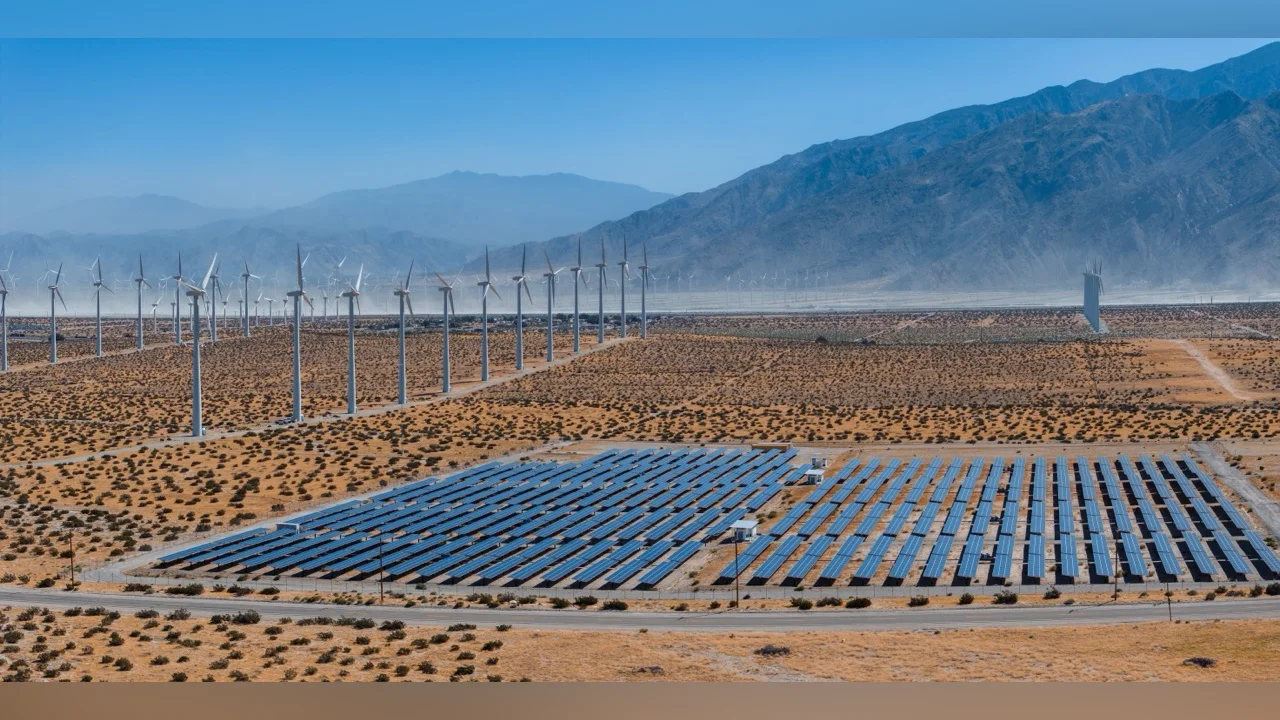
Resilient renewable energy networks designed for the desert
Accounting for weather extremes is essential for designing reliable renewable energy systems in hot, arid regions.
About
Reliable electricity supply is vital in desert locations, where maintaining cooling systems during heatwaves can be essential for human health. For communities considering a shift to renewable energy, accounting for extreme weather events can help prevent electricity shortfalls, KAUST researchers have shown[1].
Recent advances in renewable energy generation and storage are leading many sustainability-focused communities, including the KAUST campus, to explore how they might transition from fossil-fueled electricity to local grids powered entirely by renewable energy. “These systems must be carefully designed to ensure reliability,” says Farah Souayfane, a research scientist in Omar Knio’s lab, who led the work.
“Most existing designs for community-scale renewable energy systems in hot desert regions like Saudi Arabia optimize performance for average weather conditions,” Souayfane explains. “This approach could lead to failures during rare but critical weather events,” she adds.
Extreme weather days — characterized by very hot, calm, and cloudy conditions — combine high electricity demand for cooling with low electricity supply from wind and solar. This mismatch wouldcan result in power failures in systems not designed for such conditions.
“We sought to explicitly account for extreme weather in renewable energy systems designed for hot desert communities and quantify the cost implications by designing a resilient renewable energy system for KAUST,” says Ricardo Lima, a research scientist in Knio’s group.
Read the full story on KAUST Discovery.
Related People

Omar Knio
- Vice President, Academic Affairs