
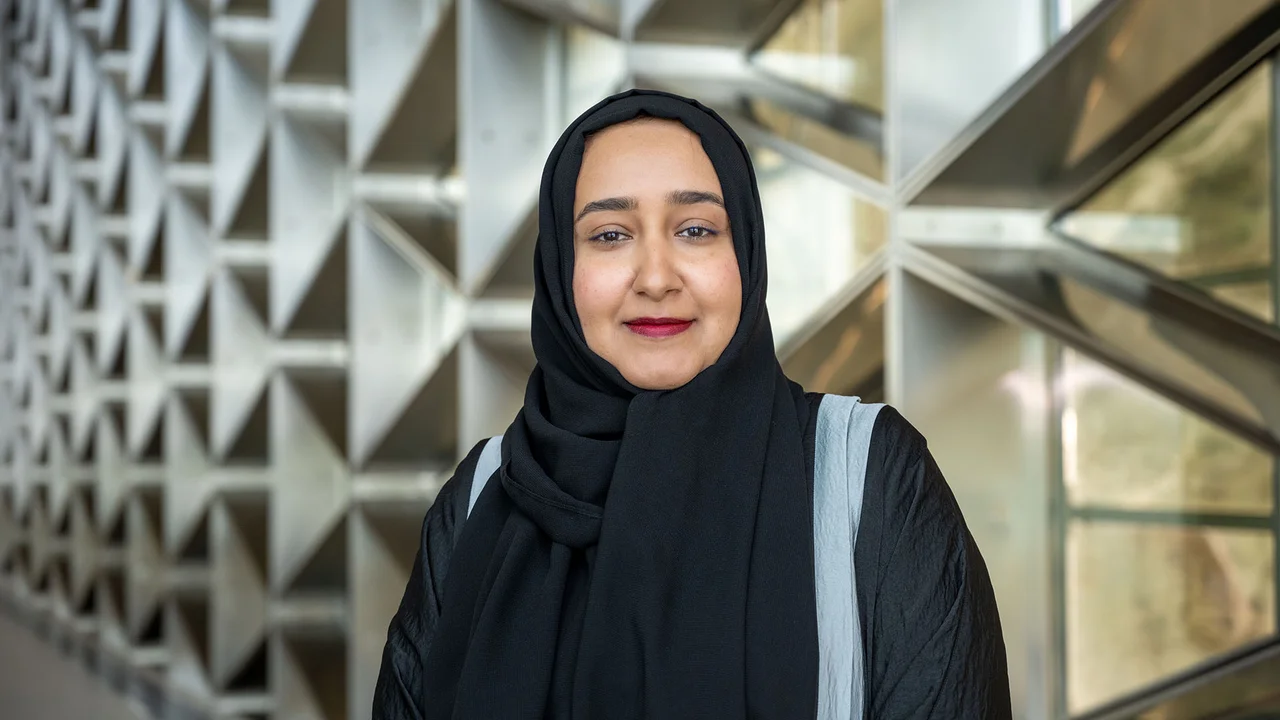
Dr. Samar Aseeri named among Scientific Computing World’s top computing leaders
Scientific Computing World recognized Aseeri among 75 leaders advancing scientific computing through research, innovation and community engagement.
About
Dr. Samar Aseeri has been recognized by Scientific Computing World as one of 75 exceptional leaders transforming their organizations through scientific computing. Launched in 1994, the publication is dedicated to scientists, researchers and engineers who rely on scientific computing in their daily work.
"It is truly an honor to be included in the SCW75 list alongside many inspiring researchers and leaders in scientific computing," said Aseeri. "I see it as encouragement to continue contributing to advanced computing research and to help support the next generation of scientists in this field.
"My inclusion was based on a combination of technical research, community engagement, and interdisciplinary collaboration. My work spans HPC performance optimization, user support and training, and more recently, quantum computing initiatives and education. I have also helped connect HPC, domain science, and quantum computing communities through workshops and international collaborations."
Connecting today's computing methods with tomorrow's technologies
Aseeri's background is in applied mathematics and scientific computing, with a current focus on high-performance computing, performance engineering and emerging computational paradigms.
"Originally, my main research drive was traditional high-performance computing, including scalable scientific applications, performance profiling, and optimization on large computing systems. Over time, however, my focus has shifted to understanding how emerging technologies, particularly quantum computing, can complement traditional HPC systems in addressing complex scientific challenges," she said.
In practice, classical HPC resources handle data preparation, large-scale simulations and optimization, while quantum processors tackle selected subproblems where they offer advantages.
Aseeri explained: "I see these technologies as complementary rather than competing. Quantum computers are unlikely to replace HPC systems; instead, they will function as specialized accelerators within larger computational workflows. Early hybrid quantum–classical algorithms already demonstrate this potential, and I expect future supercomputing centers to integrate quantum resources as part of broader advanced computing ecosystems."
For her, this way of thinking extends beyond the lab to the future of scientific discovery, and she is eager to explore practical pathways for integrating these technologies.
"Many scientific challenges are becoming too complex for a single computing paradigm. Future discovery will likely rely on heterogeneous ecosystems that combine classical supercomputers, artificial intelligence accelerators, and quantum processors. I find it exciting to contribute to this transition."
A foundational presence in KAUST computing
Aseeri has been part of the KAUST community since 2009 and is the current co-convener of the KAUST Quantum Computing Reading Group. As a member of the Supercomputing Lab since its inception, she has witnessed nearly two decades of transformation in the University's computing infrastructure and ecosystem.
"It has been truly remarkable to witness KAUST's growth. My role has evolved alongside it, and I have contributed through scientific computing support, performance analysis, user engagement and collaborative research activities. I have also been involved in training initiatives and in helping researchers effectively use advanced computing resources for their scientific applications.
"The University's greatest strength is its highly interdisciplinary culture: There is a strong integration between advanced infrastructure, research support teams and scientific programs. We have ready access to powerful computing systems and expertise in optimization, data science, AI, visualization and emerging computing technologies."
Computing a bold future for Saudi Arabia
Looking ahead, Aseeri sees KAUST playing a central role in shaping the Kingdom's long-term strategy in advanced computing and AI.
"Computational science is in an exciting state of flux," she said. "Major transformations are being driven by AI, advanced HPC architectures, and emerging quantum technologies. Collaboration will become increasingly important, as addressing future scientific challenges will require expertise from multiple disciplines."
Aseeri is equally focused on ensuring the next generation of researchers is equipped for that future.
"I plan to continue contributing to training and community engagement initiatives, particularly by helping researchers and students gain hands-on experience with emerging computing technologies. I also hope recognitions such as SCW75 help highlight the growing contributions of researchers from the region to the global scientific computing community."
Related People

Samar Aseeri
- Senior Computational Scientist, Computer Science