
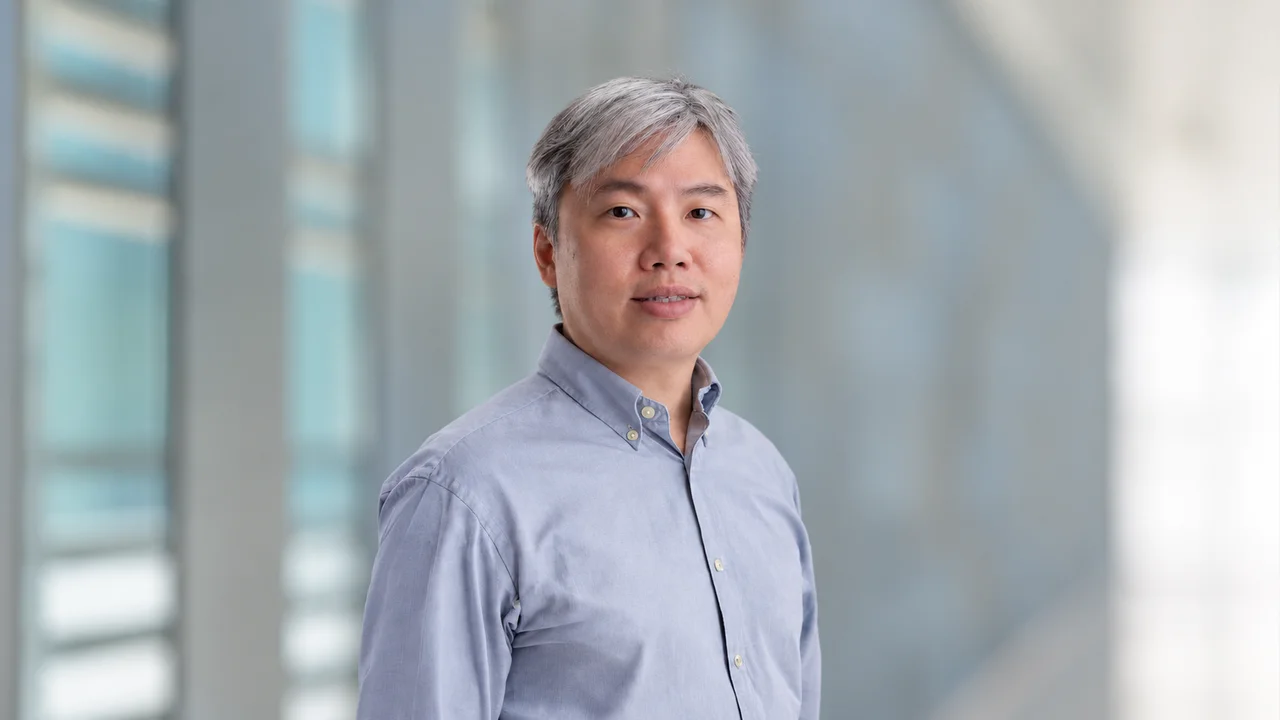
Dr. Tien Khee Ng named an SPIE Senior Member
Dr. Tien Khee Ng has been named an SPIE Senior Member, recognizing his contributions to optics and photonics.
About
Dr. Tien Khee Ng has been named an SPIE Senior Member in recognition of his significant contributions to the field of optics and photonics.
The SPIE Senior Member program recognizes members for their professional experience, active involvement in the optics and photonics community, and significant contributions to the field. Seventy-nine new Senior Members were elected for 2026 in acknowledgement of their expertise, technical contributions and influence.
"I cherish this recognition from SPIE," Ng said. "SPIE has a strong focus on applied optics, photonics engineering and technologies that make an impact beyond the laboratory. This is especially meaningful to me because much of my career has focused on training engineers and researchers in photonics and optoelectronics, while seeking to connect fundamental research with ultimately useful technologies."
For Ng, the laboratory manager and principal research scientist at the KAUST Photonics Laboratory, the distinction reflects the contributions of the many individuals he has worked with throughout his career.
"I am particularly grateful to the colleagues, mentors, students and technical staff that I have had the privilege of working with as part of my journey,” he said. “Large scientific achievements are seldom created by one person; they depend on people who grow the materials, build and maintain the equipment and facilities, fabricate the devices, perform the experiments, challenge you and keep trying when an experiment repeatedly fails."
'Rarely a straight line'
Much of Ng’s work has focused on optoelectronics. His professional journey, which he describes as “rarely following a straight line," has involved moving between academia and industry. He has worked across diverse areas, including semiconductor growth, manufacturing, device physics, communication systems, and laboratory development.
"My research evolved from an initial focus on semiconductor materials and epitaxy. Gradually, my work shifted towards devices, particularly III-nitride nanostructures, LEDs, lasers and photodetectors. Later, high-speed visible-light and underwater optical communication became increasingly important. Today, I am more interested in connecting these areas: semiconductor light sources, integrated photonics, high-speed communication, intelligent sensing and hardware-enabled security."
Understanding the 'complete chain'
It was during his postgraduate studies at Singapore's Nanyang Technological University (NTU) that Ng first encountered molecular beam epitaxy (MBE)—a precision technique that builds semiconductor materials one atomic layer at a time, giving researchers precise control over a device's composition, thickness and purity. He describes it as the "mother of creation" for modern optoelectronic and electronic devices.
"The biggest evolution in my thinking from my early days at NTU to now is that I increasingly ask not only, 'Can we demonstrate this device?' but also, 'What problem does it solve, what prevents it from becoming useful, and what engineering must come after the scientific demonstration?'" he said.
Ng's current research focuses on semiconductor optoelectronic devices and photonic systems, particularly III-nitride light sources, high-speed optical communication, integrated photonics, and increasingly secure and intelligent photonic sub-systems. A key direction is the design of high-efficiency blue and green InGaN (Indium Gallium Nitride) semiconductor lasers for underwater optical communication, visible-light communication, sensing, and emerging near-infrared integrated photonic systems.
"We are interested in the complete chain rather than only achieving a good semiconductor device," he explained. "This means understanding the epitaxial material, device physics, high-speed modulation, radio frequency and thermal packaging, optical coupling, communication performance and eventually system-level reliability."
Ng is also investigating how materials and devices can be integrated into photonic platforms to enable deep-ultraviolet light detection, optoelectronics-based signal manipulation, and secure identification for future photonic system security and low-power image processing.
"More recently, I am also interested in how photonic hardware can contribute to secure communication; for example, through physical entropy generation and hardware fingerprints. The real-world objective of my work is quite practical: develop photonic technologies that can communicate faster, consume less energy, operate in difficult environments and become more secure."
Building photonics research at KAUST
Ng joined KAUST in 2009 and helped co-establish the KAUST Photonics Laboratory, contributing to the development of a new research ecosystem from almost the ground up.
"When I joined KAUST, I saw leadership that was willing to stay close to the research community, listen, make changes and create an environment that strongly motivated people," he said.
"Over my career, I have had the privilege of overseeing the operation of four MBE systems, including two at KAUST, while leading the development of personnel and advanced semiconductor structures and optoelectronic devices."
For Ng, however, running the lab's technical infrastructure was only part of the job.
"Yet what I value most is that the laboratory never remained merely a facility for producing academic publications. It became a place where people collaborated, grew, built camaraderie, and shaped their long-term careers. It also reminded me of our humble beginnings: that developing junior personnel is not only about research excellence, but also about helping form responsible, independent-minded young engineers and researchers."
Photonics is moving toward much deeper integration as the field expands into the visible spectrum and new material systems. Where Ng and his peers once studied the light source, modulator, detector and sensing element as separate components, these functions increasingly need to work together within compact, energy-efficient platforms.
"There is still room for improvement in efficiency, modulation bandwidth, thermal management, packaging and integration, particularly for blue-green and near-infrared semiconductor lasers," he noted.
"What excites me most is that photonics is becoming less of an isolated discipline. It is increasingly becoming an enabling layer connecting communications, sensing, computing, artificial intelligence and security."
Ng remains driven by the same curiosity that shaped his early career: “Deep technical capability still matters. What matters is the ability to master something difficult over many years while continually asking how that capability can help solve a larger problem.
"Photonics has given me that opportunity throughout my career, and I remain very excited about what comes next."
Related People
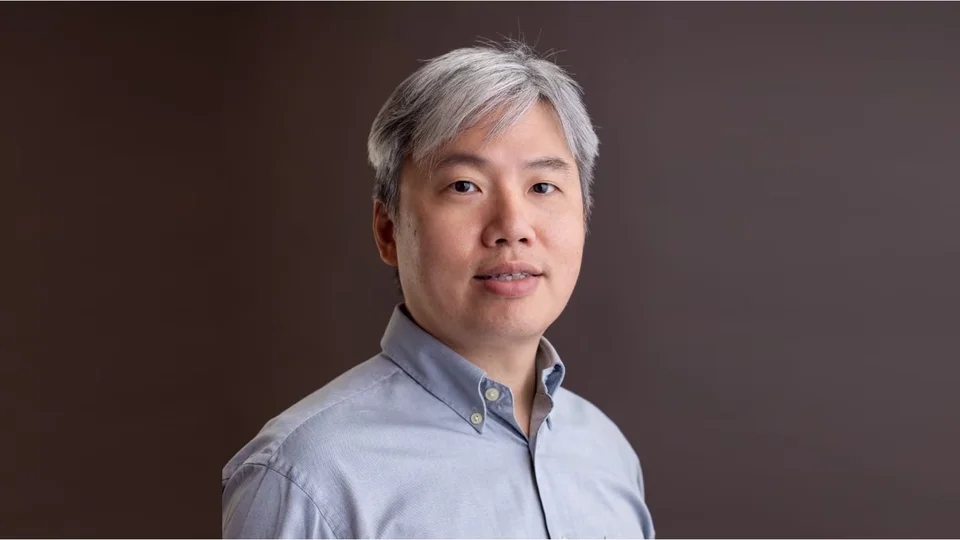
Tien Khee Ng
- Principal Research Scientist, Photonics Laboratory