
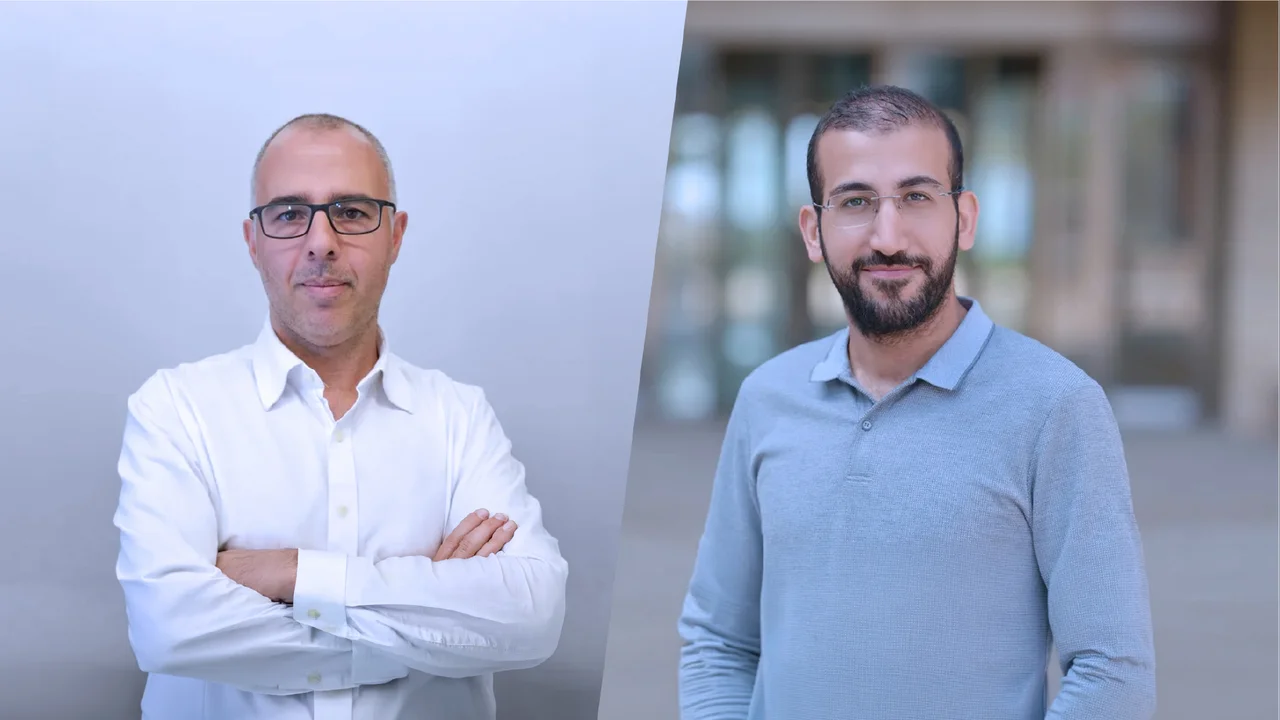
Professor Diogo Gomes and Dr. Melih Üçer receive Başar-Olsder Best Paper Award
KAUST researchers Professor Diogo Gomes and Dr. Melih Üçer have received the Başar-Olsder Best Paper Award for developing a new mathematical approach to solving complex equations that model group decision-making.
About
Professor Gomes and Dr. Melih Üçer have received the International Society of Dynamic Games' (ISDG) Başar-Olsder Best Paper Award for developing a new mathematical approach to solving a challenging class of mean-field game (MFG) equations.
Gomes, a professor of applied mathematics and computational science, and Üçer, a postdoctoral research fellow in Gomes' MFG research group, received their award at the 21st International Symposium on Dynamic Games and Applications, held in Istanbul, Türkiye, from July 20 to 23, 2026.
Their winning paper, titled "Solving First-Order Local Time-Dependent Mean-Field Games With Monotonicity Methods," develops an approach based on monotonicity methods to establish the existence of solutions to equations that model large groups of interacting decision-makers, such as crowds or markets. Under additional assumptions, the approach also establishes uniqueness of the population density.
The award-winning paper is based on a long-term collaboration with KAUST research scientist Rita Ferreira and several co-authors, extending concepts from their previous research.
Üçer found the award’s link to the history of dynamic games especially meaningful: “An accolade that bears the names of Drs. Başar and Olsder reminds us of the tradition from which this field grew and how much of what we do still rests on the foundations they laid. Seeing that work resonate with the community is the best confirmation that the effort was worth it.”
“We are thankful to KAUST for its generous support and to Sultan Albarakati, director of the KAUST Academy, for bringing us together and making this collaboration possible,” Gomes said.
Why existence and uniqueness matter
Gomes' work focuses on partial differential equations (PDEs), particularly viscosity solutions to elliptic, parabolic and Hamilton-Jacobi equations. Üçer investigates the existence and characteristics of solutions to mean-field equations.
Existence results establish that the equations admit an equilibrium, while uniqueness results determine whether more than one equilibrium is possible. These results provide a foundation for applications and for the analysis of numerical methods.
“What our paper shows, in short, is that monotonicity can reach problems that the earlier techniques could not, at least for this class of models,” Üçer explained. “It shows both that a solution exists and that it is unique. We hope our approach is taken up more widely. Every method that closes part of the knowledge gap widens the range of models our community can use with confidence.”
The role KAUST MFG research can play in the Kingdom
KAUST MFG researchers are currently pursuing three central directions to translate their mathematical work into real-world applications: extending the method to other classes of MFGs, connecting these models back to their origins, and pushing the theory toward models centered on crowd safety.
As part of an ongoing project to improve Hajj crowd safety, Gomes and his group are developing a digital twin. Millions of pilgrims move through a confined space on a fixed schedule during the pilgrimage. Gomes' group is collaborating with Professor Mohamed-Slim Alouini’s Communication Theory Lab and Professor Jinchao Xu’s Scientific Computing and Machine Learning Research Group to build the data-driven replica.
The system is being developed to forecast pedestrian density and congestion a few minutes ahead, helping operators identify emerging risks. The project also considers extreme heat as an additional risk factor.
“These research directions are close to home,” Gomes said. “Saudi Arabia hosts the Hajj each year and is undertaking one of the world’s largest energy transitions, so at KAUST the mathematics and the questions our approach might answer sit unusually close together.”
“The crowd models considered have precisely the features the ISDG paper addresses: deterministic motion and congestion that depends on the density at a person’s location,” Gomes said. “Better theory means models that are more faithful and numerical schemes that one can trust, which matters when the output is a warning someone must act on.”
Related People
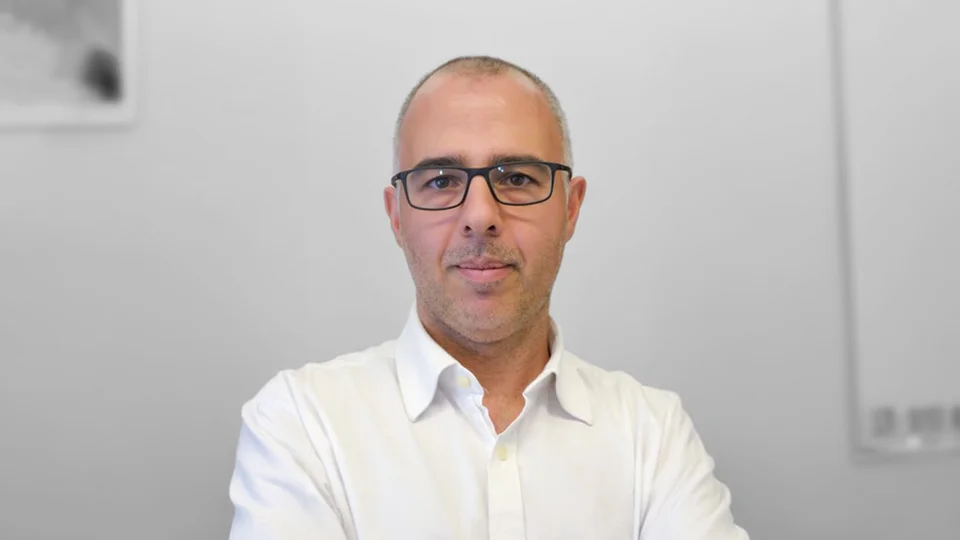
Diogo Gomes
- Associate Dean for Students, Computer, Electrical and Mathematical Sciences and Engineering
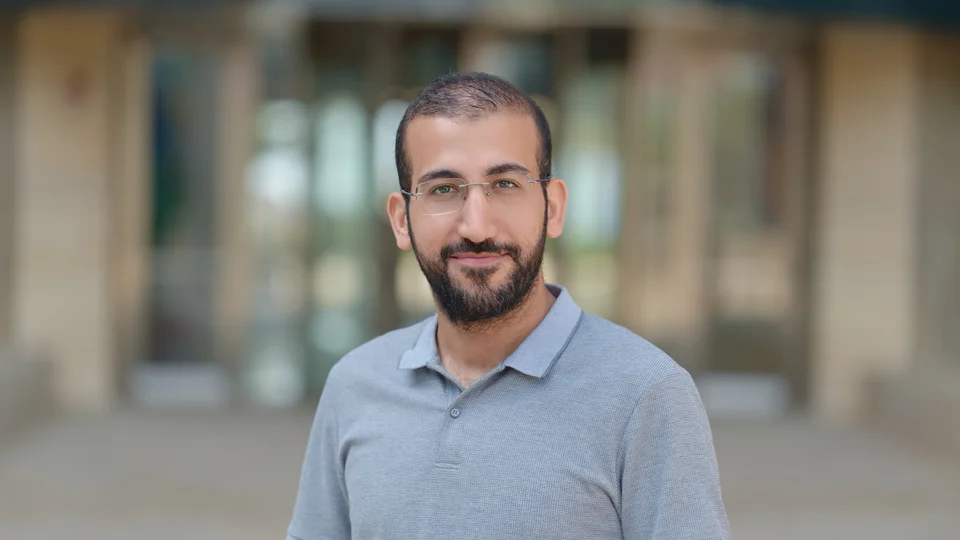
Melih Ucer
- Postdoctoral Research Fellow, Applied Mathematics and Computational Science