
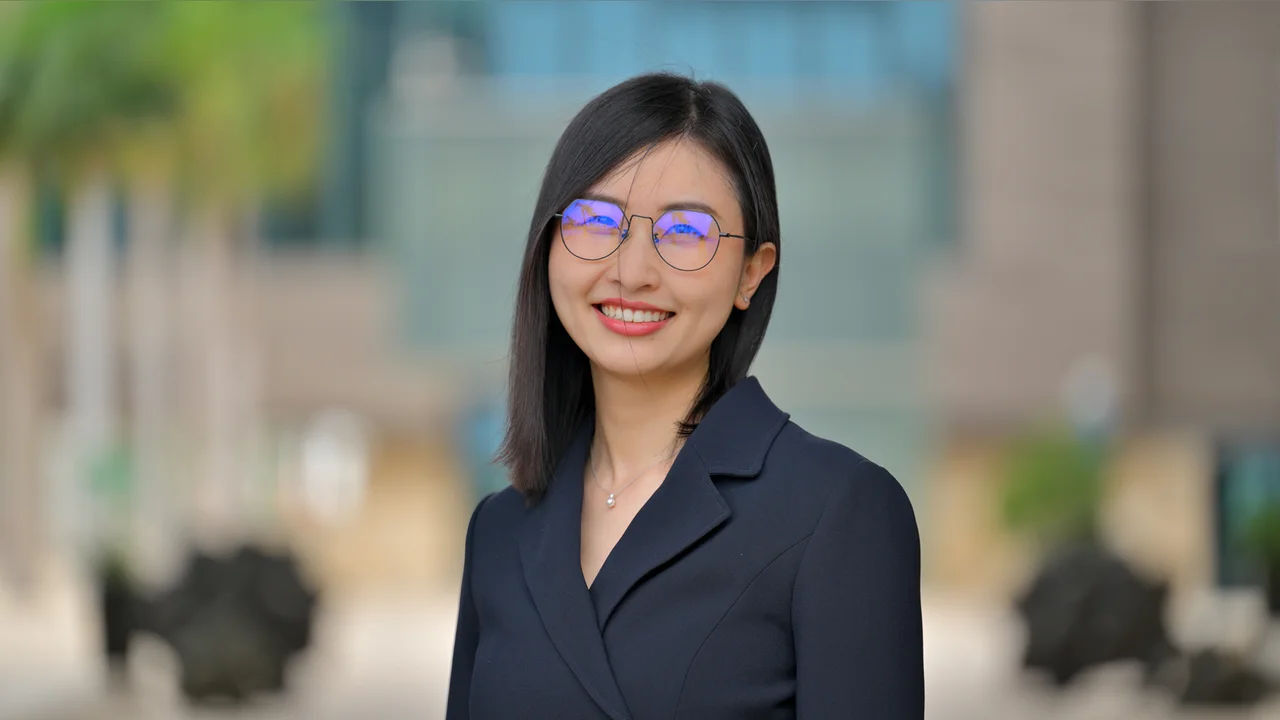
Professor Yating Wan selected as a 2027 IEEE Photonics Society Distinguished Lecturer
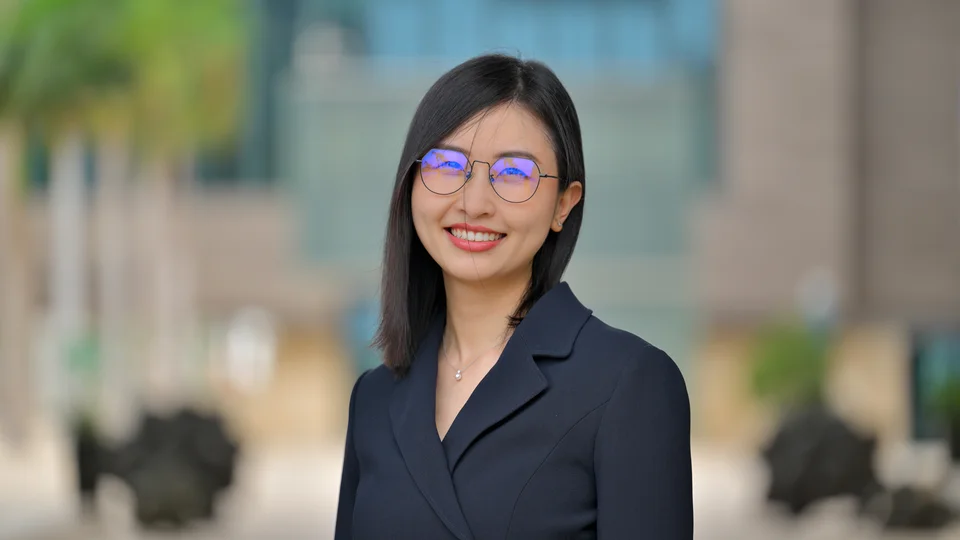
Professor Wan and her colleague, Professor Boon Ooi, have been named among the six lecturers worldwide to participate in the 2027 IEEE Photonics Society Distinguished Lecturers program.
About
KAUST Professors Yating Wan and Boon Ooi have been selected as two of the six lecturers worldwide to participate in the 2027 IEEE Photonics Society (IPS) Distinguished Lecturers (DLP) program. Their term will run from January 1, 2027, through December 31, 2027.
The program recognizes outstanding speakers for their significant technical contributions and aims to strengthen the technical programs of Photonics Society chapters. The selection of Wan and Ooi reflects the Division’s and University’s strong photonics research core.
“The Electrical and Computer Engineering program has built a critical mass that’s rare anywhere,” Wan said. “When one-third of the global cohort comes from a single department, it says something about the University—not just two individuals.”
“It also says something about Saudi Arabia. When I joined KAUST in 2022, part of the attraction was the chance to help build a photonics hub in a region that did not have one. With Vision 2030 and the AI and data-center investments now underway in the Kingdom, photonics becomes more relevant here every year.”
In their new roles, Wan and Ooi will give technical talks, professional development talks, and virtual presentations. Ooi, who previously chaired the IPS DLP, is relishing the opportunity to interact with his photonics peers.
“I am looking forward to visiting some chapters and sharing some of our recent work on semiconductor lasers with the wider photonics community,” he said.
“I hope these lectures help put KAUST and Saudi photonics on the map for chapters that may not know us yet,” Wan noted. “The DLP selection feels like a chance to give back to a community that has supported me throughout my career. If one student, in one chapter, hears a talk and decides that photonics, or a research profession, is for them, the program will have done its job.”
Building a global photonics community
Wan’s connection with the IPS dates to her student days at the Hong Kong University of Science and Technology. She served on the Society’s Conference Council from 2022 to 2024 and is an Associate Editor of the IEEE Journal of Quantum Electronics and the IEEE Photonics Journal, as well as an Associate Guest Editor of the IEEE Journal of Selected Topics in Quantum Electronics.
Wan sees her selection as shared recognition of her work and that of her colleagues: “The work and results I will be talking about were produced by about twenty group members in our Integrated Photonics Lab (IPL) at KAUST, and by the mentors and collaborators who shaped it beforehand.”
For her term, Wan will deliver two lectures: one technical talk and one career-centered talk. The former will investigate why AI systems are now constrained more by data movement than by computation, and how an on-chip light source addresses that. The career talk will trace her path from Hangzhou and Hong Kong through Santa Barbara to Saudi Arabia and the setbacks she encountered along the way.
“My technical presentation will focus on what it takes to put a stable, manufacturable light source on a silicon chip, before exploring what that source enables: optical interconnects, photonic tensor cores for AI, chaos-based hardware security, and coherent LiDAR.
“The career talk will discuss what I have learned about choosing problems, building a lab from an empty room, and mentoring students toward their own recognition.
Shining a light on silicon
As head of the KAUST IPL, Wan studies how silicon photonics—a technology that uses light rather than electrons on a chip—transfers and processes information. Although silicon is unmatched for producing chips at scale, it cannot generate light efficiently. The IPL’s core goal is to integrate a light source on the chip using quantum-dot lasers.
“Quantum dots are tiny semiconductor islands whose size sets the color of the light they emit, and they remain remarkably stable at high temperatures and under reflection,” she explained. “We integrate these lasers into silicon photonic circuits, including 300 mm foundry wafers, so that the result can be manufactured rather than merely demonstrated.”
Wan’s team is building systems around that light source in four areas: optical interconnects for AI data centers, photonic computing, hardware security, and sensing. They are also studying the physics of coupled lasers, including exceptional points and mode locking, to understand how interacting lasers can generate new types of light and create compact sources that emit multiple wavelengths at once.
“The big goal is to move from proof-of-concept chips to technologies that are deployed. Three things will keep us busy in the near term. First, bringing the light source into the foundry flow, so a quantum-dot laser becomes a standard building block on a silicon photonics wafer with the yield and reliability industry expects.
“Second, pushing the systems side: photonic processors that can run real AI workloads at the edge, broadband photonic circuits that combine quantum-dot sources with new nonlinear materials, and the chaos-based security modules we are developing for cloud-to-edge authentication.
“Third, deployment here in the Kingdom, for example, taking our LiDAR for autonomous mining trucks from the lab toward field testing, and closer engagement with the AI and data-center projects taking shape in Saudi Arabia under Vision 2030.”
Wan wants her team’s research to stay grounded in practical needs while leaving room for discoveries they cannot fully anticipate. “In the longer term, I would like KAUST and the CEMSE Division to be known as a place where the physics of lasers on silicon is pursued at the highest level and then turned into things people use,” she said.
Related Highlights
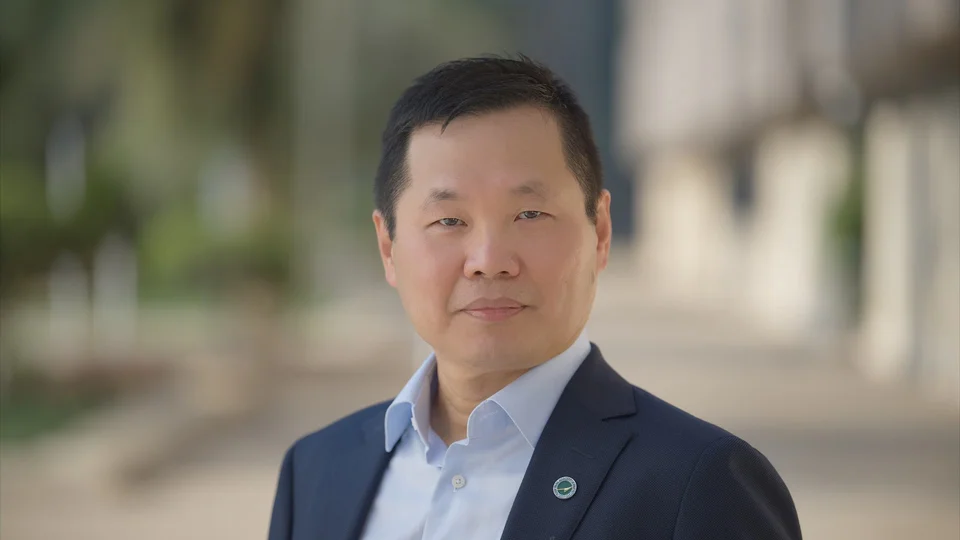
Boon Ooi
- Al-Khawarzmi Distinguished Professor, Electrical and Computer Engineering