
Simulation of Metasurfaces Described by Generalized Sheet Transition Conditions Using Integral Equations
This seminar outlines the development of computationally efficient integral equation solvers that simulate complex multiscale metasurfaces by modeling their physical geometries as infinitesimally thin sheets governed by generalized sheet transition conditions, thereby avoiding the need for full volumetric discretization.
Overview
This seminar is about the development of advanced integral equation solvers designed to address the computational challenges inherent in the multiscale nature of metasurfaces. In these formulations, the physical geometry of the unit cells is replaced by an infinitesimally thin sheet where generalized sheet transition conditions (GSTCs) are strictly enforced. The electromagnetic response is characterized by equivalent electric and magnetic surface susceptibility tensors, which are utilized to connect the fields across the interface. For the simulation of monoanisotropic and bianisotropic structures, both single-trace and multi-trace surface integral equations are coupled with these transition conditions. Furthermore, the incorporation of normal field components is facilitated through a thin-sheet volume integral equation approach, whereby polarization currents are accurately represented without the requirement of a full volumetric discretization. The accuracy and numerical efficiency of the proposed solvers are demonstrated through various complex electromagnetic benchmarks.
Presenters
Brief Biography
Sebastian Celis Sierra received the B.Eng. degrees in Electrical and Electronics Engineering from Universidad de los Andes, Bogotá, in 2018, and the M.S. and Ph.D. degrees in Electrical and Computer Engineering from King Abdullah University of Science and Technology (KAUST), Thuwal, Saudi Arabia, in 2020 and 2026, respectively. He is currently a Postdoctoral Fellow at KAUST under the supervision of Hakan Bagci. His research interests include computational electromagnetics, specifically time-domain integral equation solvers, bianisotropic structures, and the characterization of 2D materials like graphene.
Related People
Related Researchers
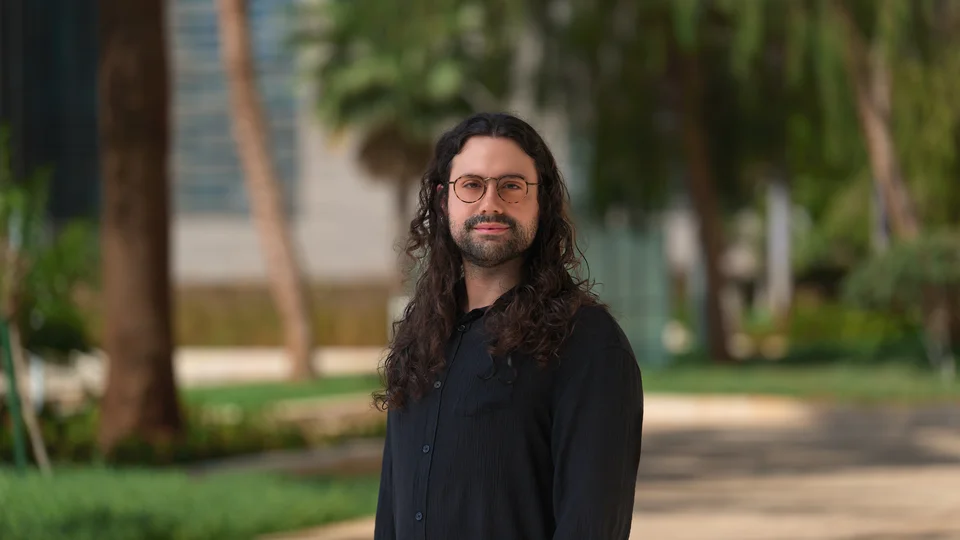
Sebastian Celis Sierra
- Postdoctoral Research Fellow, Electrical and Computer Engineering