
Time Series Clustering: Pattern Recognition, Forecasting, and Amortized Inference
This talk presents innovative time series clustering techniques, highlighting a quantile-based approach for analyzing locally stationary data, a predictive framework for enhanced forecasting, and the use of amortized inference to overcome traditional algorithmic limitations.
Overview
Time series clustering is a central task in statistics, with wide-ranging applications in demography, finance, biology, medicine, and other fields. The objective is to partition a collection of unlabeled time series into homogeneous groups such that similar series are assigned to the same cluster, while dissimilar ones are placed in different clusters. Traditionally, time series clustering has been used primarily for pattern recognition, that is, for detecting and summarizing patterns in collections of time series. In this context, the first part of the talk introduces a method for clustering locally stationary time series based on a dissimilarity measure relying on local quantile autocorrelation estimators. The method is evaluated in a simulation study, and its practical relevance is demonstrated using particulate matter data from KAUST. The second part presents a clustering framework designed to enhance forecasting by grouping time series according to predictive accuracy, yielding improved results across benchmark datasets. Finally, the talk discusses how amortized inference can address major challenges in time series clustering, such as algorithm selection, optimization limitations, and determination of the number of clusters, offering a promising unified solution to these complex issues.
Presenters
Brief Biography
Dr. López Oriona received his bachelor’s degree in Mathematics and his master’s degree in Statistics both from the University of Santiago de Compostela (Spain), his master’s degree in Big Data Analytics from the European University of Madrid (Spain), and his PhD in Statistics from the University of A Coruña (Spain). He was a Visiting Researcher at the Sapienza University of Rome (Italy), the University of Sydney (Australia), the Helmut Schmidt University of Hamburg (Germany), and Lancaster University (United Kingdom). Since September 2023, he is a Postdoctoral Fellow in the Environmental Statistics Research Group at KAUST, under the supervision of Professor Ying Sun.
Related People
Related Researchers
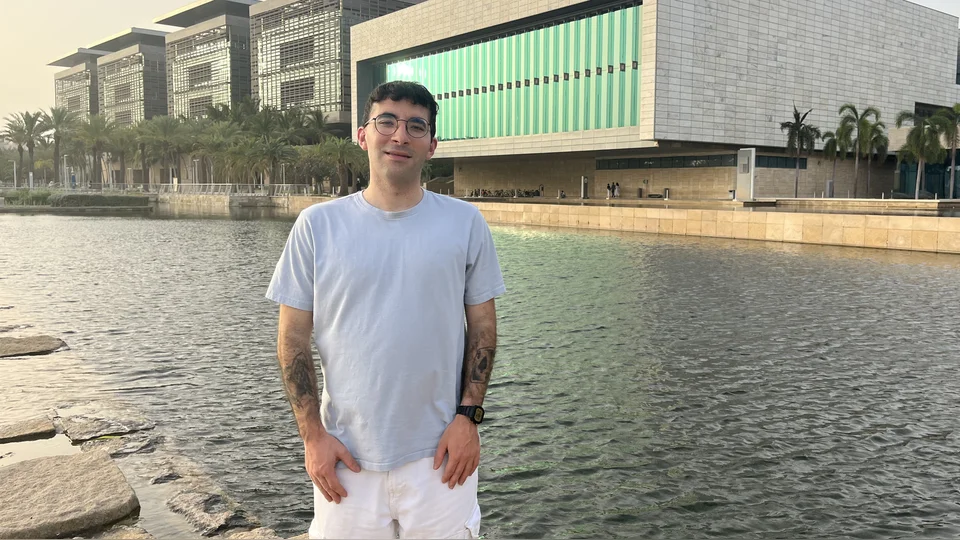
Ángel López Oriona
- Postdoctoral Research Fellow, Statistics