
Computer Science: Research, Innovation & AI at the Frontier
KAUST's Computer Science department is a research-intensive graduate program covering AI, systems, security, HPC, and computational biology, with strong faculty, industry partnerships, and citation impact.
Overview
In this talk, I will cover the computer science program structure (M.S. thesis/non-thesis and Ph.D. tracks, requirements, and timelines); enrollment and demographic statistics; seven research areas spanning AI/ML, systems, security, HPC, theory, and computational biosciences; profiles of eight AI faculty. A deep-dive on Prof. Basem Shihada's NetLab research group, focused on AI-driven 6G networks, with specific projects (Sun-Fi sunlight-based data transmission, UAV camel-grazing detection, swarm UAV networks, maritime RAN slicing, HAP-based data centers, wearable health AI); and a closing "Why KAUST CS" pitch citing industry partnerships (Aramco, Google, Ericsson, NEOM), alumni outcomes, and infrastructure (Shaheen III supercomputer).
Presenters
Brief Biography
Basem Shihada obtained his Ph.D. in computer science from the University of Waterloo, Canada, in 2007. Shortly after completing his studies, Shihada joined KAUST in 2008 as a founding faculty member.
He is currently a professor of computer science in the Computer, Electrical and Mathematical Sciences and Engineering Division at KAUST.
His expertise lies in developing next-generation wireless systems, and he has made significant contributions across several domains, including intelligent wireless systems, wireless underwater systems, molecular communication systems, and non-terrestrial networks. One of Shihada’s most notable achievements is the creation and successful demonstration of Aqua-Fi, the world’s first underwater Wi-Fi system. This pioneering work marked a major breakthrough by enabling high-speed internet connectivity in aquatic environments.
His research, conducted in close collaboration with students and colleagues, has earned multiple best-paper awards at leading international conferences. Shihada's contributions have also appeared in top-tier journals, including Nature Electronics, IEEE Transactions on Communications, and IEEE Transactions on Wireless Communications.
Related People
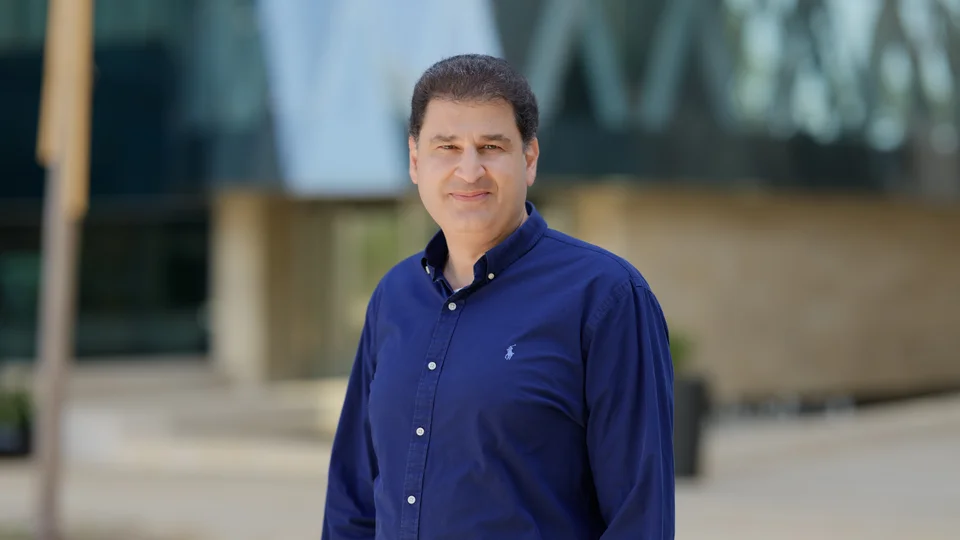
Basem Shihada
- Program Chair, Computer Science