
This seminar introduces the Lean proof assistant from the perspective of reading and auditing mathematical statements, exploring its role in auto-formalization and its capacity to expose tacit assumptions in mathematical research.
Overview
As formalization tools like Lean 4 become increasingly capable, the mathematical community faces a new challenge: while a machine can perfectly verify a proof, ensuring that a formal statement accurately reflects the intended mathematical theorem remains an irreducibly human task. This seminar offers an introduction to Lean designed specifically around reading and understanding formal definitions and theorem statements rather than writing proof scripts. We will explore the overarching goals of auto-formalization, focusing on creating auditable bridges between machine-checked code and ordinary mathematical prose. Furthermore, we will discuss why researchers should care about this translation process. By examining recent formalization efforts, we will demonstrate how translating mathematics into Lean systematically surfaces implicit assumptions, enforces rigorous boundary conditions, and exposes tacit regularity gaps that often go unnoticed in traditional peer review. Ultimately, the seminar will highlight how formalization acts not just as a verification tool, but as a mechanism to clarify mathematical communication and enable domain experts to audit statements without needing to be Lean experts themselves.
Presenters
Brief Biography
Diogo Gomes is a professor of Applied Mathematics and Computational Science (AMCS) at KAUST.
He received his Ph.D. in Mathematics in 2000 from the University of California at Berkeley, U.S. Gomes completed his postdoctoral studies at the Institute for Advanced Study, Princeton University, U.S., in 2000, and at the University of Texas at Austin, U.S., in 2001. In 2006, he earned a Habilitation in Mathematics from the Technical University of Lisbon, Portugal.
In recognition of his academic excellence, Gomes was awarded UC Berkeley’s Morrey Prize in 1997. He has served as Editor of Minimax Theory and its Applications and the Journal of Dynamics and Games and Dynamic Games and Applications.
Related People
Related Researchers
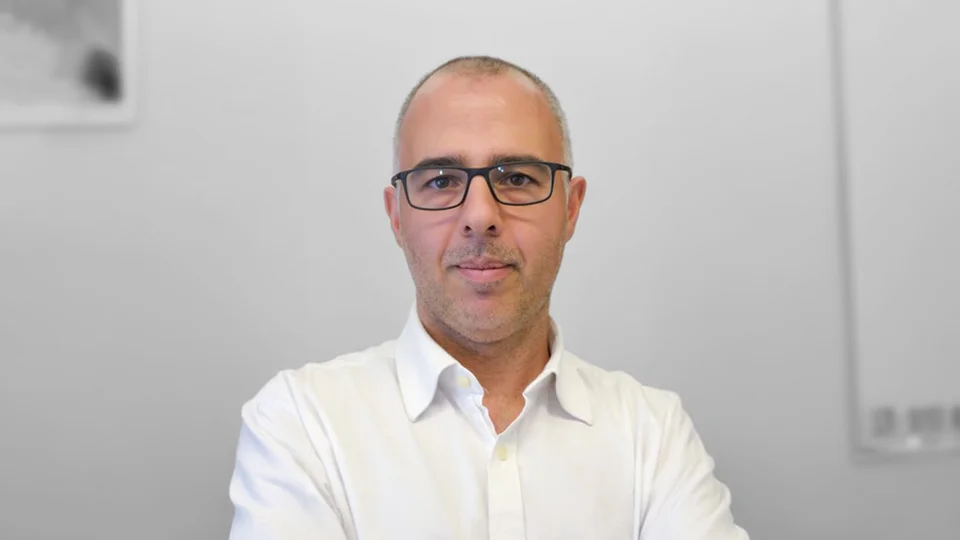
Diogo Gomes
- Associate Dean for Students, Computer, Electrical and Mathematical Sciences and Engineering