Trustworthy AI Begins in the Data Center
Debates on trustworthy AI focus on model bias, alignment, and explainability. Yet, trust in AI is only as strong as the security and resilience of the infrastructure it runs on.
Overview
Debates on trustworthy AI focus on model bias, alignment, and explainability. Yet, trust in AI is only as strong as the security and resilience of the infrastructure it runs on. As the world concentrates AI compute into a handful of hyperscale, gigawatt-scale data centers, it creates critical national infrastructure without the protection doctrine such infrastructure demands. In this talk, Prof. Di Pietro draws on his work in critical-infrastructure protection and distributed-systems security to set out the threat surface unique to physical AI infrastructure: supply-chain and hardware risks, model-weight theft, and others specific to the Gulf region. He will also address the financial dimension - total cost of ownership and return on investment - that shapes how securely this infrastructure is actually built. He then turns to the resilience challenges that determine whether AI capability stays online under stress.
Presenters
Brief Biography
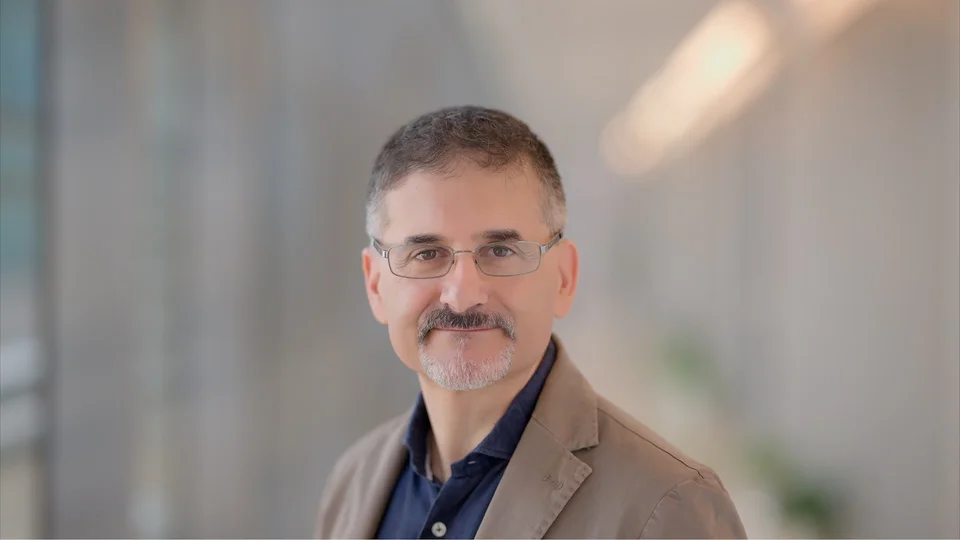
Roberto Di Pietro (Fellow, IEEE; Distinguished Scientist, ACM; Fellow, AAIA; Member Academia Europaea) is a Professor of Computer Science with the KAUST CEMSE Division, Saudi Arabia. Previously, he was a Professor in Cybersecurity and founder of the Cyber-Security Research Innovation Lab (CRI-Lab) at Hamad Bin Khalifa University (HBKU)-College of Science and Engineering (CES), Qatar.
Previously, at Bell Labs (Alcatel-Lucent/Nokia), he served as Global Head for Security Research, managing three security research departments based in Paris, Munich and Espoo, aligning research with business objectives and moving research results into innovation. Before, he was a tenured professor at the University of Padova. He started his career as a senior military officer within the Italian Ministry of Defence (MoD), working on security-related nationwide technology projects.
He has been working in the cybersecurity field for more than 25 years, leading technology-oriented and research-focused teams in the private sector, government and academia. He has served as a senior security consultant for international organizations, including the United Nations (U.N.) and U.N. agencies (the International Atomic Energy Agency (IAEA), the United Nations Global Service Centre (UNLB) and the World Intellectual Property Organization (WIPO)). In addition to his international experience, he was appointed Seconded National Expert and detached for one year at the European Union Agency for Criminal Justice Cooperation (Eurojust).
As per his drive for innovation, besides being involved in the mergers and acquisitions (M&A) of startups—and having founded one (exited)—he is on the board of research centres and startups.
In 2011-2012, he was awarded a Chair of Excellence from the University Carlos III, Madrid, Spain. In 2020, he received the Jean-Claude Laprie Award for having significantly influenced the theory and practice of Dependable Computing. In 2022, he was awarded the Individual Innovation Award from HBKU. He has been consistently included in Stanford University's "World Ranking Top 2% Scientists" list since this ranking existed.
His education accounts for an M.S. in Computer Science ('94) and an M.S. in Informatics ('03), both from the University of Pisa (UniPi), Italy, and a Specialization Diploma in Operations Research and Strategic Decisions ('03) and a Ph.D. degree in Computer Science ('04), both from the University of Rome "La Sapienza."
In his academic career, he has secured more than $9 million in funding (either as LPI or PI).