A Unified and Computationally Efficient Non-Gaussian Statistical Modeling Framework
This thesis develops a linear latent non-Gaussian modeling framework that extends latent Gaussian models to accommodate skewness, heavy tails, and extremes while preserving computational tractability, along with its implementation in the R package ngme2.
Overview
Latent Gaussian models (LGMs) provide a powerful framework for complex data, including spatio-temporal and multivariate settings, but the Gaussian assumption can be too restrictive in the presence of skewness, heavy tails, or intermittent extremes. This dissertation develops a linear latent non-Gaussian model (LLnGM) framework that preserves the computational backbone of LGMs through operator-based dependence representations, while allowing non-Gaussian latent variability via conditionally Gaussian variance-mixture augmentations.
The framework supports modular construction of complex latent structures, including additive, multivariate, separable space-time, and filtered-innovation components. For inference, stochastic gradient estimators of the log posterior are derived using Fisher’s identity and Gibbs sampling, with Rao-Blackwellization used to reduce Monte Carlo variance. These estimators enable both maximum a posteriori optimization and stochastic gradient Langevin dynamics for posterior exploration. The dissertation further establishes geometric ergodicity and trace-class properties of the associated Gibbs sampler, providing theoretical guarantees for convergence and for the validity of Monte Carlo-based inference.
The methodology is implemented in the R package ngme2. Applications to ecological, clinical, and environmental data demonstrate that non-Gaussian latent operators can improve model fit and uncertainty quantification when Gaussian assumptions are inadequate.
Presenters
Brief Biography
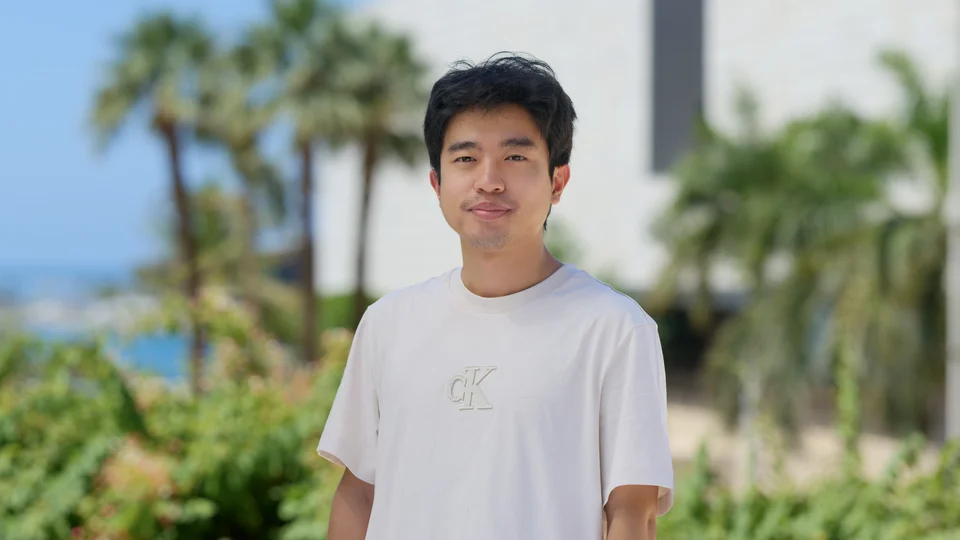
Xiaotian Jin is a Ph.D. candidate in Statistics at King Abdullah University of Science and Technology (KAUST), working under the supervision of Professor David Bolin. He received his B.S. degree in computer science from Wenzhou-Kean University, China, in 2020 and his M.S. degree in Statistics from KAUST in 2021.