This thesis establishes methods, evaluation protocols, and insights toward machine learning systems that are practical, adaptive, efficient, and trustworthy paving path for practical machine learning that rests on key three pillars: adaptation, efficiency, and trustworthiness.
Overview
The proliferation of large-scale foundation models has transformed machine learning, yet their practical deployment remains limited by challenges in adapting to dynamic environments, operating under resource constraints, and ensuring reliable and safe behavior. This dissertation argues that the path toward practical machine learning rests on three pillars: adaptation, efficiency, and trustworthiness.
First, the dissertation revisits continual learning under realistic computational budgets, showing that many sophisticated methods fail to outperform simple baselines when compute is constrained. It then examines how adaptation is evaluated in online continual learning, showing that online accuracy can be inflated by spurious label correlations and proposing near-future accuracy as a more reliable measure of true adaptation. To improve efficiency, the dissertation introduces name-only continual learning, where models adapt to new classes using only class names by leveraging uncurated webly supervised data, reducing dependence on costly manual annotation. It also studies how pretraining data diversity affects self-supervised learning under fixed compute, revealing that simply increasing diversity is insufficient to overcome distribution shifts. Finally, the dissertation investigates trustworthiness in model merging, demonstrating that a single misaligned model can compromise the safety of a merged model and proposing a safety-aware merging pipeline that preserves both expertise and alignment.
Together, these contributions provide methods, evaluation protocols, and insights toward machine learning systems that are practical, adaptive, efficient, and trustworthy.
Presenters
Brief Biography
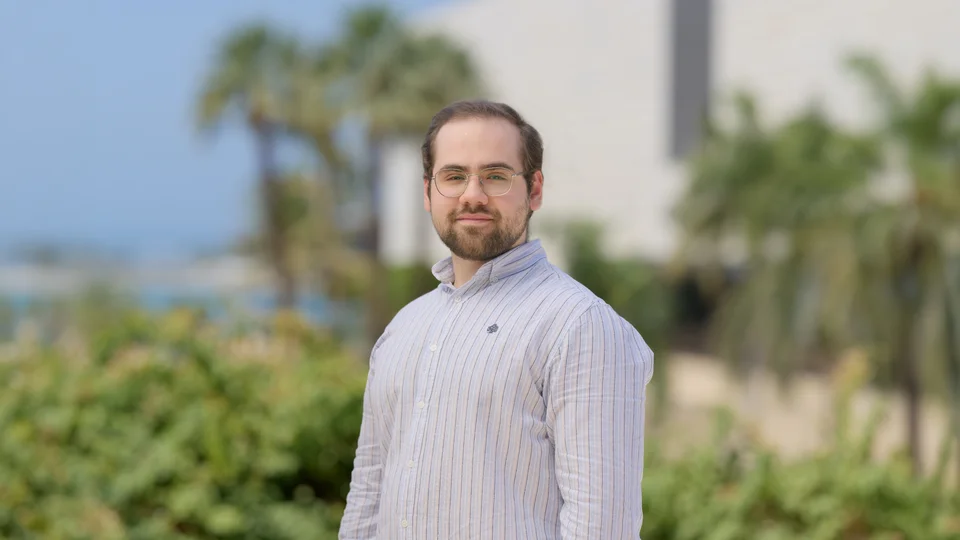
Hasan Abed Al Kader Hammoud is a Ph.D. candidate in Electrical and Computer Engineering at King Abdullah University of Science and Technology (KAUST), advised by Prof. Bernard Ghanem. During his Ph.D., he also completed research internships at the University of Oxford and Samsung Research UK. Hasan received his B.E. in Electrical and Computer Engineering from the American University of Beirut and his M.S. from KAUST. He is currently a Member of Technical Staff at OpenAI.