Flexible Electronics: From Printed Human–Machine Interfaces to Colloidal Quantum Dot Infrared Optoelectronics
This thesis develops flexible electronic and optoelectronic platforms of increasing complexity, progressing from printed sensing and human–machine interaction to colloidal quantum dot (CQD) infrared imaging and the foundations of transistor-based infrared detection.
Overview
Flexible electronics offer lightweight, conformable, and mechanically adaptable alternatives to conventional rigid technologies. Their realization, however, requires coordinated innovation in materials, fabrication, device architecture, and system integration to preserve functionality under deformation while enabling low-temperature, scalable processing.
First, conductive silver inks are directly patterned on polymer substrates to fabricate capacitive devices without photolithography or vacuum processing. The resulting pressure-sensitive touch and strain sensors are integrated into wearable interfaces for wireless wheelchair control, smart-keypad operation, and joint monitoring. These demonstrations show that solution-based fabrication can combine mechanical compliance, sensing, readout, communication, and user interaction within a complete flexible system.
The thesis then addresses flexible infrared imaging using heavy-metal-free InAs/ZnSe CQDs. Because deformation can disrupt interparticle coupling in mechanically fragile CQD solids, a strain-decoupled architecture is introduced, comprising isolated active regions integrated onto a flexible thin-film-transistor backplane. The resulting 64$\times$64-pixel short-wave infrared imager operates near 1550 nm, achieves approximately 14\% external quantum efficiency, and retains imaging performance under bending and twisting, with only limited spatial-resolution degradation. Through-silicon imaging and photovoltaic inspection demonstrate its practical utility.
Finally, nanogap transistors are developed to investigate charge transport across channels only a few quantum dots long and establish the basis for flexible infrared phototransistors. Empty-device controls reveal several orders of magnitude of apparent gate-dependent current modulation originating from the device stack itself. A control-based methodology is therefore established to distinguish genuine CQD conductance from parasitic responses. Near-band-edge photoconductance is resolved in a PbS reference material, whereas the investigated multishell InAs CQD films remain within the empty-device response envelope and cannot yet be assigned an unambiguous lateral transport contribution.
Collectively, this thesis establishes complementary fabrication, integration, and measurement strategies that advance flexible electronics from passive sensing toward infrared imaging and actively controlled optoelectronics. Future work will transfer the optimized transistor architecture to flexible substrates and engineer InAs CQD solids combining effective passivation, efficient transport, low dark current, and photoconductive gain.
Presenters
Brief Biography
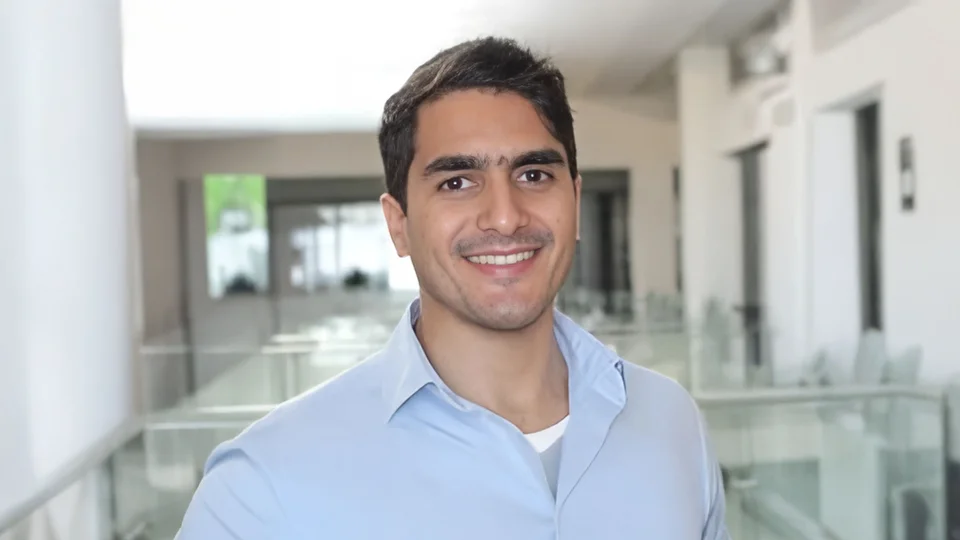
Ali Mohammed Alrashoudi is a PhD candidate in Electrical and Computer Engineering at King Abdullah University of Science and Technology (KAUST), working in Prof. Osman M. Bakr’s Functional Nanomaterials Laboratory research group. He was a KAUST Gifted Student Program scholar from 2011 to 2016, he received his B.S. in Electrical Engineering from Purdue University in 2016 and an M.Ss in Electrical Engineering from KAUST in 2019. He joined NTiS in 2019 and has headed its IC Design House Program.