Modeling of Nonstationary Extremal Dependence
This thesis develops three complementary approaches for flexible and efficient modeling of nonstationary spatial dependence.
Overview
Spatial extremes often exhibit nonstationary dependence across large or geographically complex regions, making conventional stationary models inadequate and statistical inference computationally challenging. First, we propose a locally stationary max-stable modeling framework with spatial regularization and a data-driven subregion-merging algorithm to obtain parsimonious and interpretable dependence estimates, illustrated using temperature extremes in Nepal. Second, we develop a deep spatial deformation approach combined with r-Pareto processes, transforming the spatial domain into a latent space where stationarity and isotropy can be reasonably assumed while avoiding space-folding. This approach is applied to UK precipitation extremes. Third, we introduce neural Bayes estimators based on a directional spatial graph convolutional network for fast, likelihood-free inference of spatially varying dependence parameters on irregular spatial configurations, together with uncertainty quantification. Simulations and an application to Italian nitrogen dioxide data demonstrate its ability to capture complex nonstationary and anisotropic dependence. Together, these contributions provide flexible and computationally efficient methods for modeling nonstationary spatial processes and extremes.
Presenters
Brief Biography
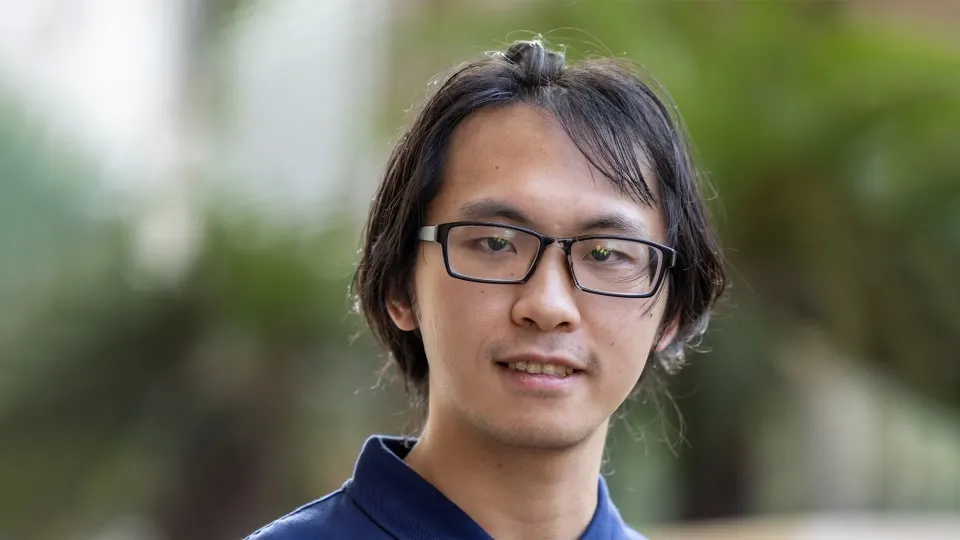
Xuanjie Shao is a Ph.D. student in Statistics at King Abdullah University of Science and Technology (KAUST), under the supervision of Prof. Raphaël G. Huser. He obtained his M.S. degree in Statistics from KAUST in 2020, and B.S. from the Southern University of Science and Technology (SUSTech), Shenzhen, China.