Causal Representation Learning
In this talk, we will explore the latest advancements in the emerging field of causal representation learning (CRL).
Overview
Machine learning (ML) has shown great success in learning low-dimensional and semantically interpretable representations of high-dimensional data. Recent advancements in transformer design have further expanded the scope of representation learning. Despite such success, strong generalization — the transfer of learned representations to new problems — remains an unsolved problem. Addressing strong representation requires moving away from learning good enough representations to learning ground truth representations. As a key step toward strong generalization, causal representation learning (CRL) has emerged as a cutting-edge field that merges the strengths of statistical inference, machine learning, and causal inference. Its objective is to estimate the ground truth latent representation of the data and the rich structures that model the interactions among the variables in the latent space.
In this talk, we will explore the latest advancements in the emerging field of CRL. We will introduce the foundational concepts and motivations behind combining representation learning with causal inference. Following a brief history of CRL, we will outline its primary objectives and the theoretical challenges it faces. We will then review the key approaches to address these challenges, including CRL with multi-view observations, CRL with interventions on latent variables, and CRL applied to temporal data. We will also highlight real-world application opportunities, discuss the challenges of scaling CRL to practical use cases, and explore open questions related to CRL from both theoretical and empirical viewpoints.
Presenters
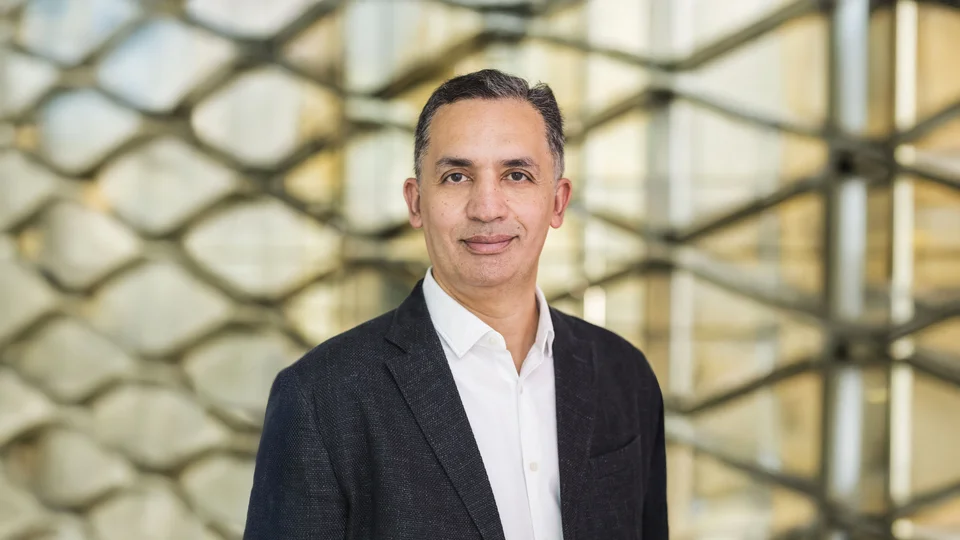
Ali Tajer, Professor, Electrical, Computer, and Systems Engineering
Brief Biography
Ali Tajer received a B.S. and an M.S. degree in Electrical Engineering from Sharif University of Technology, an M.A. in Statistics, and a Ph.D. in Electrical Engineering from Columbia University. During 2010-2012, he was a Postdoctoral Research Associate at Princeton University. He is currently a Professor of Electrical, Computer, and Systems Engineering at Rensselaer Polytechnic Institute. His research interests include mathematical statistics, machine learning, and information theory. He is currently an Associate Editor for the IEEE Transactions on Information Theory and a Senior Area Editor for the IEEE Transactions on Signal Processing. In the past, he has served as an Associate Editor for the IEEE Transactions on Signal Processing, an Editor for the IEEE Transactions on Communications, and a Guest Editor for the IEEE Signal Processing Magazine. He received the Jury Award (Columbia University), School of Engineering Research Excellence Award for Junior Faculty (Rensselaer), School of Engineering Classroom Excellence Award (Rensselaer), James M. Tien '66 Early Career Award for Faculty (Rensselaer), School of Engineering Classroom Excellence Award for Senior Faculty (Rensselaer), and a CAREER award from the U.S. National. He is a member of the 2025-2026 class of Distinguished Lecturers of the IEEE Information Theory Society.