About Bang Huang Bang Huang Postdoctoral Research Fellow, Electrical and Computer Engineering FDA-MIMO Radar Talget Detection ISAC haps remote sensing Bang Huang works as a postdoctoral fellow at the Computer Electrical and Mathematical Sciences and Engineering Division (CEMSE), King Abdullah University of Science and Technology (KAUST), under the supervision of Prof. Mohamed-Slim Alouini in the Communication Theory Lab (CTL). Education and Early Career Bang Huang received the M.S. degree (with honors) in electrical engineering and Ph.D degree in information and communication engineering from the School of Information and Communication Engineering (SICE), University of Electronic Science and Technology of China (UESTC), Chengdu, China, in Articles Related News October 2026 KAUST research develops HAPS-borne radar for persistent, real-time disaster monitoring 3 min read · Sat, Oct 3 2026 News HAPSs radar Sensing disaster monitoring SAR Researchers at King Abdullah University of Science and Technology (KAUST) have developed a joint trajectory-and-resource optimization framework that enables a high-altitude platform station (HAPS) to carry out synthetic aperture radar (SAR) sensing while carefully managing the limited energy available for flight, radar operation and communication. The team, including Bang Huang, Ki-Hong Park, Xiaowei Pang and Mohamed-Slim Alouini, investigated how solar-powered HAPS aircraft operating in the stratosphere, typically around 20 to 30 kilometers above the ground, could carry SAR payloads to August 2026 KAUST research develops joint beamforming and deployment strategies for ISAC-enabled HAPS systems 2 min read · Sun, Aug 2 2026 News High-Altitude Platform Stations haps Integrated Sensing and Communications ISAC Synthetic Aperture Radar 6g wireless systems Researchers at King Abdullah University of Science and Technology (KAUST) have developed a unified design framework for integrated sensing and communication (ISAC)-enabled high-altitude platform stations (HAPS). By jointly optimizing platform deployment and beamforming, the framework enables a HAPS to simultaneously provide wireless communications and high-resolution synthetic aperture radar (SAR) imaging, offering practical design guidelines for future multifunctional aerial platforms. The study, led by Xue Zhang, Dr. Bang Huang, and Prof. Mohamed-Slim Alouini, addresses one of the key
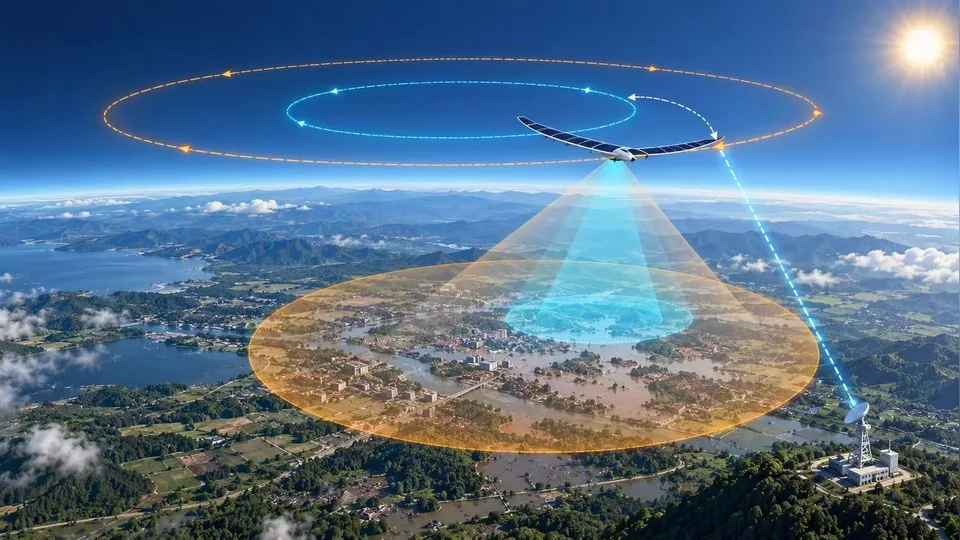
KAUST research develops HAPS-borne radar for persistent, real-time disaster monitoring 3 min read · Sat, Oct 3 2026 News HAPSs radar Sensing disaster monitoring SAR Researchers at King Abdullah University of Science and Technology (KAUST) have developed a joint trajectory-and-resource optimization framework that enables a high-altitude platform station (HAPS) to carry out synthetic aperture radar (SAR) sensing while carefully managing the limited energy available for flight, radar operation and communication. The team, including Bang Huang, Ki-Hong Park, Xiaowei Pang and Mohamed-Slim Alouini, investigated how solar-powered HAPS aircraft operating in the stratosphere, typically around 20 to 30 kilometers above the ground, could carry SAR payloads to
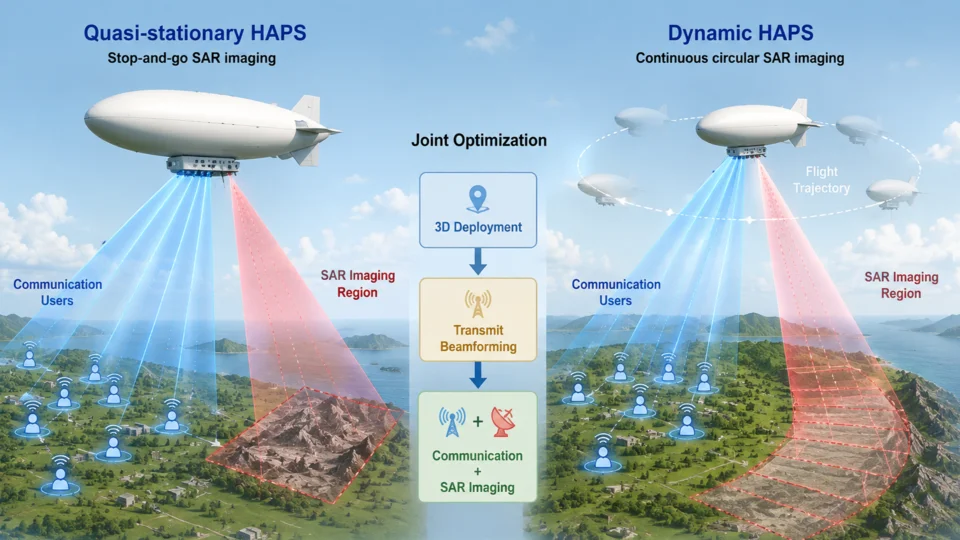
KAUST research develops joint beamforming and deployment strategies for ISAC-enabled HAPS systems 2 min read · Sun, Aug 2 2026 News High-Altitude Platform Stations haps Integrated Sensing and Communications ISAC Synthetic Aperture Radar 6g wireless systems Researchers at King Abdullah University of Science and Technology (KAUST) have developed a unified design framework for integrated sensing and communication (ISAC)-enabled high-altitude platform stations (HAPS). By jointly optimizing platform deployment and beamforming, the framework enables a HAPS to simultaneously provide wireless communications and high-resolution synthetic aperture radar (SAR) imaging, offering practical design guidelines for future multifunctional aerial platforms. The study, led by Xue Zhang, Dr. Bang Huang, and Prof. Mohamed-Slim Alouini, addresses one of the key
Related Sites Electrical and Computer Engineering (ECE) Communication Theory Lab (CTL) Related Content Articles 2 Related Links Google Scholar