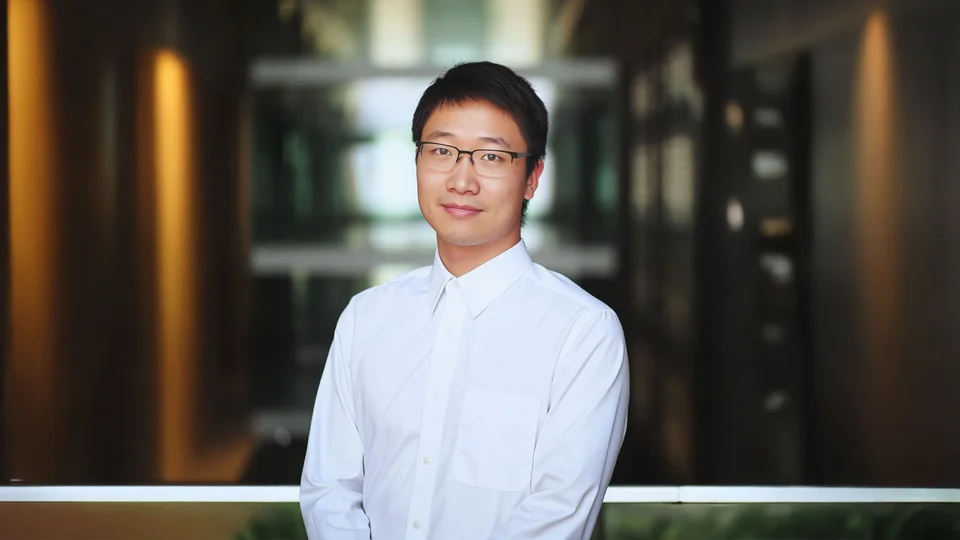
About Deng Luo Deng Luo Ph.D. Student, Computer Science bioinformatics artificial intelligence nanovisualization Deng Luo is a Ph.D. Candidate in the Computer Science program under the supervision of Professor Ivan Viola at the Visual Computer Center (VCC) at King Abdullah University of Science and Technology (KAUST) in Saudi Arabia. Articles Related News November 2020 Peering under the hood of SARS-CoV-Two 1 min read · Sun, Nov 8 2020 News visual computing Computer science COVID-19 Microscope and protein data are incorporated into an easy-to-use-and-update tool that can model an organism’s 3D appearance. May 2020 Modeling in the Time of COVID-19: Statistical and Rule-based Mesoscale Models 1 min read · Wed, May 6 2020 News visualization computer graphics bioinformatics We present a new technique for rapid modeling and construction of scientifically accurate mesoscale biological models. Resulting 3D models are based on few 2D microscopy scans and the latest knowledge about the biological entity represented as a set of geometric relationships. Our new technique is based on statistical and rule-based modeling approaches that are rapid to author, fast to construct, and easy to revise. From a few 2D microscopy scans, we learn statistical properties of various structural aspects, such as the outer membrane shape, spatial properties and distribution characteristics
Peering under the hood of SARS-CoV-Two 1 min read · Sun, Nov 8 2020 News visual computing Computer science COVID-19 Microscope and protein data are incorporated into an easy-to-use-and-update tool that can model an organism’s 3D appearance.
Modeling in the Time of COVID-19: Statistical and Rule-based Mesoscale Models 1 min read · Wed, May 6 2020 News visualization computer graphics bioinformatics We present a new technique for rapid modeling and construction of scientifically accurate mesoscale biological models. Resulting 3D models are based on few 2D microscopy scans and the latest knowledge about the biological entity represented as a set of geometric relationships. Our new technique is based on statistical and rule-based modeling approaches that are rapid to author, fast to construct, and easy to revise. From a few 2D microscopy scans, we learn statistical properties of various structural aspects, such as the outer membrane shape, spatial properties and distribution characteristics
Engage ORCID KAUST Repository LinkedIn ShareClipboard Related Sites Nanovisualization (NANOVIS) Cell Visualization Summit (Cellvis) Computer Science (CS) Related Content Articles 2 Events 1