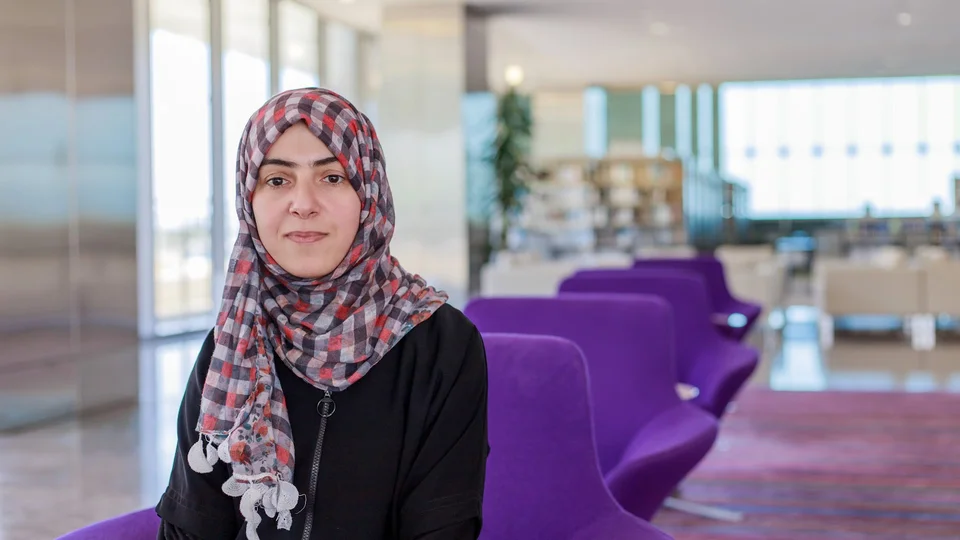
About Enas M. Odat Enas M. Odat Ph.D. Student, Electrical and Computer Engineering machine learning game theory cyber-physical systems Enas Odat received the B.S. degree in computer engineering from the Jordan University of Science and Technology in 2009, and the M.S. degree from the Department of Computer Science, King Abdullah University of Science and Technology, in 2011, where she is currently pursuing the Ph.D. degree. Her research interests include machine learning, game theory, and Cyber-Physical systems. Education Profile MS. Computer Sciences, King Abdullah University of Sciences and Technology (KAUST), 2011 BS. Computer Engineering, Jordan University of Science and Technology (JUST), 2009 Events Presented Events Jul 28 - Aug 3, 2019 Traffic Monitoring and MAC-Layer Design for Future IoT Systems Enas M. Odat, Ph.D. Student, Electrical and Computer Engineering Jul 28, 14:00 - 16:00 B1 L4 R4214 machine learning game theory cyber-physical systems The advances in the technology and the emergence of low complexity intelligent devices result in the evolution of the Internet-of-Things (IoT). One of the most important resources is the wireless channel, which is a shared resource; thus, it is necessary for the nodes to have methods that schedule channel access. This thesis considers the problem of distributed sensing and channel access in the context of IoT systems, where a set of selfish nodes competes for transmission opportunities. In the channel access part, a memory-one channel access game is proposed to reduce the collision rate, to enhance the cooperation among the nodes, and to maximize their payoffs by optimizing their channel access probabilities, based on the channel state in the previous time step.
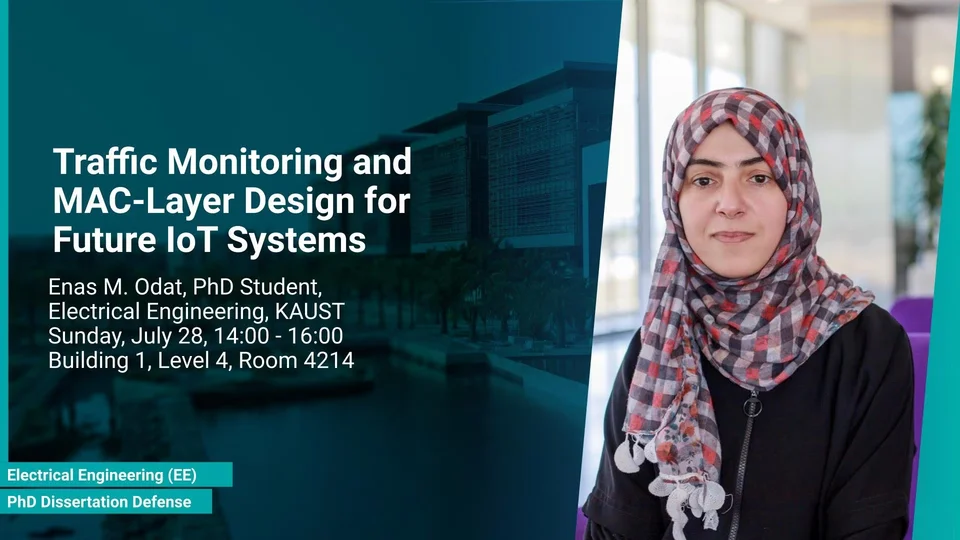
Traffic Monitoring and MAC-Layer Design for Future IoT Systems Enas M. Odat, Ph.D. Student, Electrical and Computer Engineering Jul 28, 14:00 - 16:00 B1 L4 R4214 machine learning game theory cyber-physical systems The advances in the technology and the emergence of low complexity intelligent devices result in the evolution of the Internet-of-Things (IoT). One of the most important resources is the wireless channel, which is a shared resource; thus, it is necessary for the nodes to have methods that schedule channel access. This thesis considers the problem of distributed sensing and channel access in the context of IoT systems, where a set of selfish nodes competes for transmission opportunities. In the channel access part, a memory-one channel access game is proposed to reduce the collision rate, to enhance the cooperation among the nodes, and to maximize their payoffs by optimizing their channel access probabilities, based on the channel state in the previous time step.