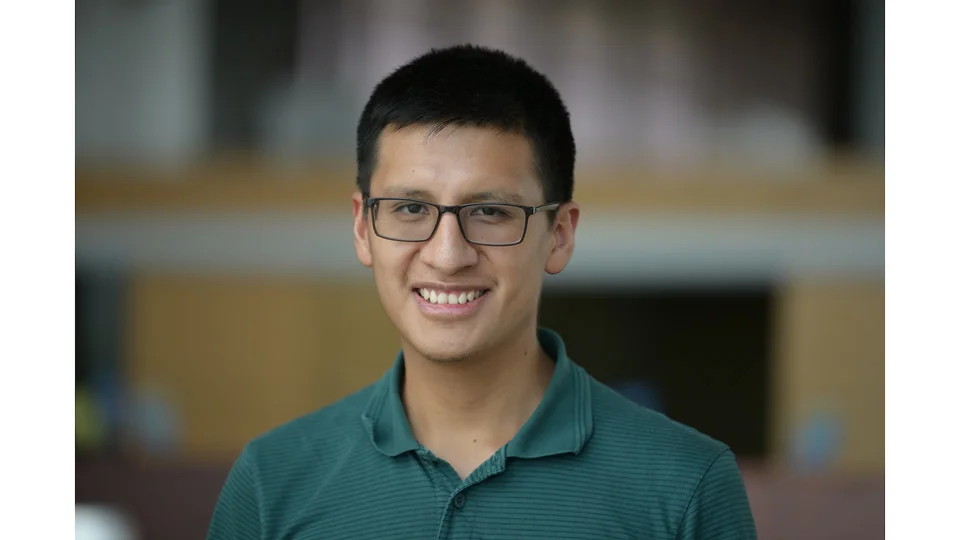
About Fernando Patricio Zhapa-Camacho Fernando Patricio Zhapa-Camacho Postdoctoral Research Fellow, Computer Science Knowledge representation and reasoning Neuro-Symbolic AI bioinformatics Fernando Patricio Zhapa Camacho is an M.S./Ph.D. candidate in the KAUST Bio-Ontology research group under the supervision of Professor Robert Hoehndorf. Before joining KAUST, Fernando obtained a bachelor's degree in Information Technology from Yachay Tech University, Ecuador. Research Interests Fernando’s research interests include knowledge representation and reasoning, machine learning and bioinformatics. He is interested in artificial intelligence and logic integration with applications in biology. Professional Profile: • 2020 to present: Graduate Student, KAUST, Thuwal, Saudi Arabia. • Projects Related Projects 2023 Towards sound, complete, and explainable machine learning with biomedical ontologies (CRG11) Sun, Jan 1 2023 - Thu, Dec 31 2026 Applied Ontology Neuro-Symbolic AI Ontology engineering Semantic similarity Deep learning has driven much of the recent progress in bioinformatics, but the resulting models are essentially black boxes: it is hard or impossible to ask why a prediction was made, to verify it against existing knowledge, or to detect biases that emerge from the interaction of dataset, architecture, and training objective. In clinical and biomedical settings these limitations matter, both because clinicians need to trust the systems they use and because formal guarantees of soundness and fairness can only be obtained when the inferential machinery can be inspected. The grand challenge 2021 IBNSINA-QI: Integrating Biomedical Networks and Semantic Information for Neural network Analysis of Quantitative Information Fri, Jan 1 2021 - Sun, Dec 31 2023 Applied Ontology Neuro-Symbolic AI Rare disease Biological measurements are inherently high-dimensional and heterogeneous: omics platforms produce thousands to millions of features per individual, and they coexist with qualitative information such as diagnoses, phenotype calls, and prescriptions. Biomedical ontologies and knowledge graphs encode rich qualitative background knowledge, but they are largely disconnected from the quantitative measurements that gave rise to the categorical phenotypes in the first place. Conversely, graph neural networks and other methods that handle quantitative data on graphs do not yet exploit the formal
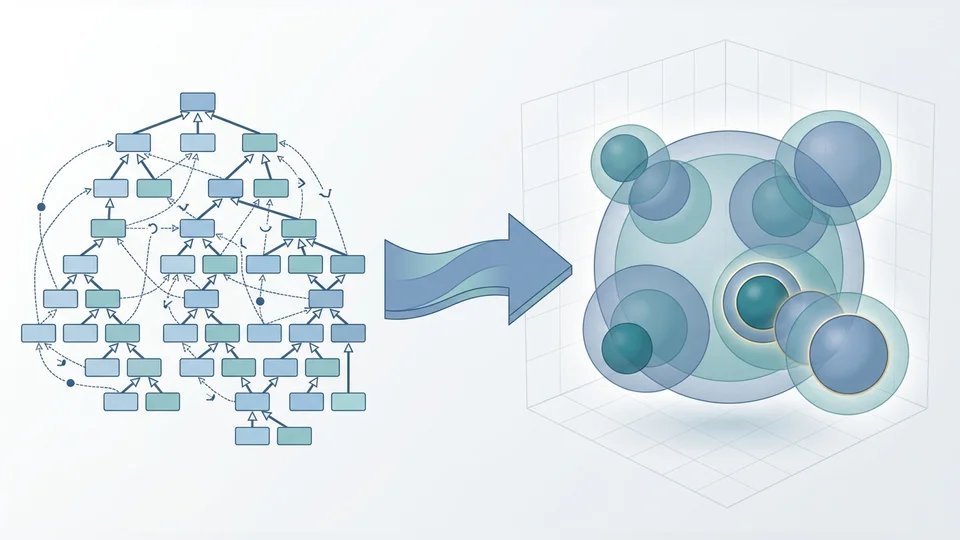
Towards sound, complete, and explainable machine learning with biomedical ontologies (CRG11) Sun, Jan 1 2023 - Thu, Dec 31 2026 Applied Ontology Neuro-Symbolic AI Ontology engineering Semantic similarity Deep learning has driven much of the recent progress in bioinformatics, but the resulting models are essentially black boxes: it is hard or impossible to ask why a prediction was made, to verify it against existing knowledge, or to detect biases that emerge from the interaction of dataset, architecture, and training objective. In clinical and biomedical settings these limitations matter, both because clinicians need to trust the systems they use and because formal guarantees of soundness and fairness can only be obtained when the inferential machinery can be inspected. The grand challenge
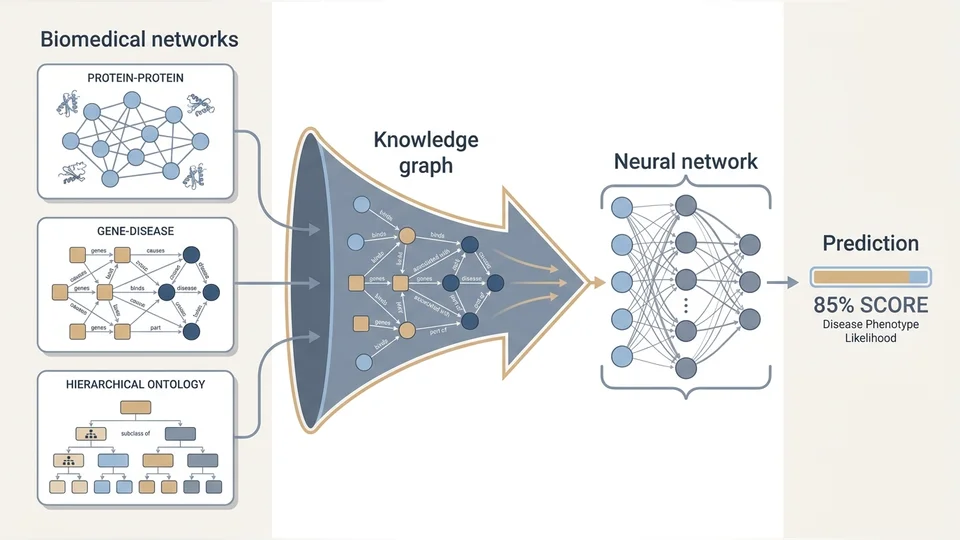
IBNSINA-QI: Integrating Biomedical Networks and Semantic Information for Neural network Analysis of Quantitative Information Fri, Jan 1 2021 - Sun, Dec 31 2023 Applied Ontology Neuro-Symbolic AI Rare disease Biological measurements are inherently high-dimensional and heterogeneous: omics platforms produce thousands to millions of features per individual, and they coexist with qualitative information such as diagnoses, phenotype calls, and prescriptions. Biomedical ontologies and knowledge graphs encode rich qualitative background knowledge, but they are largely disconnected from the quantitative measurements that gave rise to the categorical phenotypes in the first place. Conversely, graph neural networks and other methods that handle quantitative data on graphs do not yet exploit the formal
Engage ORCID ShareClipboard Related Sites Bio-Ontology Research Group (BORG) Computer Science (CS) Related Content Articles 4 Projects 2 Related Links Fernando Zhapa-Camacho list of publications on Google Scholar Fernando Zhapa-Camacho personal website