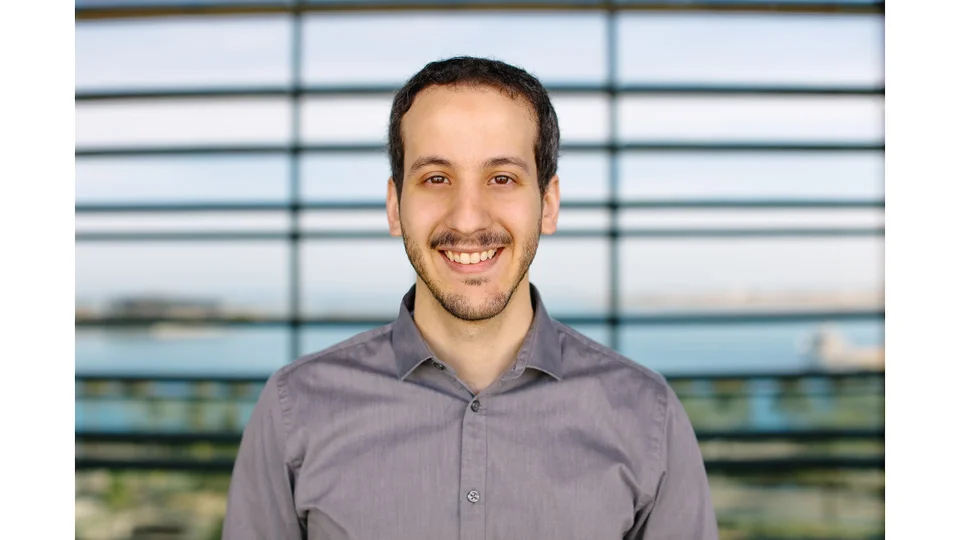
About Ibraheem Alhashim Ibraheem Alhashim Ph.D., Computer Science computer graphics geometric modeling 3D Shape Creation 3D reconstruction Deep learning Shape blending Shape Correspondence Ibraheem Alhashim is a Remote Researcher working with Professor Peter Wonka. Education and Early Career Ibraheem Alhashim completed his B.Sc. with honors in Computer Science at the Portland State University in 2008, followed by his M.Sc. in Computer Science in 2011 under the supervision of Prof. Hao Zhang and his Ph.D. in Computer Science in 2016 under the supervision of Prof. Hao Zhang and Prof. Ghassan Hamarneh at Simon Fraser University in Canada. During both his Master and Ph.D., Alhashim was working at the GrUVi Lab at Simon Fraser University in Canada. Dr. Alhashim joined KAUST in 2017 Articles Related News July 2019 KAUST Researchers Are the First to Generate Images of Realistic and Highly Detailed Texture Maps of Gigapixel in Size Using Deep Neural Networks 1 min read · Tue, Jul 2 2019 News Deep learning artificial intelligence machine learning KAUST researchers Anna Fruehstueck, Dr. Ibraheem Alhashim, and Prof. Peter Wonka have developed a novel technique to generate images of realistic and highly detailed texture maps using deep neural networks. The texture images synthesized by their system TileGAN can be of gigapixel size and are created by seamlessly merging smaller texture blocks into a single large image. The underlying neural networks are trained using high-resolution images such as detailed satellite imagery, maps and famous paintings.
KAUST Researchers Are the First to Generate Images of Realistic and Highly Detailed Texture Maps of Gigapixel in Size Using Deep Neural Networks 1 min read · Tue, Jul 2 2019 News Deep learning artificial intelligence machine learning KAUST researchers Anna Fruehstueck, Dr. Ibraheem Alhashim, and Prof. Peter Wonka have developed a novel technique to generate images of realistic and highly detailed texture maps using deep neural networks. The texture images synthesized by their system TileGAN can be of gigapixel size and are created by seamlessly merging smaller texture blocks into a single large image. The underlying neural networks are trained using high-resolution images such as detailed satellite imagery, maps and famous paintings.
Engage ORCID ShareClipboard Related Sites Peter Wonka Research Group (P-Wonka) Computer Science (CS) Related Content Articles 1 Related Links Also view list of Publications on ORCID Repository Also view list of Publications on KAUST Repository Ibraheem Alhashim's Personal Webpage