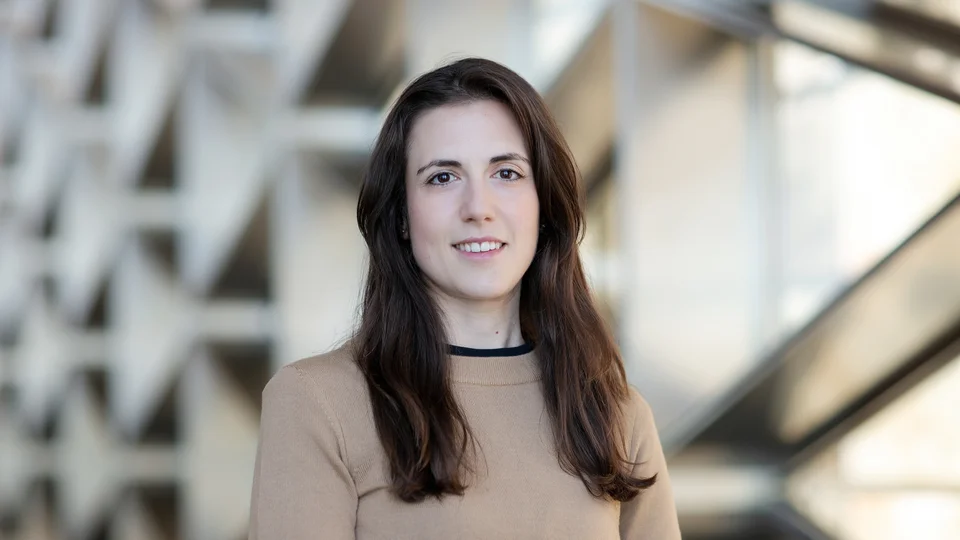
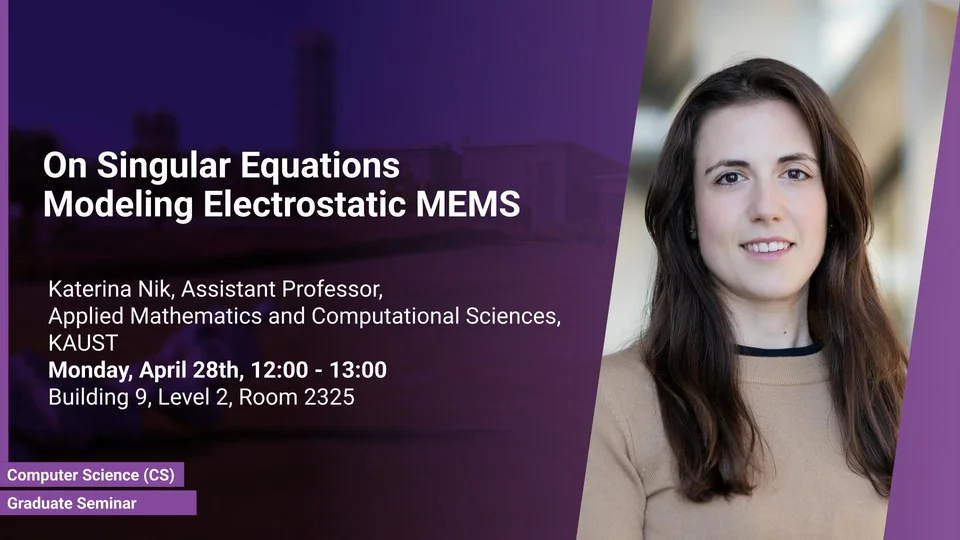
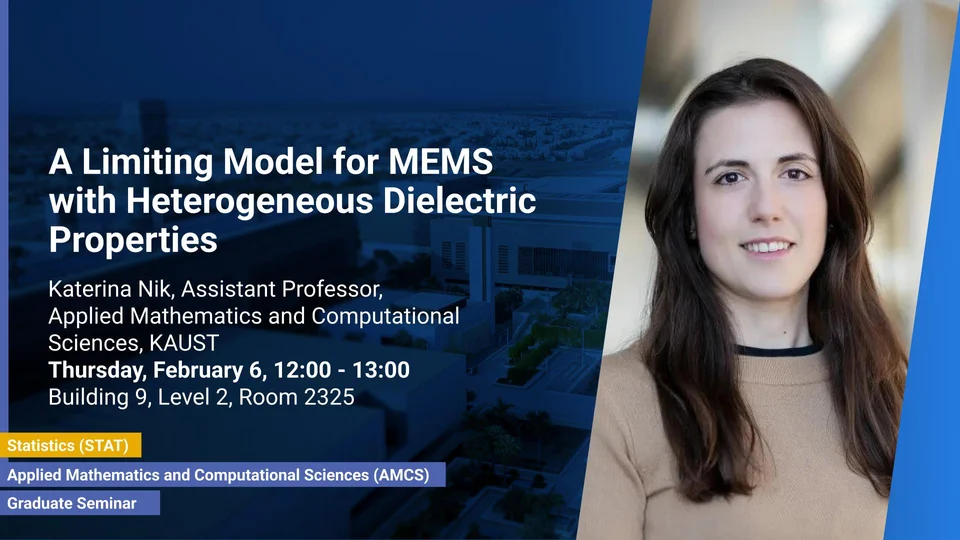
About Katerina Nik Katerina Nik Assistant Professor, Applied Mathematics and Computational Science Partial Differential Equations free boundary problems calculus of variations Mathematical Biology Microelectromechanical fluid dynamics mean curvature flow Professor Nik studies partial differential equations that describe phenomena in biological growth processes, fluid dynamics, and mechanical engineering. Events Presented Events Apr 27 - May 3, 2025 On Singular Equations Modeling Electrostatic MEMS Katerina Nik, Assistant Professor, Applied Mathematics and Computational Science Apr 28, 12:00 - 13:00 B9 L2 R2325 MEMS free boundary problems This talk introduces mathematical models for microelectromechanical systems (MEMS), focusing on the existence and behavior of solutions to equations describing the MEMS device's instability due to electrostatic forces that can lead to singularities in the mathematical equations. Feb 2 - Feb 8, 2025 A Limiting Model for MEMS with Heterogeneous Dielectric Properties Katerina Nik, Assistant Professor, Applied Mathematics and Computational Science Feb 6, 12:00 - 13:00 B9, L2, R2325 Idealized microelectromechanical systems (MEMS) consist of two dielectric plates: a rigid ground plate above which an elastic plate is suspended. The elastic plate deforms due to a Coulomb force induced by a voltage difference applied between the two components. Coating the ground plate with an insulating layer prevents direct contact between the plates.
On Singular Equations Modeling Electrostatic MEMS Katerina Nik, Assistant Professor, Applied Mathematics and Computational Science Apr 28, 12:00 - 13:00 B9 L2 R2325 MEMS free boundary problems This talk introduces mathematical models for microelectromechanical systems (MEMS), focusing on the existence and behavior of solutions to equations describing the MEMS device's instability due to electrostatic forces that can lead to singularities in the mathematical equations.
A Limiting Model for MEMS with Heterogeneous Dielectric Properties Katerina Nik, Assistant Professor, Applied Mathematics and Computational Science Feb 6, 12:00 - 13:00 B9, L2, R2325 Idealized microelectromechanical systems (MEMS) consist of two dielectric plates: a rigid ground plate above which an elastic plate is suspended. The elastic plate deforms due to a Coulomb force induced by a voltage difference applied between the two components. Coating the ground plate with an insulating layer prevents direct contact between the plates.
Engage ORCID ShareClipboard Related Sites Applied Mathematics and Computational Science (AMCS) Mathematical Modeling and Differential Equations (MMDE) Related Content Articles 1 Events 2