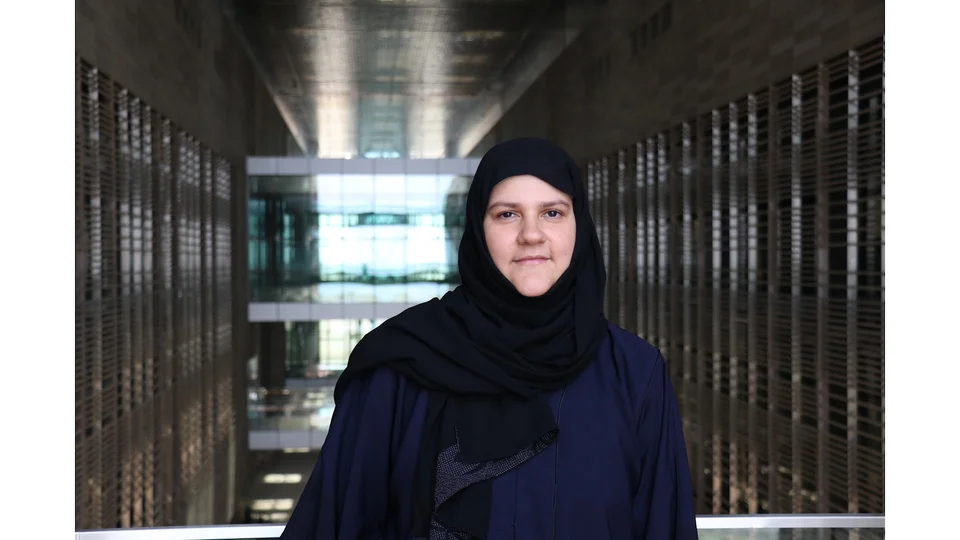
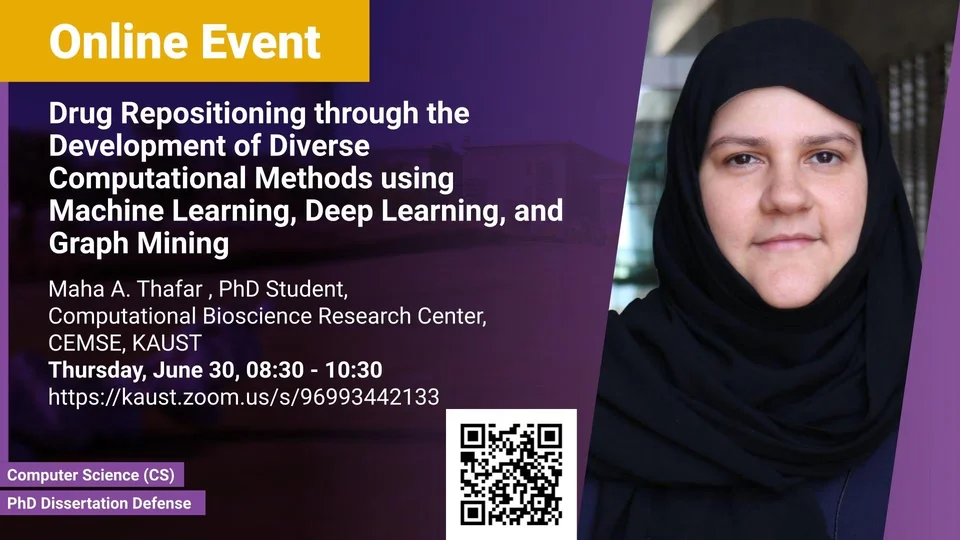
About Maha Thafar Maha Thafar Ph.D. Student, Computer Science machine learning Deep learning data mining bioinformatics Research Interests I am a computer scientist focusing on developing novel computational methods using artificial intelligence, machine learning, deep learning, and graph mining techniques to solve biomedical problems. I am developing these methods to be applied to large-scale chemical and biomedical data. Currently, I'm working on compound-protein interactions prediction and binding affinity prediction projects. My objective is to empower women in my country with a flourishing academic background that enables building better careers for themselves. Additionally, to create a research culture Events Presented Events Jun 26 - Jul 2, 2022 Drug Repositioning through the Development of Diverse Computational Methods using Machine Learning, Deep Learning, and Graph Mining Maha Thafar, Ph.D. Student, Computer Science Jun 30, 08:30 - 10:30 KAUST Computational biology machine learning Deep learning graph mining In this dissertation, we combined artificial intelligence and machine/deep learning with chemical and biological properties to develop several computational methods to solve biomedical domain problems, specifically drug repositioning, and demonstrated their efficiencies and capabilities. We developed three network-based DTI prediction methods using machine learning, graph embedding, and graph mining. These methods significantly improved prediction performance, and the best-performing method even reduces the error rate by more than 33% across all datasets compared to the best state-of-the-art method. As it is more insightful to predict continuous values that indicate how tightly the drug binds to a specific target, we conducted a comparison study of current regression-based methods that predict drug-target binding affinities (DTBA). Our methods demonstrated their efficiency and capability by achieving high prediction performance and identifying therapeutic targets for several cancer types. We further conducted a lung cancer case study of findings that support the novel predicted targets.
Drug Repositioning through the Development of Diverse Computational Methods using Machine Learning, Deep Learning, and Graph Mining Maha Thafar, Ph.D. Student, Computer Science Jun 30, 08:30 - 10:30 KAUST Computational biology machine learning Deep learning graph mining In this dissertation, we combined artificial intelligence and machine/deep learning with chemical and biological properties to develop several computational methods to solve biomedical domain problems, specifically drug repositioning, and demonstrated their efficiencies and capabilities. We developed three network-based DTI prediction methods using machine learning, graph embedding, and graph mining. These methods significantly improved prediction performance, and the best-performing method even reduces the error rate by more than 33% across all datasets compared to the best state-of-the-art method. As it is more insightful to predict continuous values that indicate how tightly the drug binds to a specific target, we conducted a comparison study of current regression-based methods that predict drug-target binding affinities (DTBA). Our methods demonstrated their efficiency and capability by achieving high prediction performance and identifying therapeutic targets for several cancer types. We further conducted a lung cancer case study of findings that support the novel predicted targets.
Related Sites Structural and Functional Bioinformatics (SFB) Computer Science (CS) Related Content Articles 1 Events 1 Related Links Publications on Google Scholar LinkedIn Profile