About Marco Canini Marco Canini Professor, Computer Science machine learning artificial intelligence distributed systems large-scale computing cloud computing programmable networks Professor Canini’s research seeks to improve networked-system design, implementation and operation concerning vital properties such as reliability, performance, security and energy efficiency. Articles Related News August 2026 FOCUS cuts wasted computing in diffusion language models 2 min read · Mon, Aug 10 2026 News artificial intelligence LLM Diffusion Models machine learning KAUST-led research identifies how diffusion language models can avoid unnecessary calculations, increasing throughput by up to 3.52 times while maintaining generation quality. April 2026 KAUST student Saverio Pasqualoni receives ISC Hans Meuer Best Paper Award for leading research on an open-source framework 3 min read · Sun, Apr 26 2026 Awards News HPC computer networking and systems Improving how supercomputers communicate can significantly reduce the time required to train artificial intelligence models. Research led by KAUST M.S./Ph.D. student Saverio Pasqualoni shows that optimizing communication across large-scale systems can cut training time by up to 44%. The research introduces PICO (Performance Insights for Collective Operations), an open-source framework that analyzes and improves communication across large-scale computing systems. The system’s fine-grained profiling, rich metadata collection and automated orchestration break down complex internal algorithmic November 2025 KAUST researcher proves the power of homegrown talent on the world stage 1 min read · Mon, Nov 17 2025 News Clip News Federated learning AI A look into KAUST Ph.D. candidate Mohammed Aljahdali’s journey and the FLTA Best Paper award recognizing his work in federated learning. KAUST advances scalable AI through global collaboration 1 min read · Wed, Nov 12 2025 News Clip News machine learning LLM Federated learning Distributed algorithms KAUST brings global experts together to advance scalable AI and tackle the challenges of training large models. April 2025 A blindfold approach improves machine learning privacy 1 min read · Mon, Apr 28 2025 News Clip News machine learning artificial intelligence distributed systems large-scale computing A query-based method for extracting knowledge from sensitive datasets without showing any underlying private data could resolve long-standing privacy concerns in machine learning. November 2021 KAUST collaborative research wins ACM SOSP 2021 Best Paper Award 2 min read · Sun, Nov 7 2021 News distributed file systems A collaborative multi-institutional research team featuring KAUST Associate Professor of Computer Science Marco Canini won the best paper award at the 28th ACM Symposium on Operating Systems Principles (SOSP 2021). October 2021 Meet KAUST new student: Mohammed Khalid Aljahdali 2 min read · Mon, Oct 4 2021 News Mohammed Khalid Aljahdali obtained his B.Sc. from King Abdulaziz University, Faculty of Computing and Information Technology, Rabigh, Saudi Arabia. August 2021 Drop the zeros for a performance boost 1 min read · Mon, Aug 23 2021 News machine learning big data artificial intelligence Computer science An eight-fold speed up of deep machine learning can be achieved by skipping the transmission of zero values. June 2021 Algorithmic, Systems and Privacy Aspects of Split Learning 1 min read · Tue, Jun 1 2021 News Federated learning (FL) is a new machine learning setting introduced in 2016 in a sequence of papers resulting from a collaboration between a Google team led by Brendan McMahan and Peter Richtarik’s group. Key idea: Many clients (e.g., mobile phones, IoT devices or organizations) collaboratively train a machine learning model under the orchestration of a central trusted server, while keeping the training data stored on the client devices in a decentralized fashion in order to protect privacy. Split learning (SL) is a new federated learning tool specifically developed for training of deep April 2021 Machine learning at speed 1 min read · Mon, Apr 12 2021 News machine learning artificial intelligence big data Computer science Optimizing network communication accelerates training in large-scale machine-learning models. April 2020 Peeling back the layers of deep machine learning 1 min read · Fri, Apr 17 2020 News machine learning artificial intelligence Computer science A layer-based approach raises the efficiency of training artificial intelligence models. May 2017 Cocoon finally out: Professor Marco Canini together with VMware, Samsung, and Microsoft craft the ultimate SDN ally 2 min read · Mon, May 29 2017 News distributed systems machine learning artificial intelligence With the recent emergence of software-defined networking, which brings programmability and lowers the barrier for new functionalities into networks, the academic and industry communities have become very interested in the problem of network verification. April 2017 Building SANDS at KAUST 2 min read · Sat, Apr 15 2017 News SDN machine learning We live in a connected world where networked systems play an increasingly important role. These systems, which are the foundational pillars of our modern digital lives, are the result of some remarkable technological advancements and progress in computer science over the past three decades.
FOCUS cuts wasted computing in diffusion language models 2 min read · Mon, Aug 10 2026 News artificial intelligence LLM Diffusion Models machine learning KAUST-led research identifies how diffusion language models can avoid unnecessary calculations, increasing throughput by up to 3.52 times while maintaining generation quality.
KAUST student Saverio Pasqualoni receives ISC Hans Meuer Best Paper Award for leading research on an open-source framework 3 min read · Sun, Apr 26 2026 Awards News HPC computer networking and systems Improving how supercomputers communicate can significantly reduce the time required to train artificial intelligence models. Research led by KAUST M.S./Ph.D. student Saverio Pasqualoni shows that optimizing communication across large-scale systems can cut training time by up to 44%. The research introduces PICO (Performance Insights for Collective Operations), an open-source framework that analyzes and improves communication across large-scale computing systems. The system’s fine-grained profiling, rich metadata collection and automated orchestration break down complex internal algorithmic
KAUST researcher proves the power of homegrown talent on the world stage 1 min read · Mon, Nov 17 2025 News Clip News Federated learning AI A look into KAUST Ph.D. candidate Mohammed Aljahdali’s journey and the FLTA Best Paper award recognizing his work in federated learning.
KAUST advances scalable AI through global collaboration 1 min read · Wed, Nov 12 2025 News Clip News machine learning LLM Federated learning Distributed algorithms KAUST brings global experts together to advance scalable AI and tackle the challenges of training large models.
A blindfold approach improves machine learning privacy 1 min read · Mon, Apr 28 2025 News Clip News machine learning artificial intelligence distributed systems large-scale computing A query-based method for extracting knowledge from sensitive datasets without showing any underlying private data could resolve long-standing privacy concerns in machine learning.
KAUST collaborative research wins ACM SOSP 2021 Best Paper Award 2 min read · Sun, Nov 7 2021 News distributed file systems A collaborative multi-institutional research team featuring KAUST Associate Professor of Computer Science Marco Canini won the best paper award at the 28th ACM Symposium on Operating Systems Principles (SOSP 2021).
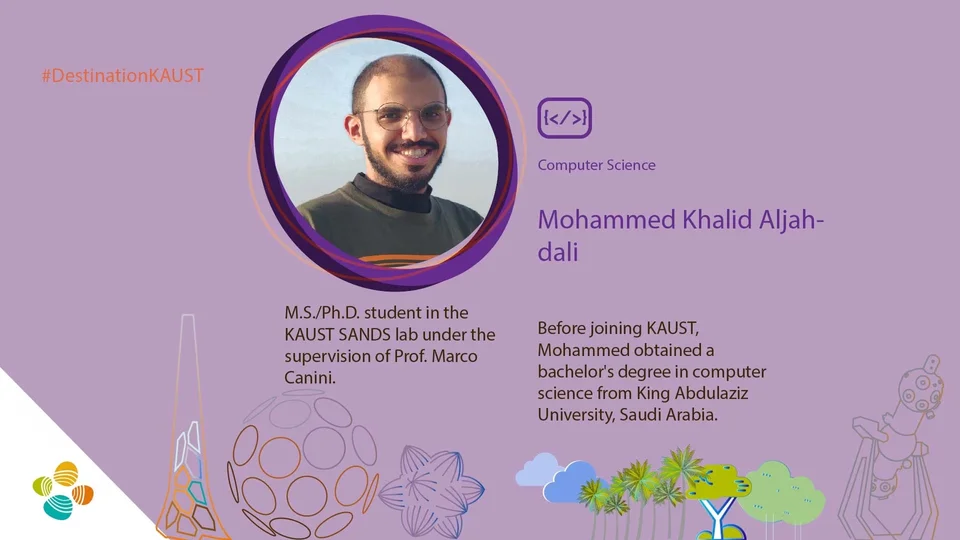
Meet KAUST new student: Mohammed Khalid Aljahdali 2 min read · Mon, Oct 4 2021 News Mohammed Khalid Aljahdali obtained his B.Sc. from King Abdulaziz University, Faculty of Computing and Information Technology, Rabigh, Saudi Arabia.
Drop the zeros for a performance boost 1 min read · Mon, Aug 23 2021 News machine learning big data artificial intelligence Computer science An eight-fold speed up of deep machine learning can be achieved by skipping the transmission of zero values.
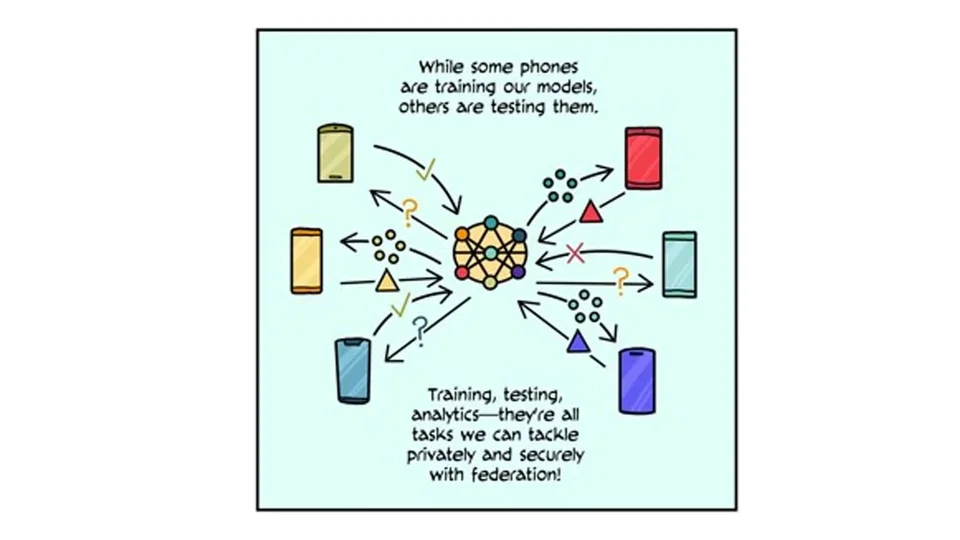
Algorithmic, Systems and Privacy Aspects of Split Learning 1 min read · Tue, Jun 1 2021 News Federated learning (FL) is a new machine learning setting introduced in 2016 in a sequence of papers resulting from a collaboration between a Google team led by Brendan McMahan and Peter Richtarik’s group. Key idea: Many clients (e.g., mobile phones, IoT devices or organizations) collaboratively train a machine learning model under the orchestration of a central trusted server, while keeping the training data stored on the client devices in a decentralized fashion in order to protect privacy. Split learning (SL) is a new federated learning tool specifically developed for training of deep
Machine learning at speed 1 min read · Mon, Apr 12 2021 News machine learning artificial intelligence big data Computer science Optimizing network communication accelerates training in large-scale machine-learning models.
Peeling back the layers of deep machine learning 1 min read · Fri, Apr 17 2020 News machine learning artificial intelligence Computer science A layer-based approach raises the efficiency of training artificial intelligence models.
Cocoon finally out: Professor Marco Canini together with VMware, Samsung, and Microsoft craft the ultimate SDN ally 2 min read · Mon, May 29 2017 News distributed systems machine learning artificial intelligence With the recent emergence of software-defined networking, which brings programmability and lowers the barrier for new functionalities into networks, the academic and industry communities have become very interested in the problem of network verification.
Building SANDS at KAUST 2 min read · Sat, Apr 15 2017 News SDN machine learning We live in a connected world where networked systems play an increasingly important role. These systems, which are the foundational pillars of our modern digital lives, are the result of some remarkable technological advancements and progress in computer science over the past three decades.
Engage ORCID KAUST Repository KAUST Academic Portal ShareClipboard Related Sites Computer Science (CS) Center of Excellence for Generative AI (GenAI) Software-Defined Advanced Networked and Distributed Systems (SANDS) Related Content Articles 13 Events 4 Related Links Building SANDS at KAUST Personal website