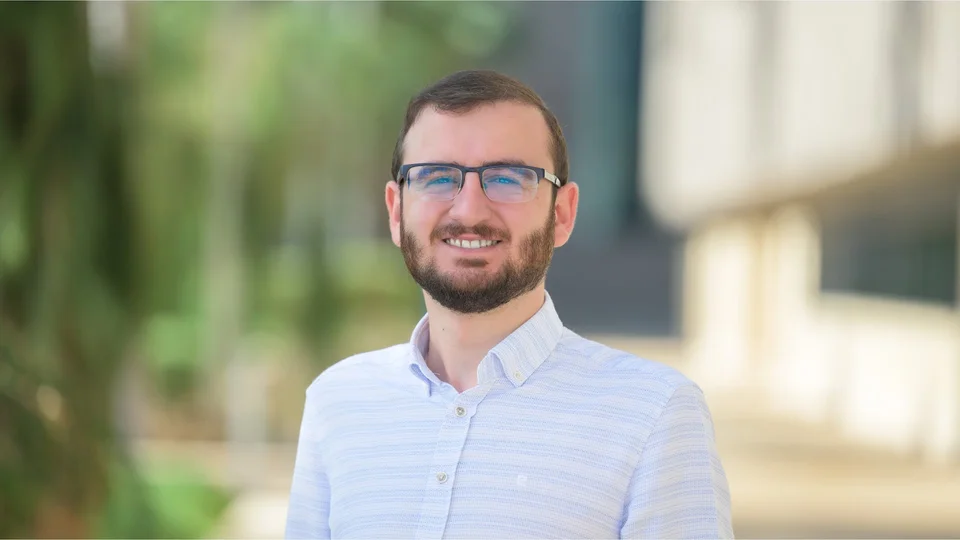
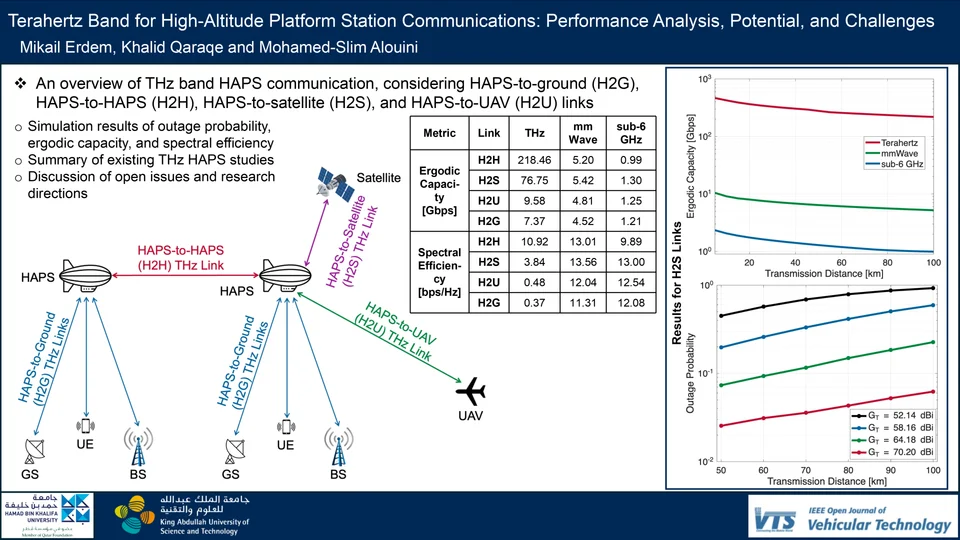
About Mikail Erdem Mikail Erdem Postdoctoral Research Fellow, Electrical and Computer Engineering estimation/cancellation in wireless communications full duplex communication Terahertz communications Mikail Erdem works as a postdoctoral fellow at the Communication Theory Lab at King Abdullah University of Science and Technology (KAUST), under the supervision of Prof. Mohamed-Slim Alouini. Education and Early Career Mikail Erdem received his B.S. degree in Electrical-Electronics Engineering at Bogazici University in 2014, he received his M.S. degree in Electronics and Computer Engineering at Istanbul Sehir University in 2016, and he received his Ph.D. degree in Electronics Engineering at Sabanci University in 2021. In 2016, he worked as a research engineer for IstLink Communication on the Articles Related News August 2026 Terahertz Band Could Strengthen High-Altitude Communications Networks 1 min read · Mon, Aug 10 2026 News Terahertz High-Altitude Platform Stations Non-Terrestrial Networks 6G Wireless Communications Researchers from Hamad Bin Khalifa University and KAUST have presented a comprehensive analysis of how terahertz (THz) communications could support high-altitude platform stations (HAPSs), offering guidance for next-generation non-terrestrial networks. Their study examines where THz links are most effective, where they remain challenging, and which research problems must be solved before deployment. HAPSs operate in the stratosphere and can complement terrestrial infrastructure by extending connectivity to remote regions, disaster areas, and temporary events. Since they locate above the
Terahertz Band Could Strengthen High-Altitude Communications Networks 1 min read · Mon, Aug 10 2026 News Terahertz High-Altitude Platform Stations Non-Terrestrial Networks 6G Wireless Communications Researchers from Hamad Bin Khalifa University and KAUST have presented a comprehensive analysis of how terahertz (THz) communications could support high-altitude platform stations (HAPSs), offering guidance for next-generation non-terrestrial networks. Their study examines where THz links are most effective, where they remain challenging, and which research problems must be solved before deployment. HAPSs operate in the stratosphere and can complement terrestrial infrastructure by extending connectivity to remote regions, disaster areas, and temporary events. Since they locate above the
Related Sites Electrical and Computer Engineering (ECE) Communication Theory Lab (CTL) Related Content Articles 1 Related Links LinkedIn Google Scholar dblp Scopus