About Mona Alshahrani Mona Alshahrani Ph.D. (former), Computer Science machine learning human bioinformatics data integration network-based approaches Mona Alshahrani obtained her Ph.D. degree in Computer Science under the supervision of Professor Robert Hoehndorf at the Bio-Ontology Research Group (BORG) at King Abdullah University of Science and Technology (KAUST). Research Interests Machine Learning, human bioinformatics, data integration. The combination of neuro-symbolic methods over ontologies and semantic RDF graphs with statistical methods. Their applications in data analysis and features representations in several biomedical applications such as phenotypes prediction, drug repurposing, and others. I'm also interested in network Projects Related Projects 2019 CompleX: Variant Prioritization in Complex Disease Tue, Jan 1 2019 - Fri, Dec 31 2021 Applied Ontology Neuro-Symbolic AI Rare disease Semantic similarity The hardest cases in clinical genome sequencing are the ones where no single variant explains the disease. As Mendelian gene discovery slows and the diagnostic rate for whole-exome sequencing stalls below 50%, growing evidence points to oligogenic and polygenic origins: combinations of medium-rare or common alleles that, individually, look unremarkable. Population-level approaches lack the power to find them, and traditional single-gene Mendelian reasoning ignores them. The CompleX project (2019–2021, with the Universities of Cambridge and Birmingham) set out to break this impasse by extending 2018 Bio2Vec: Smart analytics infrastructure for the life sciences Mon, Jan 1 2018 - Thu, Dec 31 2020 Applied Ontology Neuro-Symbolic AI Semantic similarity By the mid-2010s the life sciences had produced an extraordinary investment in machine-readable knowledge: biomedical ontologies were used throughout biology to annotate data, and large RDF knowledge graphs such as Bio2RDF aggregated billions of statements from dozens of major databases. At the same time, large personal genomic datasets, the UK 100,000 Genomes project, UK Biobank, and the Saudi Human Genome Program, were coming online, and translating these into clinical insight depended on integrating them with that existing background knowledge. Generic knowledge-graph machine learning
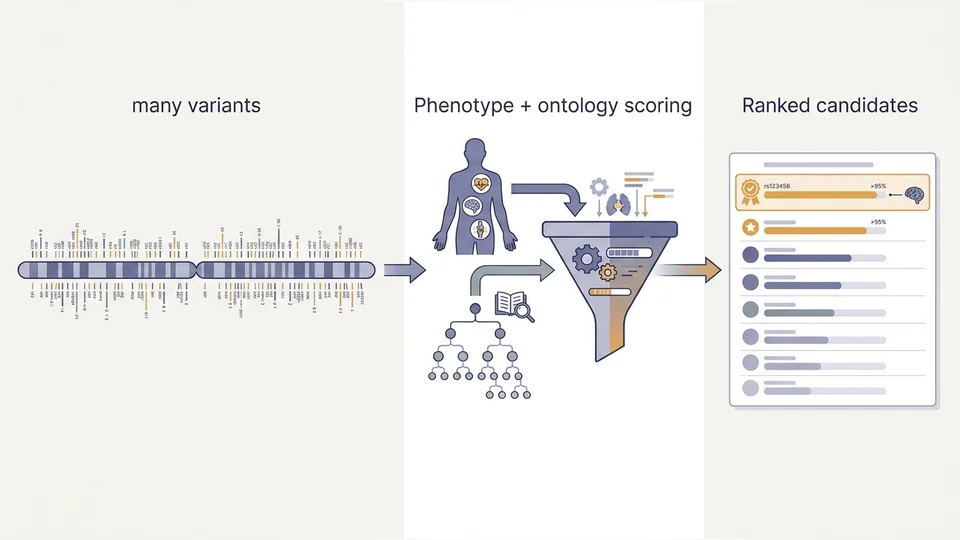
CompleX: Variant Prioritization in Complex Disease Tue, Jan 1 2019 - Fri, Dec 31 2021 Applied Ontology Neuro-Symbolic AI Rare disease Semantic similarity The hardest cases in clinical genome sequencing are the ones where no single variant explains the disease. As Mendelian gene discovery slows and the diagnostic rate for whole-exome sequencing stalls below 50%, growing evidence points to oligogenic and polygenic origins: combinations of medium-rare or common alleles that, individually, look unremarkable. Population-level approaches lack the power to find them, and traditional single-gene Mendelian reasoning ignores them. The CompleX project (2019–2021, with the Universities of Cambridge and Birmingham) set out to break this impasse by extending
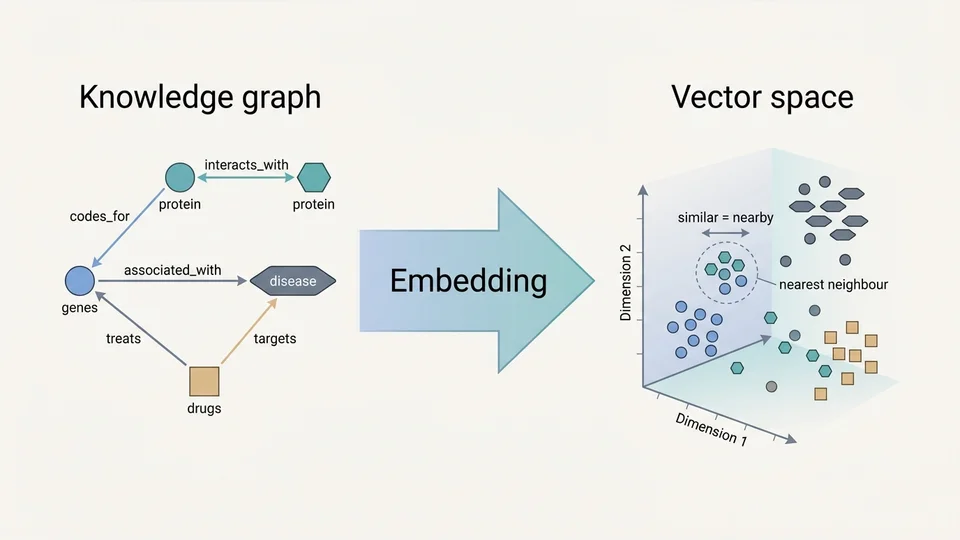
Bio2Vec: Smart analytics infrastructure for the life sciences Mon, Jan 1 2018 - Thu, Dec 31 2020 Applied Ontology Neuro-Symbolic AI Semantic similarity By the mid-2010s the life sciences had produced an extraordinary investment in machine-readable knowledge: biomedical ontologies were used throughout biology to annotate data, and large RDF knowledge graphs such as Bio2RDF aggregated billions of statements from dozens of major databases. At the same time, large personal genomic datasets, the UK 100,000 Genomes project, UK Biobank, and the Saudi Human Genome Program, were coming online, and translating these into clinical insight depended on integrating them with that existing background knowledge. Generic knowledge-graph machine learning
Engage ORCID ShareClipboard Related Sites Structural and Functional Bioinformatics (SFB) Bio-Ontology Research Group (BORG) Computer Science (CS) Related Content Articles 3 Projects 2 Events 1 Related Links Publications list on ORCID Also view list of Publications on KAUST Repository Also view list of Publications on Google Scholar