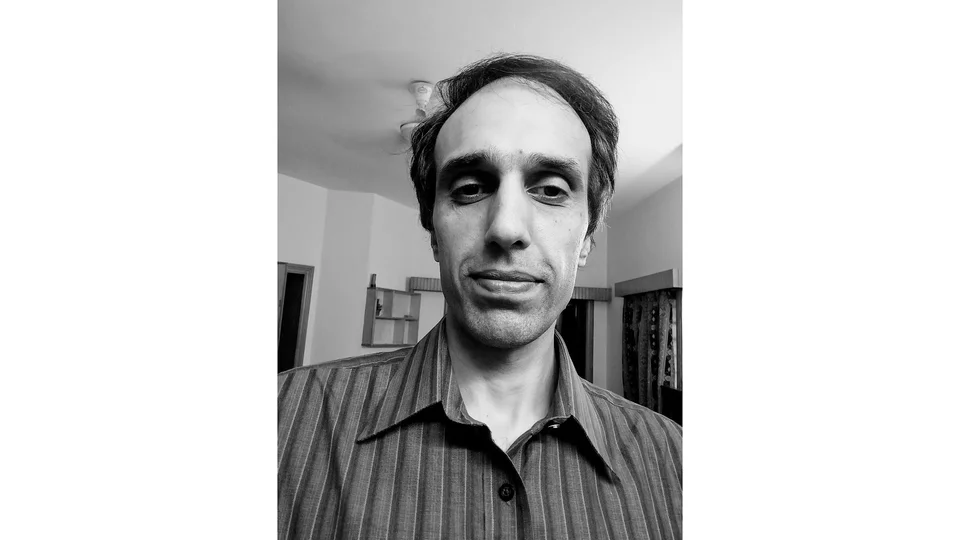
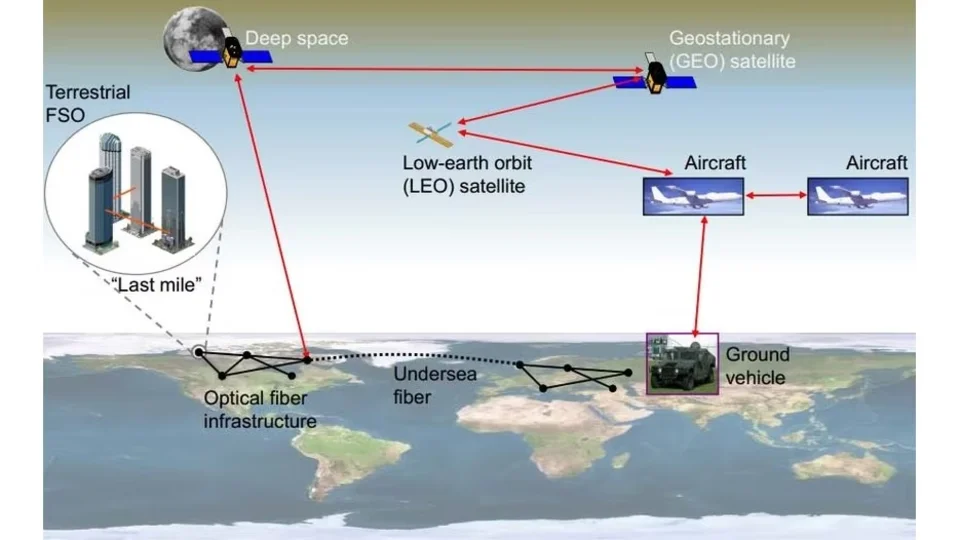
About Muhammad Salman Bashir Muhammad Salman Bashir Postdoctoral Research Fellow, Electrical and Computer Engineering Statistical Signal Processing and Adaptive Filtering Muhammad Salman Bashir is working as a Postdoc Fellow under the supervision of Prof. Mohamed-Slim Alouini as part of the Communication Theory Lab (CTL) at King Abdullah University of Science and Technology (KAUST). Education and Early Career Muhammad Salman Bashir got his B.Sc. in Electrical Engineering with Honors from the University of Engineering and Technology Lahore, an M.S. in Telecommunication Engineering from the National University of Computer and Emerging Sciences Lahore, and an M.S. and a Ph.D. in Electrical and Computer Engineering from Purdue University West Lafayette, Indiana Articles Related News August 2021 On the beam tracking of free space optical communication systems 1 min read · Mon, Aug 9 2021 News Free-space optical (FSO) communications will play an important role in the backhaul of future generation of wireless networks in order to support high data rates. Because of narrow beamwidth inherent to an optical signal, acquisition and tracking form an important component of any FSO communication system. In order to achieve this, a free-space optical receiver divides the total received signal energy into data detection and beam tracking channels so that received symbols can be detected at the same time as the beam is being tracked. KAUST researchers have analyzed the optimization of received
On the beam tracking of free space optical communication systems 1 min read · Mon, Aug 9 2021 News Free-space optical (FSO) communications will play an important role in the backhaul of future generation of wireless networks in order to support high data rates. Because of narrow beamwidth inherent to an optical signal, acquisition and tracking form an important component of any FSO communication system. In order to achieve this, a free-space optical receiver divides the total received signal energy into data detection and beam tracking channels so that received symbols can be detected at the same time as the beam is being tracked. KAUST researchers have analyzed the optimization of received
Engage ORCID ShareClipboard Related Sites Electrical and Computer Engineering (ECE) Communication Theory Lab (CTL) Related Content Articles 1 Related Links LinkedIn Google Scholar ORCID