About Muneer Al-ZuBi Muneer Al-ZuBi Postdoctoral Research Fellow, Electrical and Computer Engineering Radio Wave Propagation Modeling RF Measurements molecular communication Internet of Bio-Nano Things Muneer Al-ZuBi is a Postdoctoral Fellow at the Communication Theory Lab (CTL), King Abdullah University of Science and Technology (KAUST), under the supervision of Professor Mohamed-Slim Alouini. Education and Early Career He received his Ph.D. in Engineering from the University of Technology Sydney (UTS), Sydney, Australia, 2020. He obtained his master’s degree in electrical engineering/wireless communication from the Jordan University of Science and Technology (JUST), Irbid, Jordan, 2014. Also, he obtained his undergraduate degree in electrical engineering/communication and software Articles Related News September 2025 KAUST researchers propose a novel solution for IoT-based monitoring and inspection in harsh pipeline environments 2 min read · Mon, Sep 22 2025 Press Releases Macroscale Molecular Communication IoT First proposed macroscale application of molecular communication for IoT-based pipeline inspection and monitoring applications verified using a computational model and an experimental testbed. November 2023 Modelling and examining the feasibility of the natural phenomenon of diffraction using sub-6 GHz NLOS backhaul for broadband internet connectivity in rural areas 2 min read · Mon, Nov 6 2023 News In an effort to address the challenges associated with providing broadband Internet connectivity in rural and hard-to-reach areas, a team of researchers from the Communication Theory Lab (CTL) at KAUST, including Muneer M. Al-Zubi and Mohamed-Slim Alouini, carried out a research study on modelling and examining the feasibility of non-line-of-sight (NLOS) sub-6 GHz backhaul via diffraction for providing internet connectivity in rural areas using both theoretical and experimental data. This work has recently been published in the IEEE Open Journal of Communications Society. Many rural areas Authored News July 2024 New study highlights crucial role of digital terrain data accuracy in wireless communication networks coverage planning 1 min read · Wed, Jul 10 2024 Accurate prediction and modelling of radio signal propagation is necessary for the planning and design of wireless communication systems. Today, many RF planning and propagation tools are usually implemented based on site-specific propagation models that require the terrain elevation profile between the base stations (BSs) to realistically estimate the pathloss, received signal, and coverage area for the wireless communication systems. The terrain elevation profile can be extracted from various freeware and commercial global digital elevation models (DEMs). The DEMs were developed using
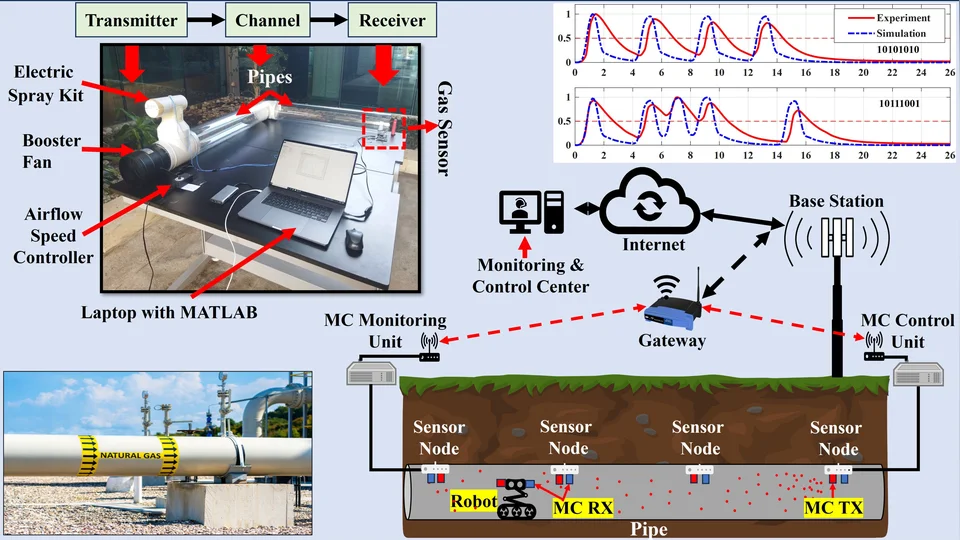
KAUST researchers propose a novel solution for IoT-based monitoring and inspection in harsh pipeline environments 2 min read · Mon, Sep 22 2025 Press Releases Macroscale Molecular Communication IoT First proposed macroscale application of molecular communication for IoT-based pipeline inspection and monitoring applications verified using a computational model and an experimental testbed.
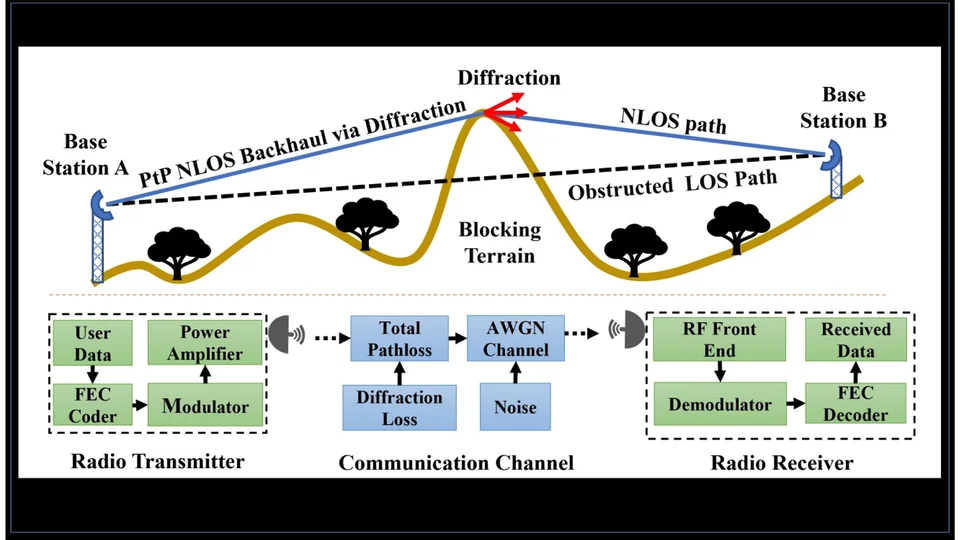
Modelling and examining the feasibility of the natural phenomenon of diffraction using sub-6 GHz NLOS backhaul for broadband internet connectivity in rural areas 2 min read · Mon, Nov 6 2023 News In an effort to address the challenges associated with providing broadband Internet connectivity in rural and hard-to-reach areas, a team of researchers from the Communication Theory Lab (CTL) at KAUST, including Muneer M. Al-Zubi and Mohamed-Slim Alouini, carried out a research study on modelling and examining the feasibility of non-line-of-sight (NLOS) sub-6 GHz backhaul via diffraction for providing internet connectivity in rural areas using both theoretical and experimental data. This work has recently been published in the IEEE Open Journal of Communications Society. Many rural areas
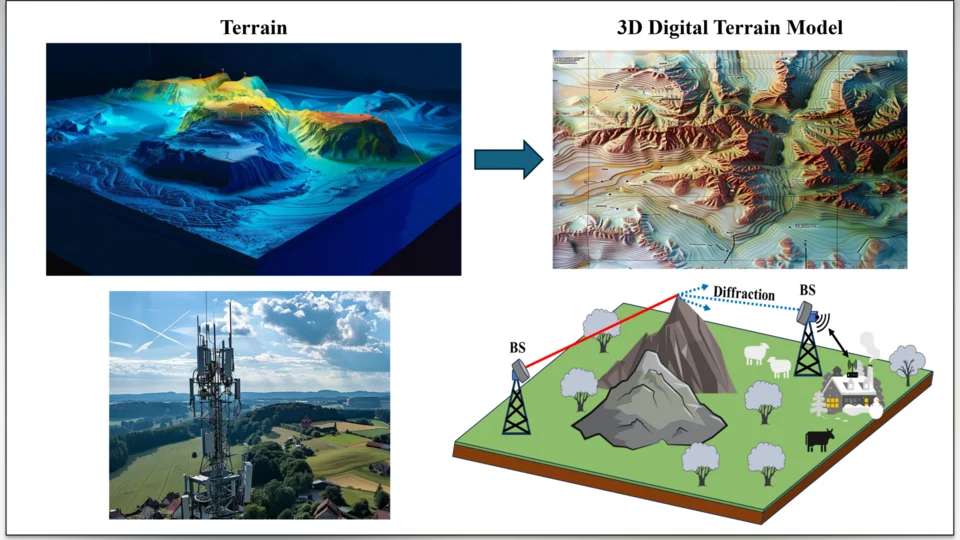
New study highlights crucial role of digital terrain data accuracy in wireless communication networks coverage planning 1 min read · Wed, Jul 10 2024 Accurate prediction and modelling of radio signal propagation is necessary for the planning and design of wireless communication systems. Today, many RF planning and propagation tools are usually implemented based on site-specific propagation models that require the terrain elevation profile between the base stations (BSs) to realistically estimate the pathloss, received signal, and coverage area for the wireless communication systems. The terrain elevation profile can be extracted from various freeware and commercial global digital elevation models (DEMs). The DEMs were developed using
Related Sites Electrical and Computer Engineering (ECE) Communication Theory Lab (CTL) Related Content Articles 3 Related Links LinkedIn Google Scholar dblp