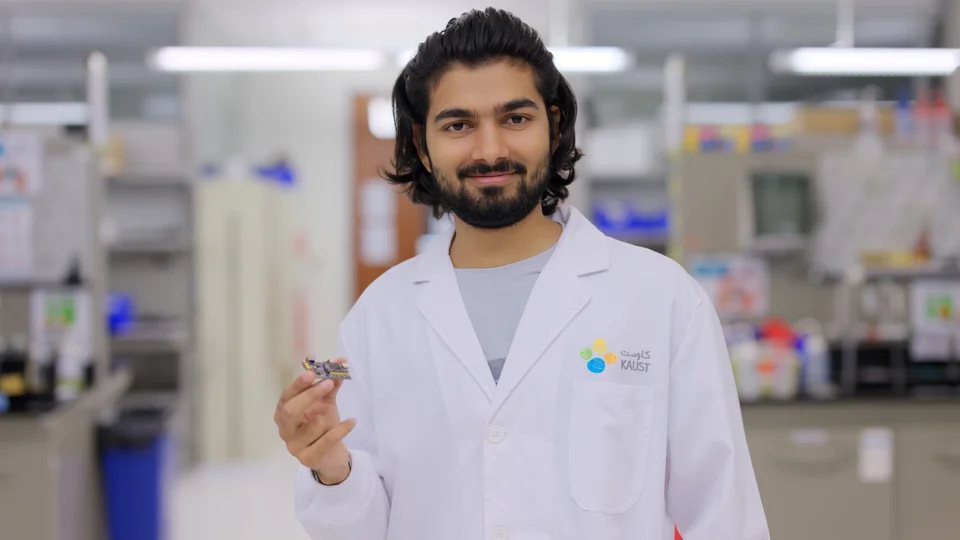
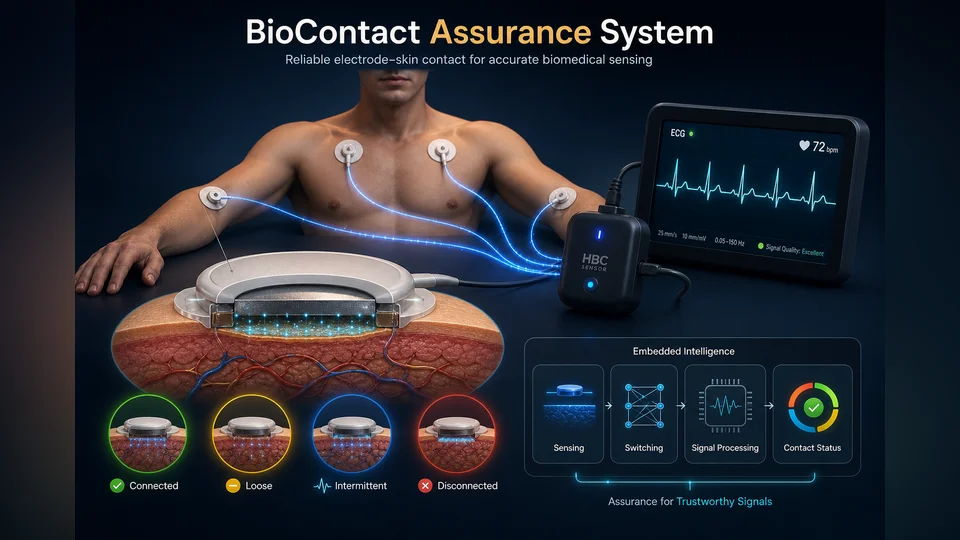
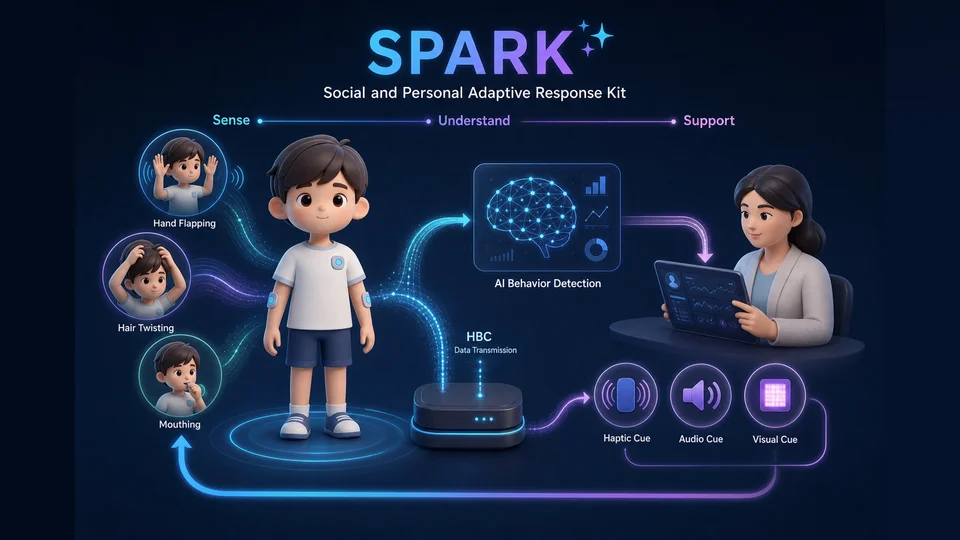
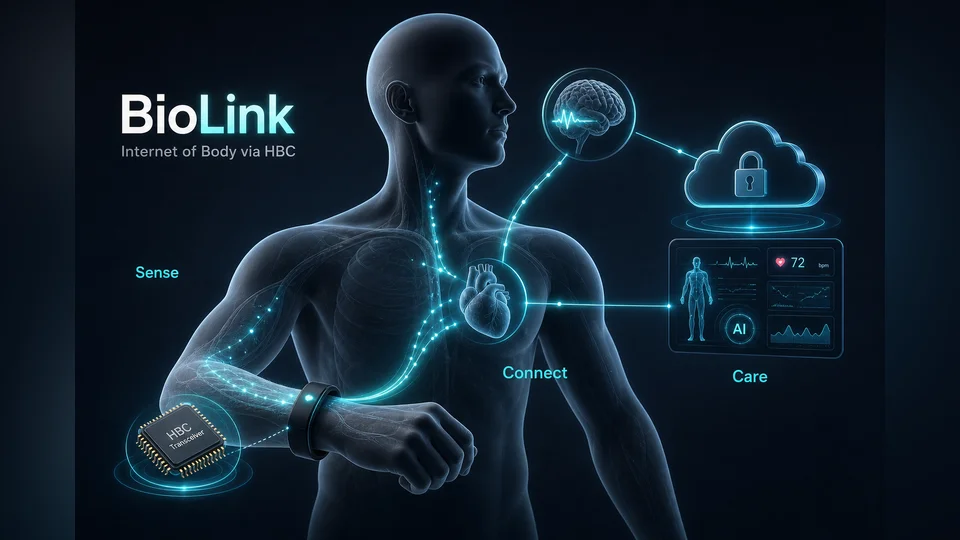
About Rajat Kumar Rajat Kumar Ph.D. Student, Electrical and Computer Engineering Internet of Bodies body area networks human body communication wearable electronics Rajat Kumar is a member of the Communication and Computing Systems Lab (CCSL), where his work focuses on human body communication and wearable systems. Projects Related Projects 2026 BioContact Assurance System Mon, Aug 17 2026 Research body area networks Reliable electrode-skin contact is fundamental for accurate biomedical signal acquisition in applications such as ECG, EEG, and EMG monitoring. Traditional lead-off detection methods face challenges from motion artifacts, environmental noise, and fluctuating skin-electrode impedance. The BioContact Assurance System (BCAS) leverages common-ground human body communication (CG-HBC), utilizing the human body itself as a signal transmission medium. BCAS enables real-time electrode contact monitoring and verification, paving the way for improved performance in wearable healthcare devices and broader SPARK: Social and Personal Adaptive Response Kit Thu, Aug 20 2026 Resource body area networks Igniting Child Development with AI and Sensor Technology 2025 BioLink: Internet of Body via HBC for Healthcare Thu, Sep 25 2025 Research body area networks BioLink is an umbrella research initiative advancing Human Body Communication (HBC) technologies for connected and personalized healthcare. It brings together multiple research projects spanning ultra-low-power HBC transceiver integrated circuits, wearable and implantable sensing systems, physiological-signal monitoring, body-area networking, embedded intelligence, and secure healthcare connectivity. HBC uses the human body itself as a medium for data exchange between devices placed on, around, or within the body. In contrast to conventional wireless links that radiate radio-frequency signals
BioContact Assurance System Mon, Aug 17 2026 Research body area networks Reliable electrode-skin contact is fundamental for accurate biomedical signal acquisition in applications such as ECG, EEG, and EMG monitoring. Traditional lead-off detection methods face challenges from motion artifacts, environmental noise, and fluctuating skin-electrode impedance. The BioContact Assurance System (BCAS) leverages common-ground human body communication (CG-HBC), utilizing the human body itself as a signal transmission medium. BCAS enables real-time electrode contact monitoring and verification, paving the way for improved performance in wearable healthcare devices and broader
SPARK: Social and Personal Adaptive Response Kit Thu, Aug 20 2026 Resource body area networks Igniting Child Development with AI and Sensor Technology
BioLink: Internet of Body via HBC for Healthcare Thu, Sep 25 2025 Research body area networks BioLink is an umbrella research initiative advancing Human Body Communication (HBC) technologies for connected and personalized healthcare. It brings together multiple research projects spanning ultra-low-power HBC transceiver integrated circuits, wearable and implantable sensing systems, physiological-signal monitoring, body-area networking, embedded intelligence, and secure healthcare connectivity. HBC uses the human body itself as a medium for data exchange between devices placed on, around, or within the body. In contrast to conventional wireless links that radiate radio-frequency signals
Engage LinkedIn ORCID Google Scholar ShareClipboard Related Sites Electrical and Computer Engineering (ECE) Communication and Computing Systems Lab (CCSL) Related Content Articles 1 Projects 3