About Raul Tempone Raul Tempone Professor, Applied Mathematics and Computational Science numerical analysis Computational finance computational statistics stochastic differential equations uncertainty quantification bayesian inference data assimilation hierarchical and sparse approximation optimal control optimal experimental design stochastic optimization Professor Raul Tempone is a worldwide recognized researcher in numerical analysis and uncertainty quantification. Professor Raul Tempone at KAUST leads the stochastic numerics research group, significantly contributing to Saudi Arabia's Vision 2030 goals through advancements in computational science. His work in adaptive algorithms, Bayesian inverse problems, and scientific machine learning drives forward critical applications in technology and sustainability, embodying KAUST's commitment to global scientific leadership and economic diversification. Projects Related Projects 2016 The forward-reverse algorithm for stochastic reaction networks with applications to statistical inference Thu, Feb 18 - Sun, Jul 10 2016 In this work, we present an extension of the forward-reverse algorithm by Bayer and Schoenmakers [Annals of Applied Probability, 24(5):1994--2032, October 2014] to the context of stochastic reaction networks (SRNs). It makes the approximation of expected values of functionals of bridges for this type of process computationally feasible. 2015 Multi Index Method Mon, Jun 1 2015 - Wed, Jun 1 2016 Monte Carlo sampling Multi index methods are based on Sparse Grid methods and utilize the extra mixed regularity between dimensions (spatial or stochastic) to reduce the work complexity of different methods. In fact, in some cases we may get the rate of work complexity that is independent of the number of dimensions. Multilevel ensemble Kalman filtering Thu, Jan 1 - Mon, Jun 1 2015 Kalman filter Filtering is a method for sequentially estimating the state of an evolving dynamical system in settings where only partial and possibly inaccurate measurements of the history of the state are available. 2014 Bayesian analysis of metallic fatigue data Tue, Apr 1 2014 - Mon, Feb 1 2016 Fatigue tests at different speeds (cycles per minute) all along a range of mean loads are performed to determine the fatigue strength of a certain kind of metallic specimen. Such experiments involve expensive destructive tests and are therefore carefully designed and applied. Bayesian inference for linear parabolic partial differential equations Sun, Jun 1 2014 - Thu, Jan 1 2015 Details We are currently developing hierarchical Bayesian techniques to infer the unknown coefficients in initial-boundary value problems (IBVPs) for linear parabolic partial differential equations. Finitely many noisy measurements of the solution field are made available, at a sequence of time points, in the interior of a domain of interest and for the boundaries. The main novelty of our approach to solving such class of inverse problems relies on the assumption that the boundary parameters are unknown and modeled by means of adequate probability distributions. Using the linearity of the Multilevel Approximation of Stochastic Reaction Networks Thu, Apr 24 2014 - Tue, May 10 2016 Stochastic Reaction Networks is a class of Markovian pure jump processes that model a wide range of phenomena, including chemical reactions at the molecular level, dynamics of wireless communication networks, and the spread of epidemic diseases in small populations. Multiscale Inference for Pure Jump Processes Wed, Jan 1 - Mon, Dec 1 2014 We aim to use a multiscale sequential Bayesian inference approach. It is multiscale because we have a continuous-time discrete-state pure jump process base microscopic model and then two levels of approximation. 2013 Data Assimilation and Filtering Sat, Jun 1 2013 - Sun, Jun 1 2014 Data assimilation, or filtering, refers to the problem of combining noisy observations of a (typically physical) system together with a model for that system in order to infer the state and/or parameters online as data is received. In the probabilistic context of a hidden-Markov model, this leads to a recursion of Bayesian updates. The objective of the filtering problem is then to obtain the posterior distribution of the unknown as a function of the history of observations. Dimension-Independent MCMC Sampling Algorithms Sat, Jun 1 2013 - Sun, Jun 1 2014 Inspired by the recent development of pCN and other function-space MCMC samplers, and also the recent independent development of Riemann manifold methods and stochastic Newton methods, we propose a class of algorithms which combine the benefits of both, yielding various dimension-independent, likelihood-informed (DILI) sampling algorithms. These algorithms are very effective at obtaining minimally-correlated samples from very high-dimensional distributions. 2012 Bayesian Calibration, Validation and Uncertainty Quantification of Subsurface flow models Tue, Jun 5 2012 - Sun, Jun 1 2014 In this project, we address the mathematical modeling, numerical simulation, and uncertainty quantification of multiphase flow in porous media with a special emphasis on CO2 storage in geological formations. 2011 Adaptive Multi Level Monte Carlo (MLMC) Wed, Jun 1 2011 - Fri, Nov 1 2013 stochastic differential equations Stochastic differential equations (SDEs), both ordinary time-dependent equations and partial differential equations with random coefficients, are common mathematical tools to model natural processes with uncertainty. 2010 Earthquake Source Validation Tue, Jun 1 2010 - Sun, Nov 1 2015 We are developing a new method based on the Bayesian inference technique for the ground motion computations. The ultimate goal of this project is to have a better understanding of earthquake distribution. Stochastic Partial Differential Equations (SPDEs) Tue, Jun 1 2010 - Sat, Jun 1 2013 SPDEs are partial differential equations with random terms which are due to uncertainty in the models. They arise in many multidimensional physical problems. Examples for the source of uncertainty include the variability of soil permeability in subsurface aquifers and heterogeneity of materials with microstructure. We work on the analysis and computation of elliptic, parabolic and hyperbolic equations with random data.
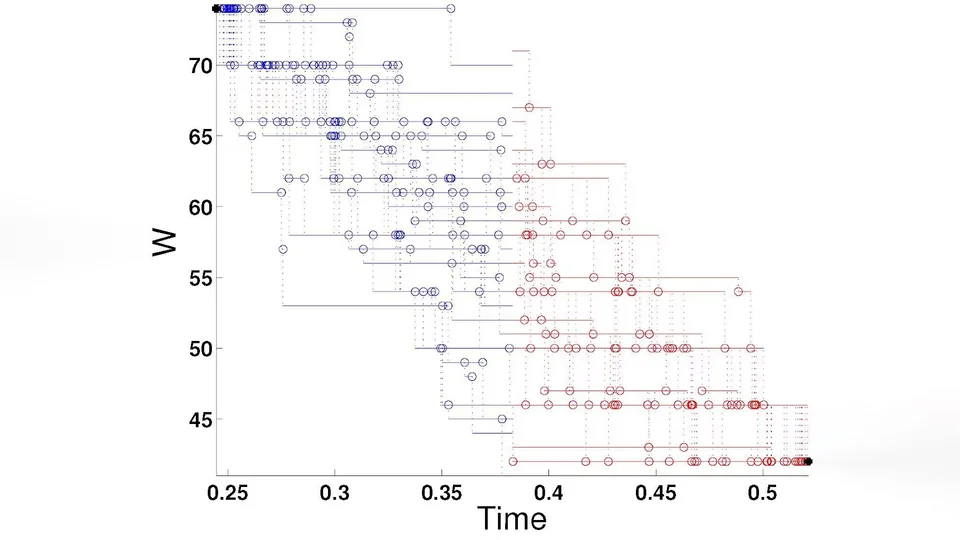
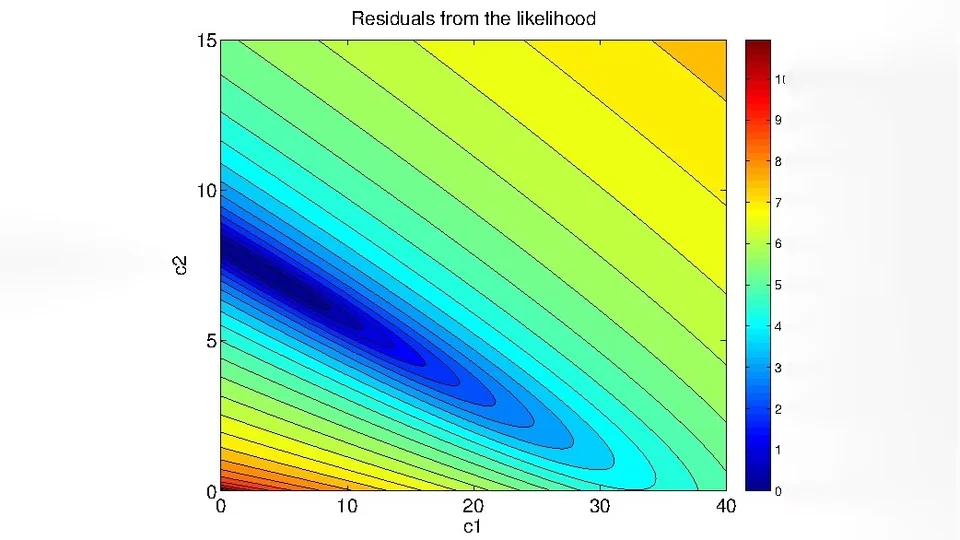
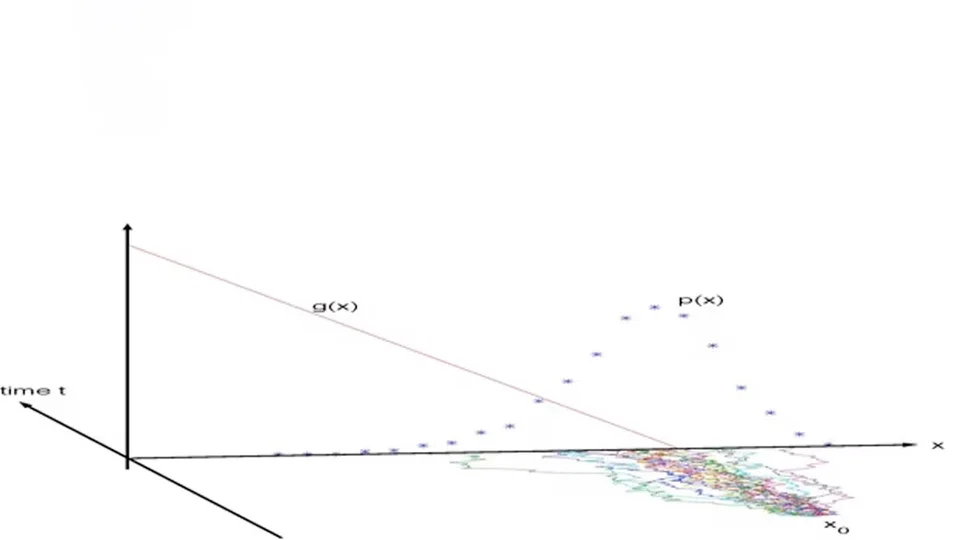
The forward-reverse algorithm for stochastic reaction networks with applications to statistical inference Thu, Feb 18 - Sun, Jul 10 2016 In this work, we present an extension of the forward-reverse algorithm by Bayer and Schoenmakers [Annals of Applied Probability, 24(5):1994--2032, October 2014] to the context of stochastic reaction networks (SRNs). It makes the approximation of expected values of functionals of bridges for this type of process computationally feasible.
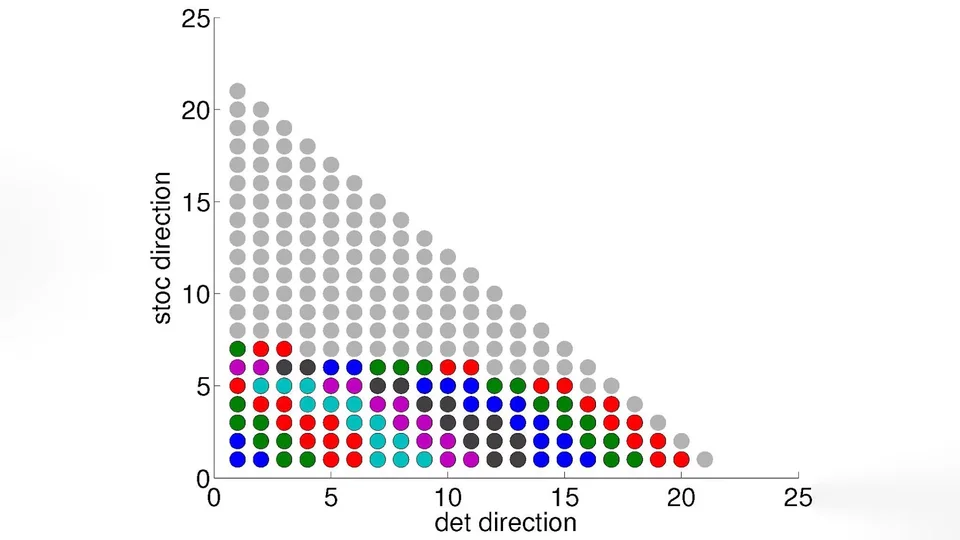
Multi Index Method Mon, Jun 1 2015 - Wed, Jun 1 2016 Monte Carlo sampling Multi index methods are based on Sparse Grid methods and utilize the extra mixed regularity between dimensions (spatial or stochastic) to reduce the work complexity of different methods. In fact, in some cases we may get the rate of work complexity that is independent of the number of dimensions.
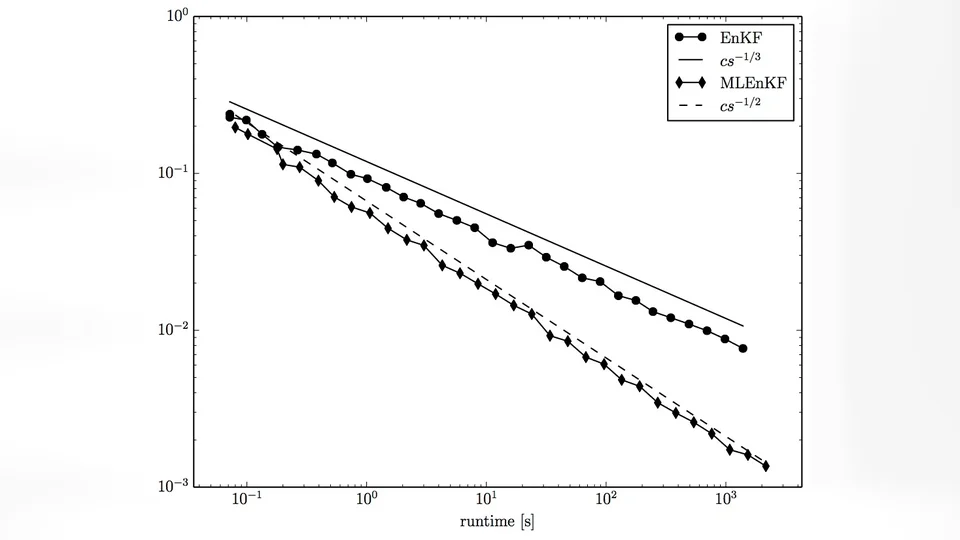
Multilevel ensemble Kalman filtering Thu, Jan 1 - Mon, Jun 1 2015 Kalman filter Filtering is a method for sequentially estimating the state of an evolving dynamical system in settings where only partial and possibly inaccurate measurements of the history of the state are available.
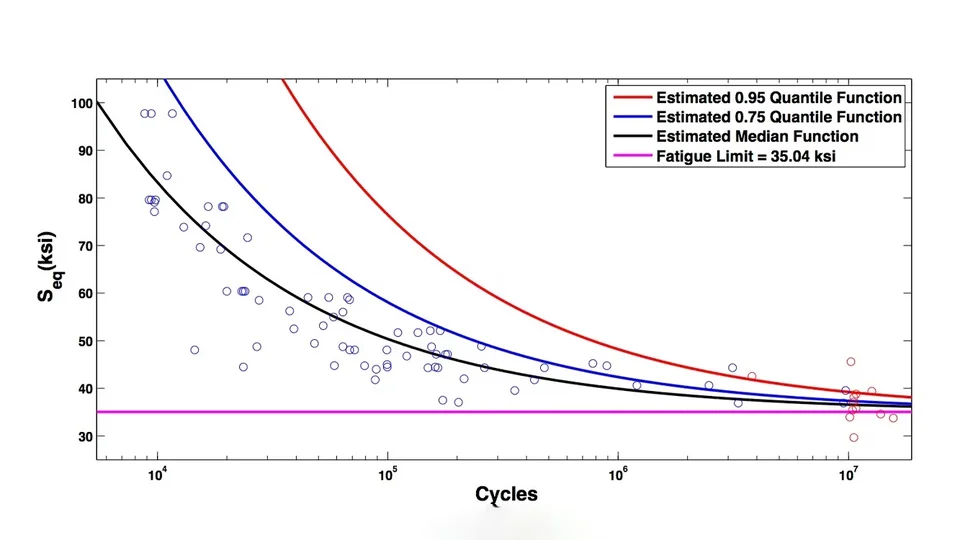
Bayesian analysis of metallic fatigue data Tue, Apr 1 2014 - Mon, Feb 1 2016 Fatigue tests at different speeds (cycles per minute) all along a range of mean loads are performed to determine the fatigue strength of a certain kind of metallic specimen. Such experiments involve expensive destructive tests and are therefore carefully designed and applied.
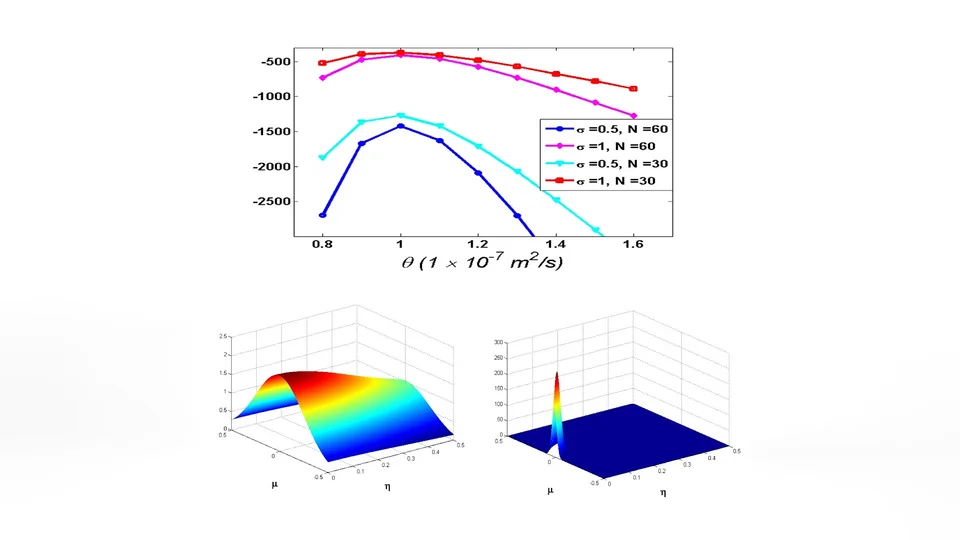
Bayesian inference for linear parabolic partial differential equations Sun, Jun 1 2014 - Thu, Jan 1 2015 Details We are currently developing hierarchical Bayesian techniques to infer the unknown coefficients in initial-boundary value problems (IBVPs) for linear parabolic partial differential equations. Finitely many noisy measurements of the solution field are made available, at a sequence of time points, in the interior of a domain of interest and for the boundaries. The main novelty of our approach to solving such class of inverse problems relies on the assumption that the boundary parameters are unknown and modeled by means of adequate probability distributions. Using the linearity of the
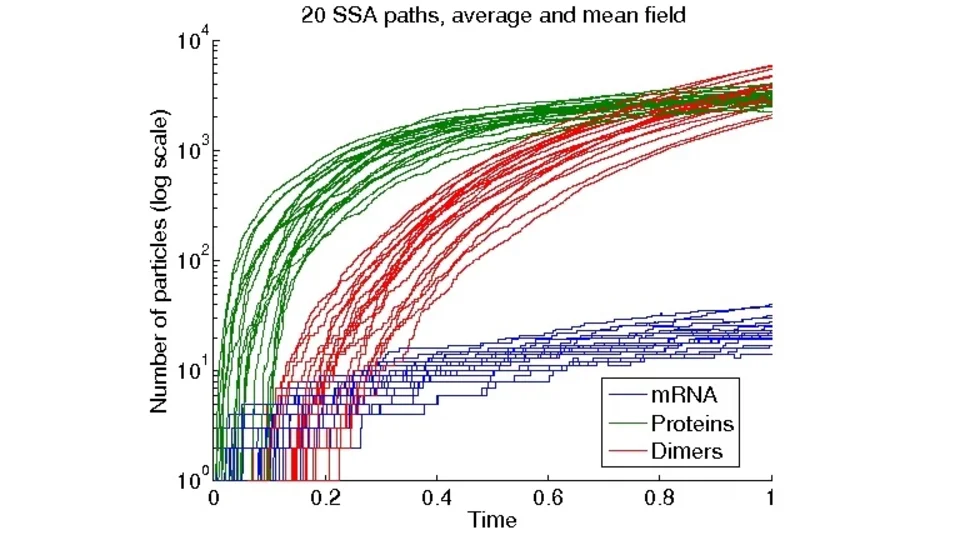
Multilevel Approximation of Stochastic Reaction Networks Thu, Apr 24 2014 - Tue, May 10 2016 Stochastic Reaction Networks is a class of Markovian pure jump processes that model a wide range of phenomena, including chemical reactions at the molecular level, dynamics of wireless communication networks, and the spread of epidemic diseases in small populations.
Multiscale Inference for Pure Jump Processes Wed, Jan 1 - Mon, Dec 1 2014 We aim to use a multiscale sequential Bayesian inference approach. It is multiscale because we have a continuous-time discrete-state pure jump process base microscopic model and then two levels of approximation.
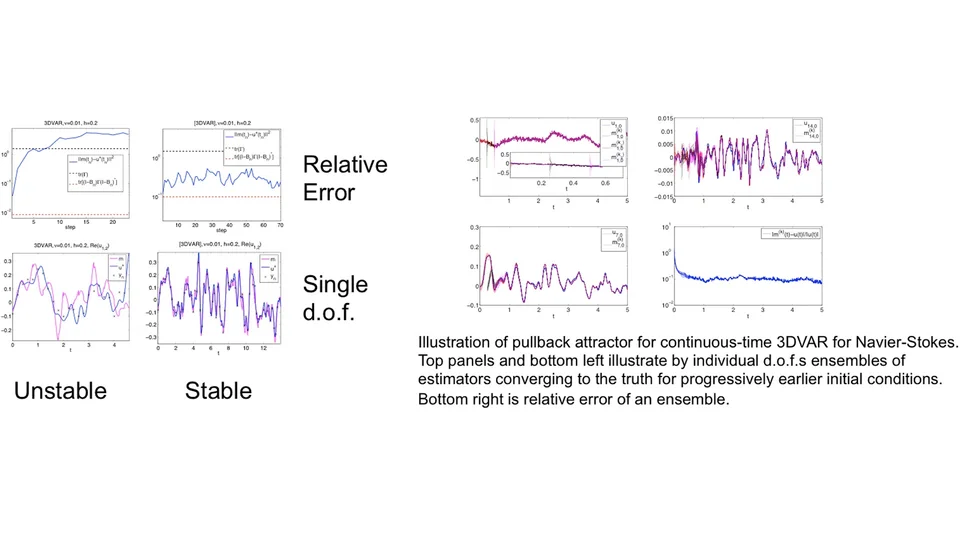
Data Assimilation and Filtering Sat, Jun 1 2013 - Sun, Jun 1 2014 Data assimilation, or filtering, refers to the problem of combining noisy observations of a (typically physical) system together with a model for that system in order to infer the state and/or parameters online as data is received. In the probabilistic context of a hidden-Markov model, this leads to a recursion of Bayesian updates. The objective of the filtering problem is then to obtain the posterior distribution of the unknown as a function of the history of observations.
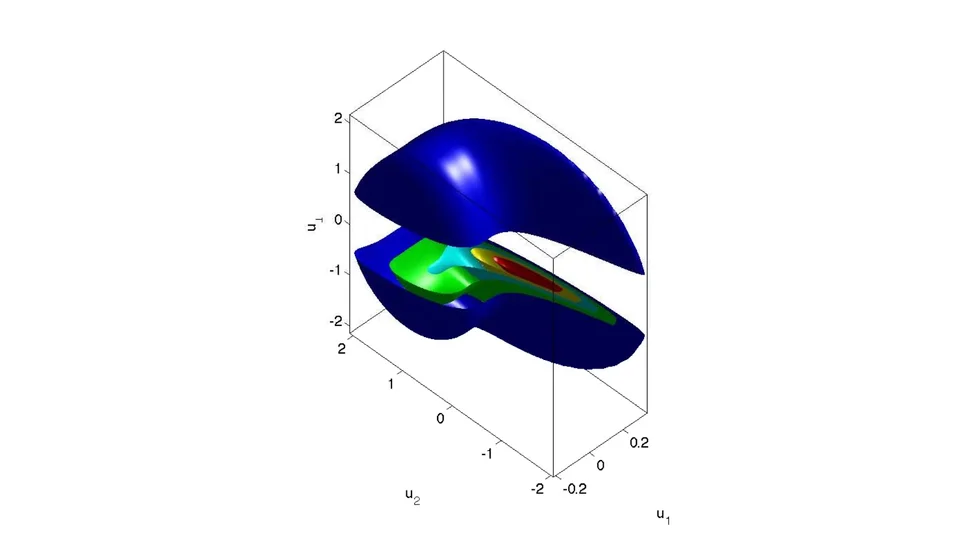
Dimension-Independent MCMC Sampling Algorithms Sat, Jun 1 2013 - Sun, Jun 1 2014 Inspired by the recent development of pCN and other function-space MCMC samplers, and also the recent independent development of Riemann manifold methods and stochastic Newton methods, we propose a class of algorithms which combine the benefits of both, yielding various dimension-independent, likelihood-informed (DILI) sampling algorithms. These algorithms are very effective at obtaining minimally-correlated samples from very high-dimensional distributions.
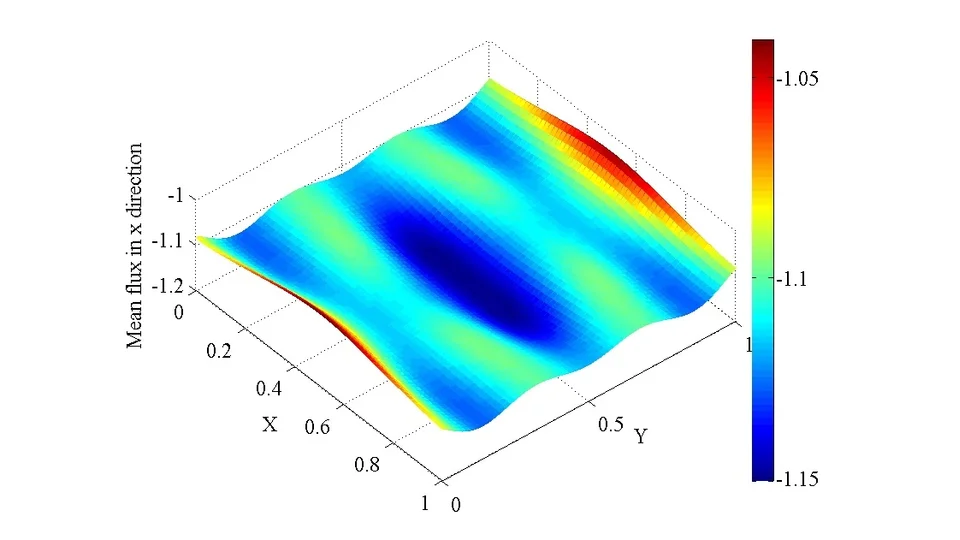
Bayesian Calibration, Validation and Uncertainty Quantification of Subsurface flow models Tue, Jun 5 2012 - Sun, Jun 1 2014 In this project, we address the mathematical modeling, numerical simulation, and uncertainty quantification of multiphase flow in porous media with a special emphasis on CO2 storage in geological formations.
Adaptive Multi Level Monte Carlo (MLMC) Wed, Jun 1 2011 - Fri, Nov 1 2013 stochastic differential equations Stochastic differential equations (SDEs), both ordinary time-dependent equations and partial differential equations with random coefficients, are common mathematical tools to model natural processes with uncertainty.
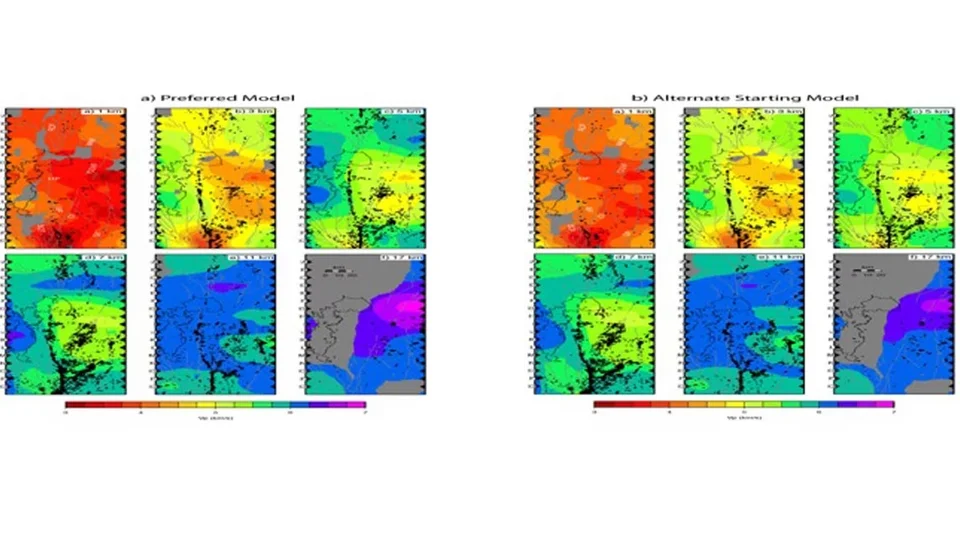
Earthquake Source Validation Tue, Jun 1 2010 - Sun, Nov 1 2015 We are developing a new method based on the Bayesian inference technique for the ground motion computations. The ultimate goal of this project is to have a better understanding of earthquake distribution.
Stochastic Partial Differential Equations (SPDEs) Tue, Jun 1 2010 - Sat, Jun 1 2013 SPDEs are partial differential equations with random terms which are due to uncertainty in the models. They arise in many multidimensional physical problems. Examples for the source of uncertainty include the variability of soil permeability in subsurface aquifers and heterogeneity of materials with microstructure. We work on the analysis and computation of elliptic, parabolic and hyperbolic equations with random data.
Engage ORCID KAUST Repository KAUST Academic Portal Scopus ShareClipboard Related Sites Applied Mathematics and Computational Science (AMCS) Statistics (STAT) Stochastic Numerics Research Group (STOCHNUM) Related Content Articles 181 Projects 13 Events 3 Related Links Raul Tempone's publication list per year