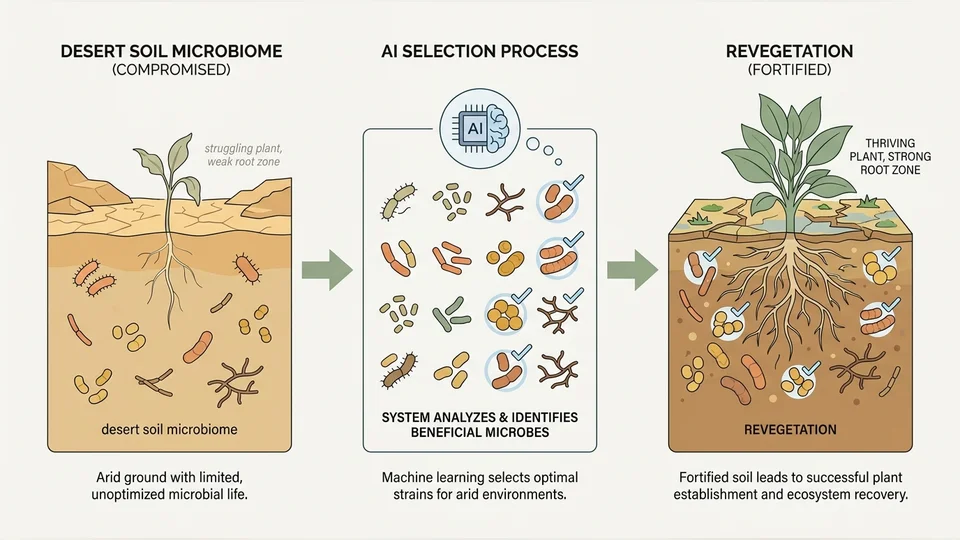
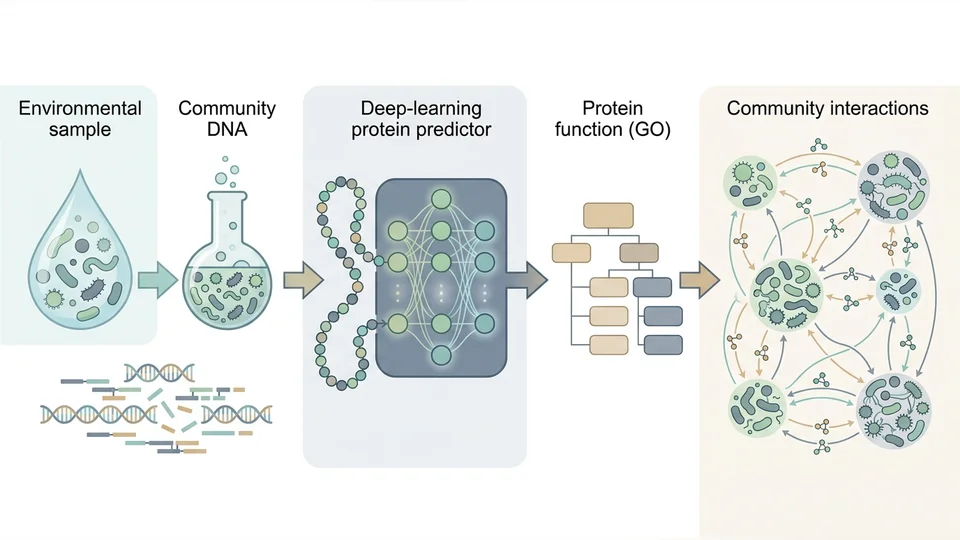
About Rund Tawfiq Rund Tawfiq Ph.D. Student (former), Bioengineering bioinformatics computational analysis Research Interests My research interests include bioinformatics and using computational methods for data analysis in biology. I am interested in working on biological questions that require multi-omics data integration. I am also interested in neuropharmacology and the molecular biology underlying neuropsychiatric disorders. Professional Profile 2015-2019: Bachelor of Science in Biology, Psychology and Neuroscience; University of Massachusetts - Amherst 2019-2021: Master of Science in Bioscience; King Abdullah University of Science and Technology 2021-present: Ph.D. student; King Abdullah Projects Related Projects 2023 Enabling desert revegetation by AI-tailored soil microbiome fortification Sun, Jan 1 2023 - Wed, Dec 31 2025 Microbial communities Neuro-Symbolic AI protein function Roughly twelve million hectares of dryland are lost every year worldwide, and the megaprojects launched to reverse desertification — the Sahel's Great Green Wall is the canonical example — typically fail because most planted trees die when irrigation stops. The biological reason is that desert soils are low in nutrients and high in salinity, and the microbial communities that mediate nitrogen, phosphate, and mineral acquisition for plants are missing or unbalanced. This project, led by Heribert Hirt's plant-microbiome group with our group and the Modeling and Simulation group of Gabriel Wittum 2022 Computational methods for functional metagenomics: from protein functions to multi-scale interactions Sat, Jan 1 2022 - Tue, Dec 31 2024 Applied Ontology Microbial communities Neuro-Symbolic AI protein function Metagenomic sequencing has made it routine to read the DNA of an entire microbial community, but most analysis pipelines stop at taxonomic composition or at the level of individual protein families. The really biologically informative questions, which proteins do what, which proteins interact, which metabolic pathways are reconstructible, and how the community as a whole interacts with its environment or host, remain largely out of reach computationally. Even associations that are very robust empirically, for example between gut microbiome composition and colorectal cancer or inflammatory
Enabling desert revegetation by AI-tailored soil microbiome fortification Sun, Jan 1 2023 - Wed, Dec 31 2025 Microbial communities Neuro-Symbolic AI protein function Roughly twelve million hectares of dryland are lost every year worldwide, and the megaprojects launched to reverse desertification — the Sahel's Great Green Wall is the canonical example — typically fail because most planted trees die when irrigation stops. The biological reason is that desert soils are low in nutrients and high in salinity, and the microbial communities that mediate nitrogen, phosphate, and mineral acquisition for plants are missing or unbalanced. This project, led by Heribert Hirt's plant-microbiome group with our group and the Modeling and Simulation group of Gabriel Wittum
Computational methods for functional metagenomics: from protein functions to multi-scale interactions Sat, Jan 1 2022 - Tue, Dec 31 2024 Applied Ontology Microbial communities Neuro-Symbolic AI protein function Metagenomic sequencing has made it routine to read the DNA of an entire microbial community, but most analysis pipelines stop at taxonomic composition or at the level of individual protein families. The really biologically informative questions, which proteins do what, which proteins interact, which metabolic pathways are reconstructible, and how the community as a whole interacts with its environment or host, remain largely out of reach computationally. Even associations that are very robust empirically, for example between gut microbiome composition and colorectal cancer or inflammatory
Engage ORCID ShareClipboard Related Sites Bioengineering (BioE) Bio-Ontology Research Group (BORG) Related Content Articles 2 Projects 2