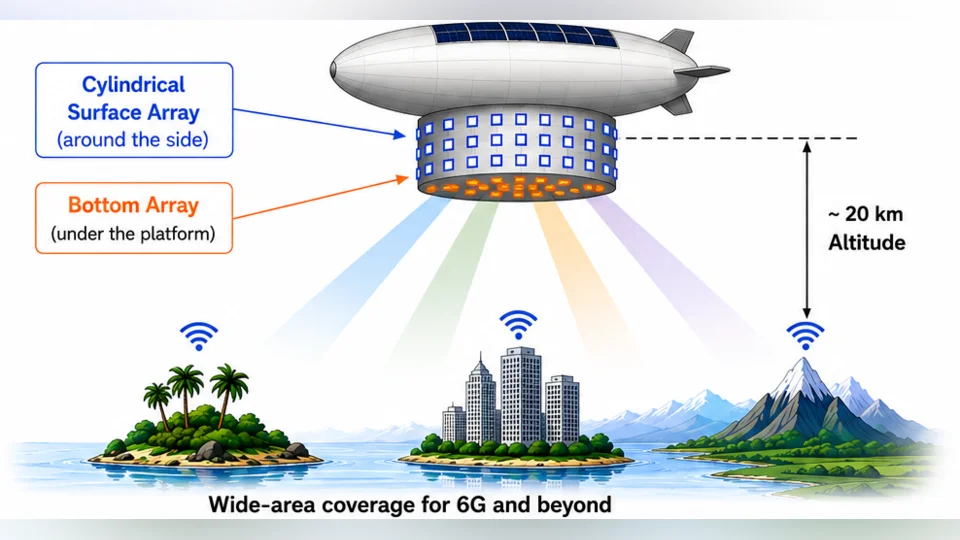
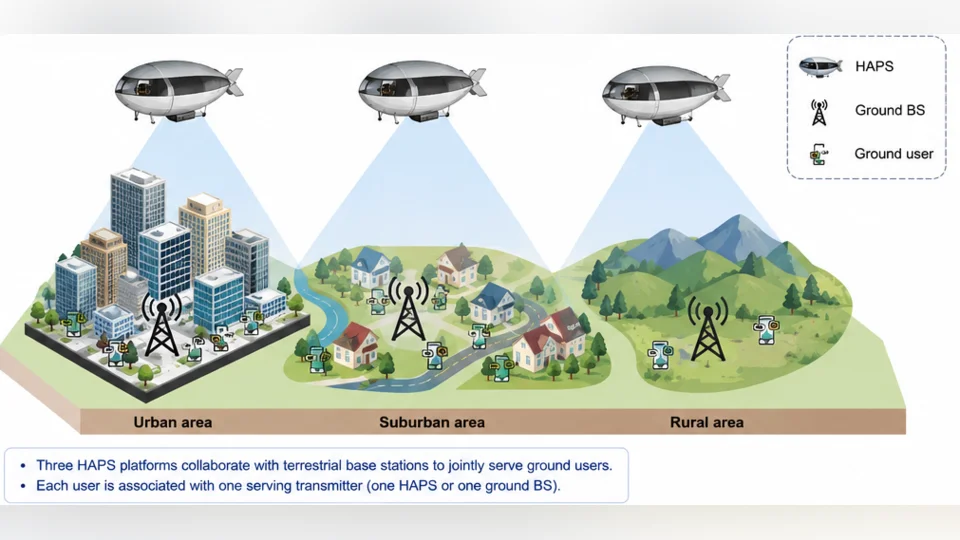
About Shasha Liu Shasha Liu Ph.D. Student, Electrical and Computer Engineering machine learning Next generation wireless communications Shasha Liu is a visit student in the Communication Theory Lab (CTL) under the supervision of Professor Mohamed-Slim Alouini at King Abdullah University of Science and Technology (KAUST). Education and Early Career Shasha Liu will obtain her bachelor degree in Information Countermeasure Technology from University of Electronic Science and Technology of China (UESTC) in 2022. Scientific Interest Shasha Liu is interested in Machine Learning and Communicate Engineering. Education Profile B.S. in Information Countermeasure Technology, University of Electronic Science and Technology of China (UESTC) Articles Related News September 2026 A New Mathematical Framework for Spatial Correlation Modeling in HAPS Communications 3 min read · Thu, Sep 3 2026 News As the world moves toward sixth-generation (6G) wireless communications, researchers are exploring technologies capable of delivering seamless, high-speed connectivity far beyond the reach of conventional terrestrial networks. Among the most promising solutions are high-altitude platform stations (HAPS), aircraft operating in the stratosphere at an altitude of approximately 20 kilometers. Positioned between satellites and ground-based infrastructure, HAPS combine wide-area coverage with relatively low latency and flexible deployment, making them well suited for providing broadband services to August 2026 Multi-HAPS Collaboration Advances Fair and High-Capacity 6G Connectivity 3 min read · Mon, Aug 17 2026 News High-Altitude Platform Stations haps Wireless Communications 6G As wireless communications continue to evolve toward sixth-generation (6G) networks, one of the greatest challenges is delivering reliable, high-speed connectivity to users. While terrestrial cellular infrastructure has significantly expanded broadband access, rural, mountainous, and disaster-affected regions still suffer from limited or unreliable coverage. At the same time, densely populated urban environments frequently experience traffic congestion that degrades network performance. Addressing these diverse connectivity demands requires new network architectures capable of extending
A New Mathematical Framework for Spatial Correlation Modeling in HAPS Communications 3 min read · Thu, Sep 3 2026 News As the world moves toward sixth-generation (6G) wireless communications, researchers are exploring technologies capable of delivering seamless, high-speed connectivity far beyond the reach of conventional terrestrial networks. Among the most promising solutions are high-altitude platform stations (HAPS), aircraft operating in the stratosphere at an altitude of approximately 20 kilometers. Positioned between satellites and ground-based infrastructure, HAPS combine wide-area coverage with relatively low latency and flexible deployment, making them well suited for providing broadband services to
Multi-HAPS Collaboration Advances Fair and High-Capacity 6G Connectivity 3 min read · Mon, Aug 17 2026 News High-Altitude Platform Stations haps Wireless Communications 6G As wireless communications continue to evolve toward sixth-generation (6G) networks, one of the greatest challenges is delivering reliable, high-speed connectivity to users. While terrestrial cellular infrastructure has significantly expanded broadband access, rural, mountainous, and disaster-affected regions still suffer from limited or unreliable coverage. At the same time, densely populated urban environments frequently experience traffic congestion that degrades network performance. Addressing these diverse connectivity demands requires new network architectures capable of extending
Related Sites Electrical and Computer Engineering (ECE) Communication Theory Lab (CTL) Related Content Articles 2 Related Links Google Scholar KAUST Repository