About Sumyyah Toonsi Sumyyah Toonsi Ph.D. Student (former), Computer Science Projects Related Projects 2021 Development of Algorithms for Biotechnology and Biomedical Applications Fri, Jan 1 2021 - Sun, Dec 31 2023 Neuro-Symbolic AI This CBRC Competitive Funding project (2021–2023, run under the now-dissolved Computational Bioscience Research Center) functioned as an umbrella program for algorithm development across the group's biotechnology and biomedical work, with a deliberate focus on metabolic modeling — predicting metabolic function from genome, predicting interactions from structure, and learning from interaction networks to identify disease-relevant biology. The unifying scientific bet was that systems biology requires algorithms that operate not on isolated molecules but on the networks of interactions within and IBNSINA-QI: Integrating Biomedical Networks and Semantic Information for Neural network Analysis of Quantitative Information Fri, Jan 1 2021 - Sun, Dec 31 2023 Applied Ontology Neuro-Symbolic AI Rare disease Biological measurements are inherently high-dimensional and heterogeneous: omics platforms produce thousands to millions of features per individual, and they coexist with qualitative information such as diagnoses, phenotype calls, and prescriptions. Biomedical ontologies and knowledge graphs encode rich qualitative background knowledge, but they are largely disconnected from the quantitative measurements that gave rise to the categorical phenotypes in the first place. Conversely, graph neural networks and other methods that handle quantitative data on graphs do not yet exploit the formal 2018 Bio2Vec: Smart analytics infrastructure for the life sciences Mon, Jan 1 2018 - Thu, Dec 31 2020 Applied Ontology Neuro-Symbolic AI Semantic similarity By the mid-2010s the life sciences had produced an extraordinary investment in machine-readable knowledge: biomedical ontologies were used throughout biology to annotate data, and large RDF knowledge graphs such as Bio2RDF aggregated billions of statements from dozens of major databases. At the same time, large personal genomic datasets, the UK 100,000 Genomes project, UK Biobank, and the Saudi Human Genome Program, were coming online, and translating these into clinical insight depended on integrating them with that existing background knowledge. Generic knowledge-graph machine learning
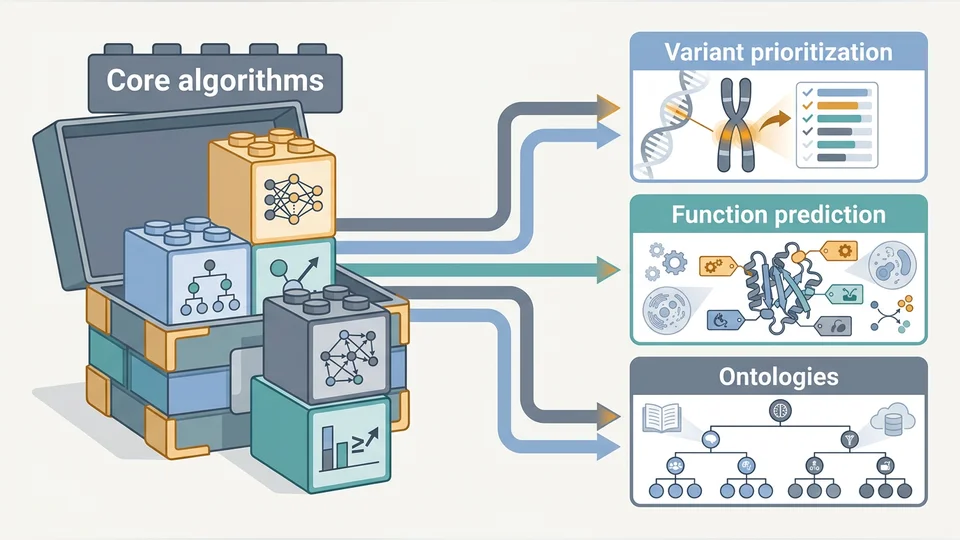
Development of Algorithms for Biotechnology and Biomedical Applications Fri, Jan 1 2021 - Sun, Dec 31 2023 Neuro-Symbolic AI This CBRC Competitive Funding project (2021–2023, run under the now-dissolved Computational Bioscience Research Center) functioned as an umbrella program for algorithm development across the group's biotechnology and biomedical work, with a deliberate focus on metabolic modeling — predicting metabolic function from genome, predicting interactions from structure, and learning from interaction networks to identify disease-relevant biology. The unifying scientific bet was that systems biology requires algorithms that operate not on isolated molecules but on the networks of interactions within and
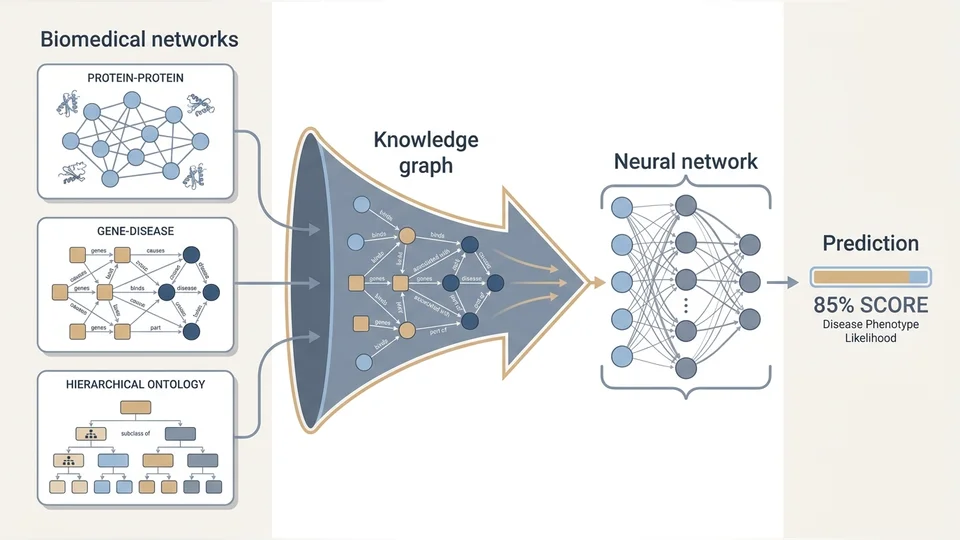
IBNSINA-QI: Integrating Biomedical Networks and Semantic Information for Neural network Analysis of Quantitative Information Fri, Jan 1 2021 - Sun, Dec 31 2023 Applied Ontology Neuro-Symbolic AI Rare disease Biological measurements are inherently high-dimensional and heterogeneous: omics platforms produce thousands to millions of features per individual, and they coexist with qualitative information such as diagnoses, phenotype calls, and prescriptions. Biomedical ontologies and knowledge graphs encode rich qualitative background knowledge, but they are largely disconnected from the quantitative measurements that gave rise to the categorical phenotypes in the first place. Conversely, graph neural networks and other methods that handle quantitative data on graphs do not yet exploit the formal
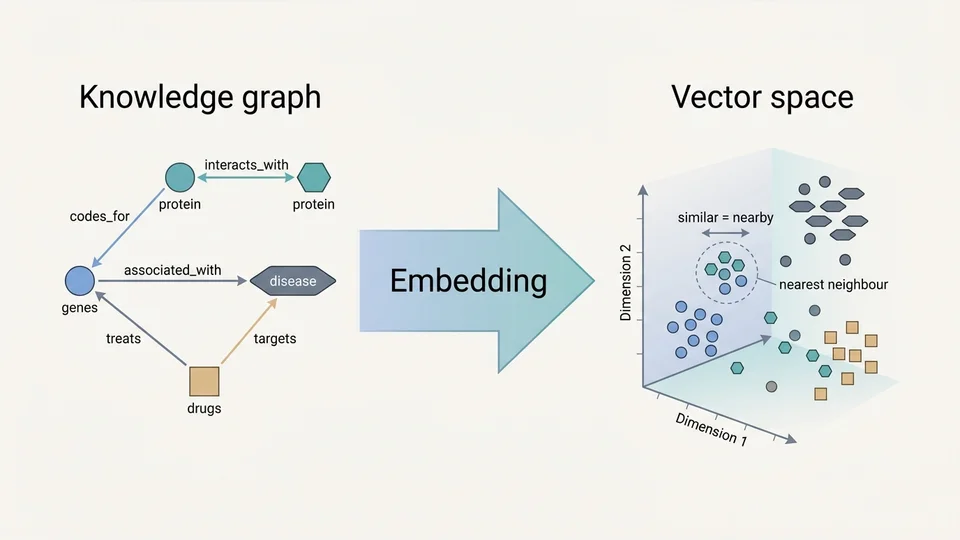
Bio2Vec: Smart analytics infrastructure for the life sciences Mon, Jan 1 2018 - Thu, Dec 31 2020 Applied Ontology Neuro-Symbolic AI Semantic similarity By the mid-2010s the life sciences had produced an extraordinary investment in machine-readable knowledge: biomedical ontologies were used throughout biology to annotate data, and large RDF knowledge graphs such as Bio2RDF aggregated billions of statements from dozens of major databases. At the same time, large personal genomic datasets, the UK 100,000 Genomes project, UK Biobank, and the Saudi Human Genome Program, were coming online, and translating these into clinical insight depended on integrating them with that existing background knowledge. Generic knowledge-graph machine learning
Related Sites Bio-Ontology Research Group (BORG) Computer Science (CS) Related Content Articles 1 Projects 3 Events 1