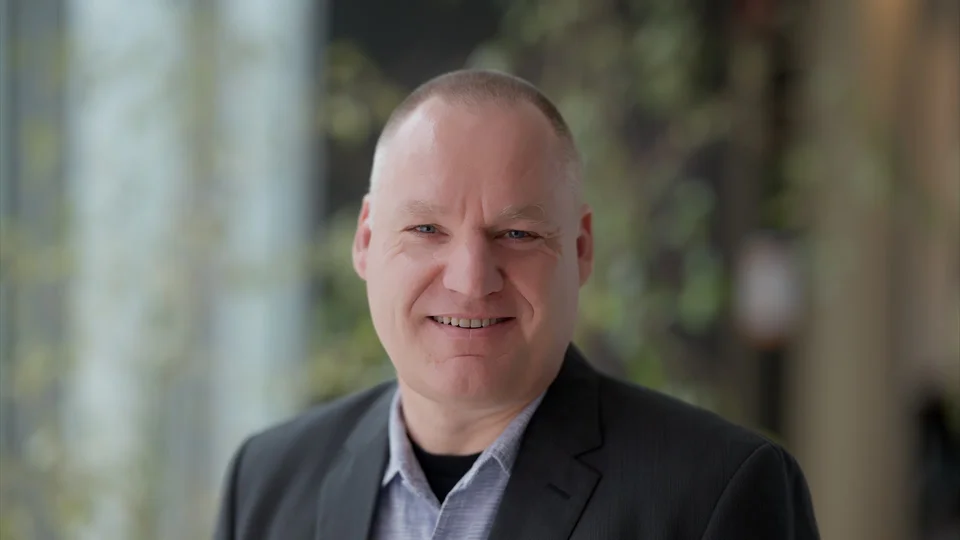
About Wolfgang Heidrich Wolfgang Heidrich Professor, Computer Science Computational Photography computer graphics optics inverse methods Professor Heidrich is apinoeer in the development of novel sensing and display technologies by combining computer graphics, machine vision, imaging, inverse methods, optics and perception. Events Presented Events Feb 8 - Feb 14, 2026 AI for Optics and Optics for AI Wolfgang Heidrich, Professor, Computer Science Feb 8, 12:00 - 13:00 B9 L2 R2325 This talk will highlight recent work on the interconnection between AI techniques and (imaging) optics. Mar 31 - Apr 6, 2024 Learned Imaging Systems Wolfgang Heidrich, Professor, Computer Science Apr 1, 11:30 - 12:30 B9 L2 H2 Computational imaging systems are based on the joint design of optics and associated image reconstruction algorithms. Of particular interest in recent years has been the development of end-to-end learned “Deep Optics” systems that use differentiable optical simulation in combination with backpropagation to simultaneously learn optical design and deep network post-processing for applications such as hyperspectral imaging, HDR, or extended depth of field. In this talk I will in particular focus on new developments that expand the design space of such systems from simple DOE optics to compound refractive optics and mixtures of different types of optical components. Feb 26 - Mar 4, 2023 Learned Optics — Improving Computational Imaging Systems through Deep Learning and Optimization Wolfgang Heidrich, Professor, Computer Science Feb 26, 12:00 - 13:00 B9 L2 H2 Learned Optics Computational imaging systems are based on the joint design of optics and associated image reconstruction algorithms. Sep 19 - Sep 25, 2021 Deep Optics - Joint Design of Imaging Hardware and Reconstruction Methods - Graduate Seminar Wolfgang Heidrich, Professor, Computer Science Sep 20, 12:00 - 13:00 B9 R2322 H1 Classical imaging systems are characterized by the independent design of optics, sensors, and image processing algorithms. In contrast, computational imaging systems are based on a joint design of two or more of these components, which allows for greater flexibility of the type of captured information beyond classical 2D photos, as well as for new form factors and domain-specific imaging systems. In this talk, I will describe how numerical optimization and learning-based methods can be used to achieve truly end-to-end optimized imaging systems that outperform classical solutions. Feb 2 - Feb 8, 2020 Optimization and Learning in Computational Imaging Wolfgang Heidrich, Professor, Computer Science Feb 5, 12:00 - 13:00 B9 H1 R2322 computational imaging The Machine Learning Hub Seminar Series presents “Optimization and Learning in Computational Imaging” by Dr. Wolfgang Heidrich, Professor in Computer Science at KAUST. He leads the AI Initiative and is the Director of the KAUST Visual Computing Center. Computational imaging systems are based on the joint design of optics and associated image reconstruction algorithms. Historically, many such systems have employed simple transform-based reconstruction methods. Modern optimization methods and priors can drastically improve the reconstruction quality in computational imaging systems. Furthermore, learning-based methods can be used to design the optics along with the reconstruction method, yielding truly end-to-end learned imaging systems, blurring the boundary between imaging hardware and software.
AI for Optics and Optics for AI Wolfgang Heidrich, Professor, Computer Science Feb 8, 12:00 - 13:00 B9 L2 R2325 This talk will highlight recent work on the interconnection between AI techniques and (imaging) optics.
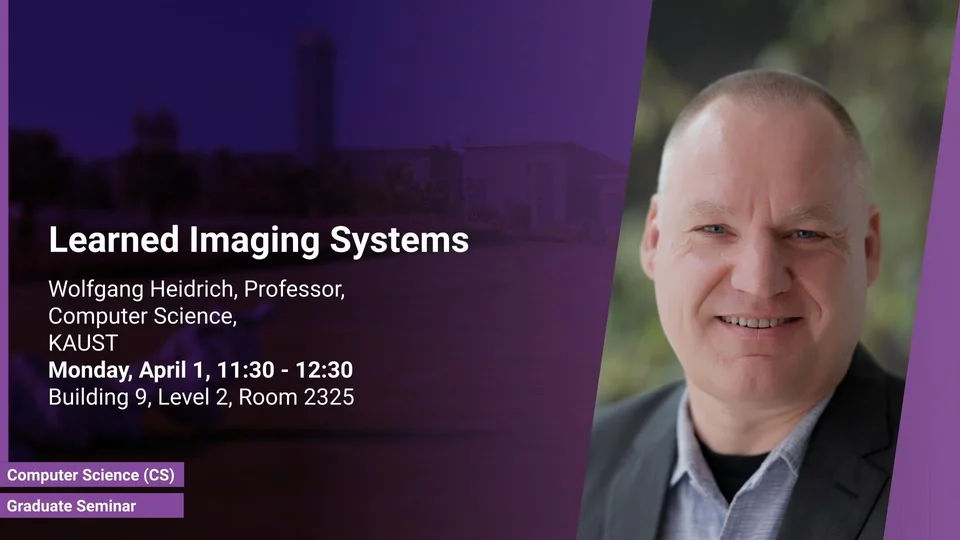
Learned Imaging Systems Wolfgang Heidrich, Professor, Computer Science Apr 1, 11:30 - 12:30 B9 L2 H2 Computational imaging systems are based on the joint design of optics and associated image reconstruction algorithms. Of particular interest in recent years has been the development of end-to-end learned “Deep Optics” systems that use differentiable optical simulation in combination with backpropagation to simultaneously learn optical design and deep network post-processing for applications such as hyperspectral imaging, HDR, or extended depth of field. In this talk I will in particular focus on new developments that expand the design space of such systems from simple DOE optics to compound refractive optics and mixtures of different types of optical components.
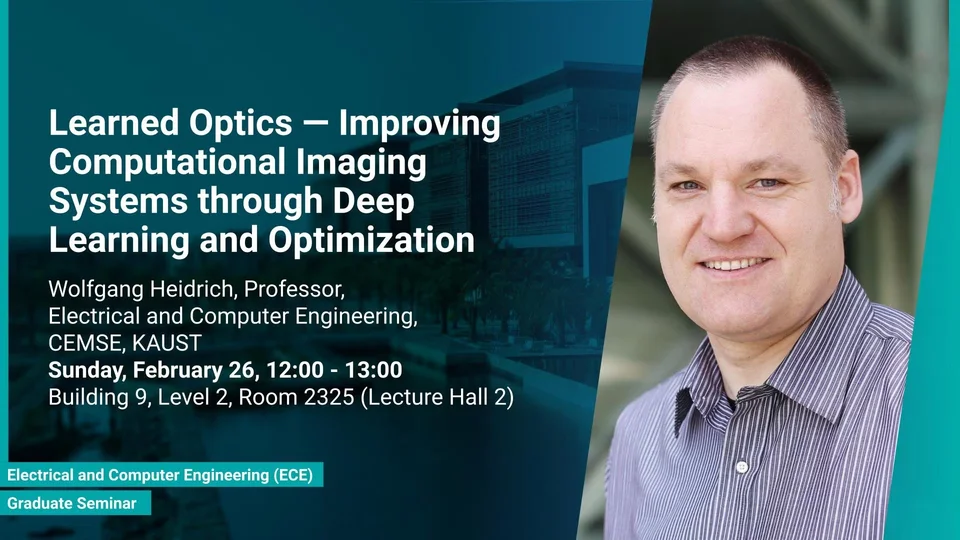
Learned Optics — Improving Computational Imaging Systems through Deep Learning and Optimization Wolfgang Heidrich, Professor, Computer Science Feb 26, 12:00 - 13:00 B9 L2 H2 Learned Optics Computational imaging systems are based on the joint design of optics and associated image reconstruction algorithms.
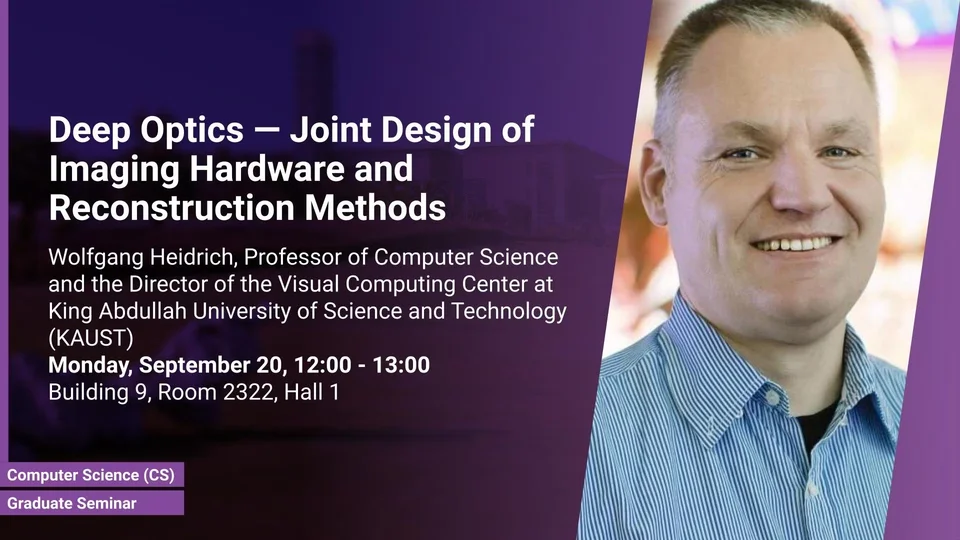
Deep Optics - Joint Design of Imaging Hardware and Reconstruction Methods - Graduate Seminar Wolfgang Heidrich, Professor, Computer Science Sep 20, 12:00 - 13:00 B9 R2322 H1 Classical imaging systems are characterized by the independent design of optics, sensors, and image processing algorithms. In contrast, computational imaging systems are based on a joint design of two or more of these components, which allows for greater flexibility of the type of captured information beyond classical 2D photos, as well as for new form factors and domain-specific imaging systems. In this talk, I will describe how numerical optimization and learning-based methods can be used to achieve truly end-to-end optimized imaging systems that outperform classical solutions.
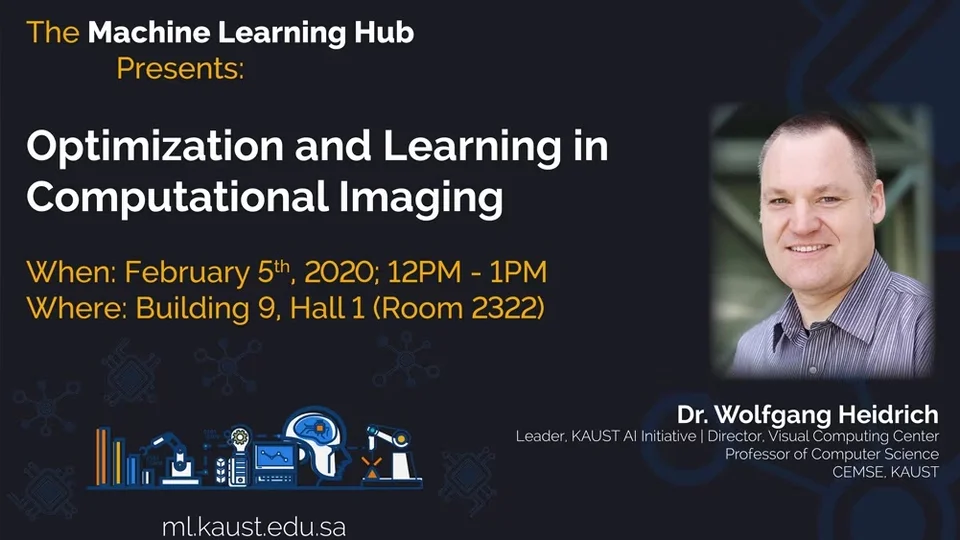
Optimization and Learning in Computational Imaging Wolfgang Heidrich, Professor, Computer Science Feb 5, 12:00 - 13:00 B9 H1 R2322 computational imaging The Machine Learning Hub Seminar Series presents “Optimization and Learning in Computational Imaging” by Dr. Wolfgang Heidrich, Professor in Computer Science at KAUST. He leads the AI Initiative and is the Director of the KAUST Visual Computing Center. Computational imaging systems are based on the joint design of optics and associated image reconstruction algorithms. Historically, many such systems have employed simple transform-based reconstruction methods. Modern optimization methods and priors can drastically improve the reconstruction quality in computational imaging systems. Furthermore, learning-based methods can be used to design the optics along with the reconstruction method, yielding truly end-to-end learned imaging systems, blurring the boundary between imaging hardware and software.
Engage ORCID KAUST Repository KAUST Academic Portal Scopus ShareClipboard Related Sites Electrical and Computer Engineering (ECE) Computer Science (CS) Center of Excellence for Generative AI (GenAI) Computational Imaging Group (VCCIMAGING) Related Content Articles 16 Events 5 Related Links Publications list on ORCID Also view Publications in the KAUST Repository Also view list of Publications on Google Scholar Full list of publications, with project pages on personal web page Computational Imaging Group