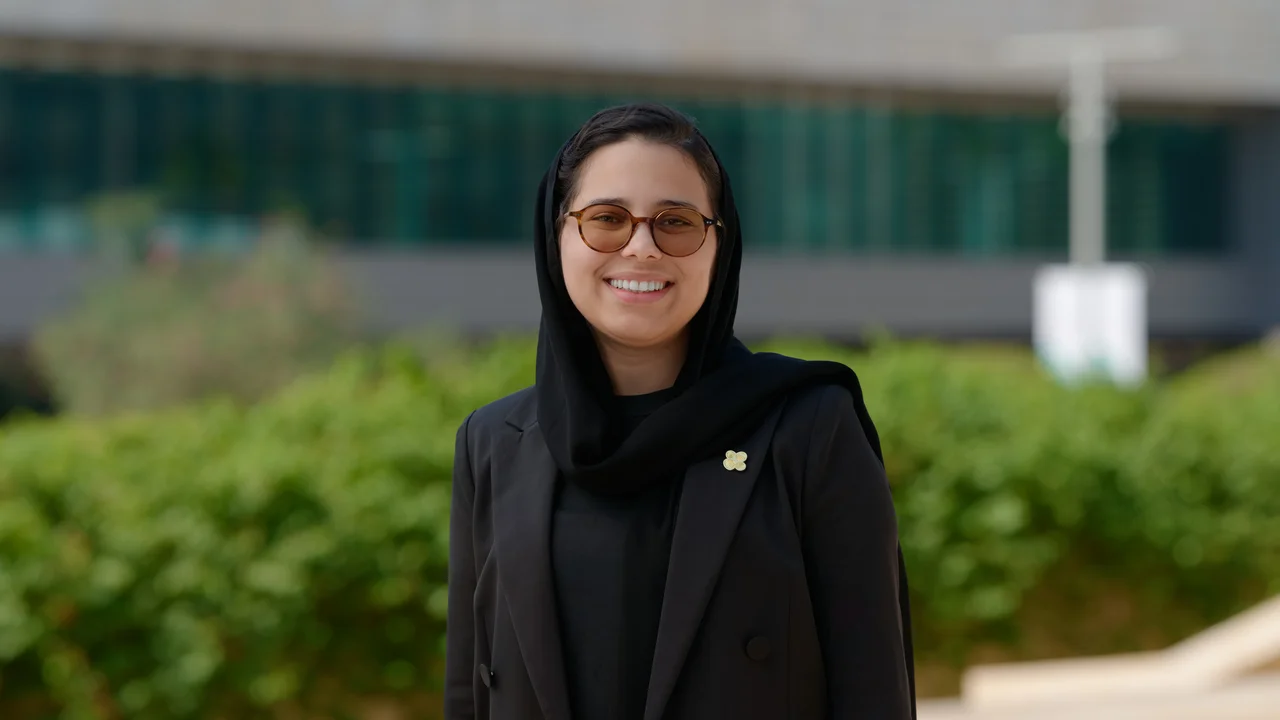
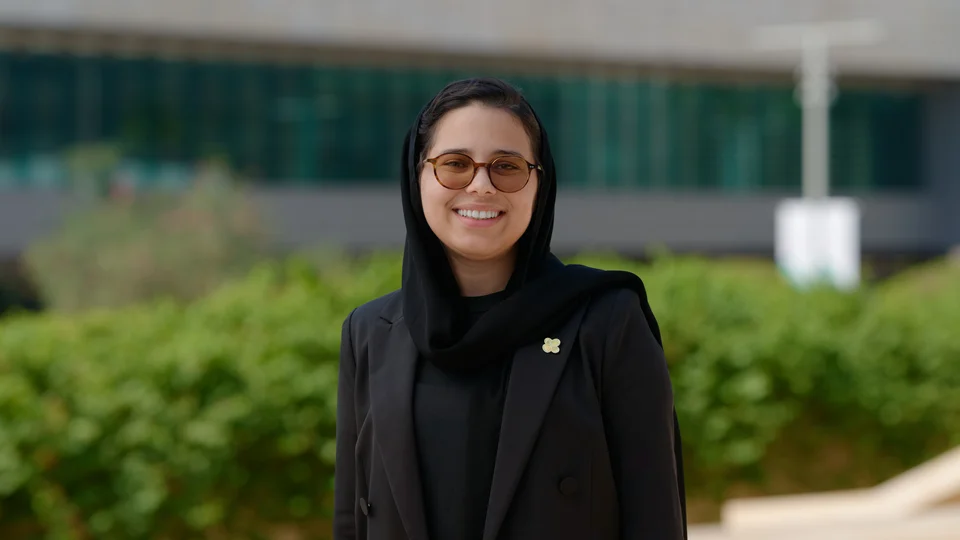
CEMSE student Rawan Alghamdi selected as a 2025 IEEE SPS Scholarship Program recipient
CEMSE’s Rawan Alghamdi honored with IEEE SPS Scholarship for her work to bridge the global “digital divide.”
About
CEMSE Ph.D. candidate Rawan Alghamdi is tackling one of today’s most pressing challenges: bridging the “digital divide.” Fueled by a relentless curiosity and a determination to ensure that “no one is left behind,” her research in signal processing and wireless communications centers on expanding reliable connectivity to remote and underserved rural communities worldwide.
Alghamdi’s commitment has been recognized by the IEEE Signal Processing Society (SPS), which named her a recipient of the 2025 SPS Scholarship Program. The Society commended her as a “high-achieving student in an engineering program [...] taking the appropriate action to obtain the knowledge and skills necessary to make an impact across the signal processing profession.”
Applying optimization and detection techniques, she designs physical-layer solutions that enhance wireless coverage, reliability and accessibility, including methods that reduce time and frequency dispersion in communication systems.
Alghamdi—who is jointly affiliated with the KAUST Communication Theory Lab (CTL) under Professor Mohamed-Slim Alouini and the KAUST Information Science Lab (ISL) under Professor Tareq Al-Naffouri—emphasized the importance of mentorship in her journey.
“Both of my KAUST Ph.D. advisers, Professors Alouini and Al-Naffouri, have supported, trusted, and guided me to make the right decisions. Receiving the SPS scholarship is a testament to the quality of research conducted at CTL and ISL. It is a great honor that will support my professional career,” she said.
“I am also deeply grateful to Professor Hayssam Dahrouj from the University of Sharjah, United Arab Emirates, and Professor Mohamed Siala from the Higher School of Communications (SUP’COM), Tunisia. Professor Dahrouj guided me throughout my undergraduate studies and master’s thesis at KAUST, profoundly shaping my academic journey, while Professor Siala has been an invaluable mentor during my Ph.D. research.”
A boundless curiosity: The pursuit of impactful research
Internet access has become the foundation of modern life, improving every facet of society. However, over 2.8 billion people worldwide remain without internet access, preserving inequalities in education, healthcare, and economic development [1].
At KAUST, Alghamdi and her colleagues are working to close this gap by enhancing next-generation non-terrestrial networks (NTNs) that employ airborne and space-based platforms to deliver inclusive internet access in the world’s most challenging locations.
The KAUST researchers believe that low-Earth orbit (LEO) satellites present a promising solution to overcoming current infrastructure limitations; however, their high velocity introduces a Doppler effect—the change in frequency of a wave caused by relative motion between the source and observer—which degrades communication quality.
“In my doctoral studies, I focus on answering the fundamental question of how to design and optimize communication waveforms to mitigate the channel degradation of high-mobility systems,” Alghamdi said.
“I have developed complementary waveform designs using a mix of signal-processing and optimization tools to reduce Doppler spread and channel dispersion while minimizing computational complexity and power consumption.”
Alghamdi’s work also applies to high-speed train networks, emergency response communications, underwater acoustic systems and airborne connectivity—areas vital to Saudi Arabia’s national research priorities. In the long term, her research will support the Kingdom’s ambitions in direct-to-smartphone satellite communication systems—technology that enables standard mobile phones to connect directly to satellites in space, bypassing traditional land-based cell towers—and in cognitive cities.
“My research contributes to Saudi Vision 2030 by supporting the digital economy, improving quality of life, and expanding digital access nationwide. It also offers a resilient and reliable framework for disaster response and emergency management.”
Helping others to grow
Alghamdi’s curiosity also extends beyond the laboratory. A volunteer podcast host and coordinator for the recently launched IEEE Women in Engineering podcast, she uses her platform to inspire others involved in science, technology, engineering and mathematics (STEM).
“I am always curious to pursue impact-driven research projects and communication technology solutions that improve the quality of our daily lives,” she said. “In my free time, I also create digital content to help first-generation students navigate the hardship of pursuing higher education.”
Looking ahead, Alghamdi aspires to an academic career that combines research, teaching, and mentorship.
“Through teaching, research, and mentorship, I aim to help students grow as scientists and individuals and to translate knowledge into impactful solutions,” she said. “My broader mission is to cultivate an inclusive and supportive STEM community that helps students thrive and realize their goals.”
Related People
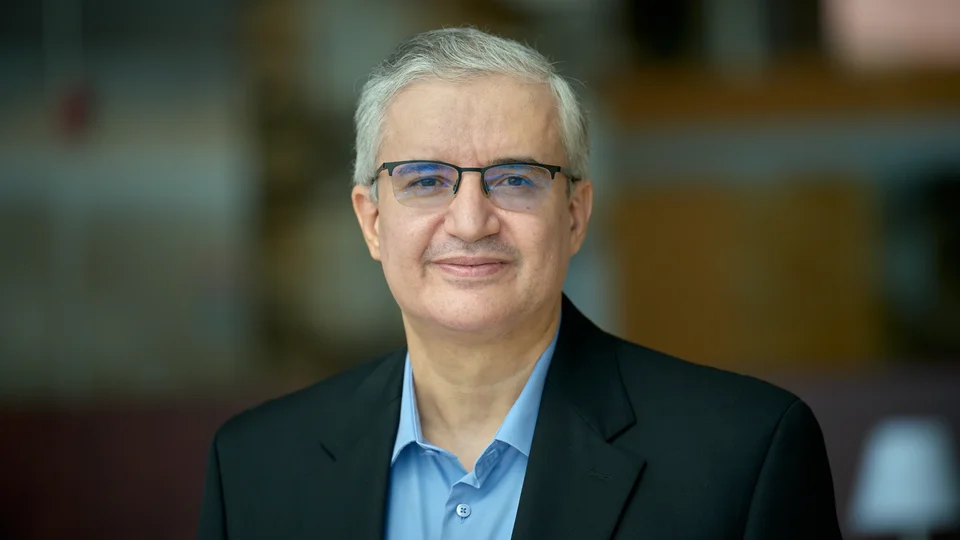
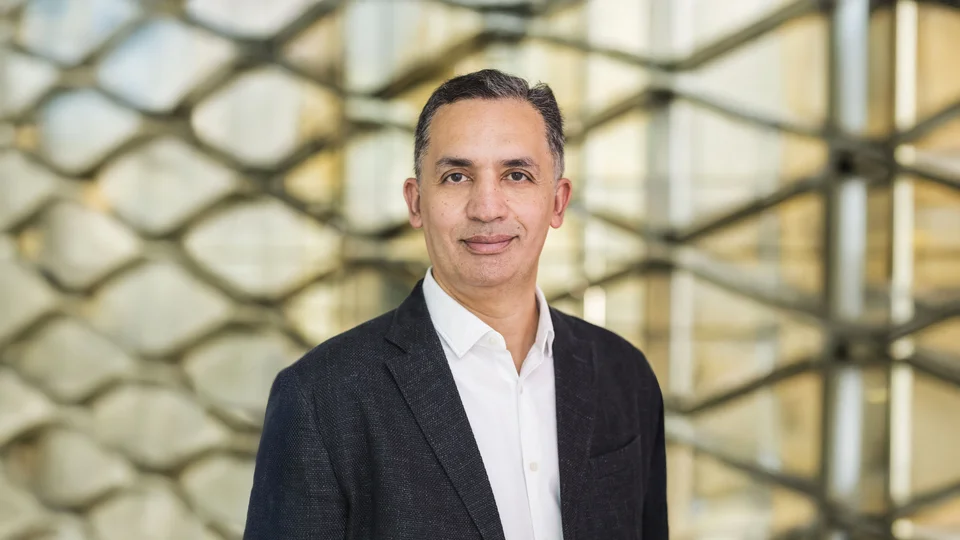
Mohamed-Slim Alouini
- Al-Khawarzmi Distinguished Professor, Electrical and Computer Engineering